
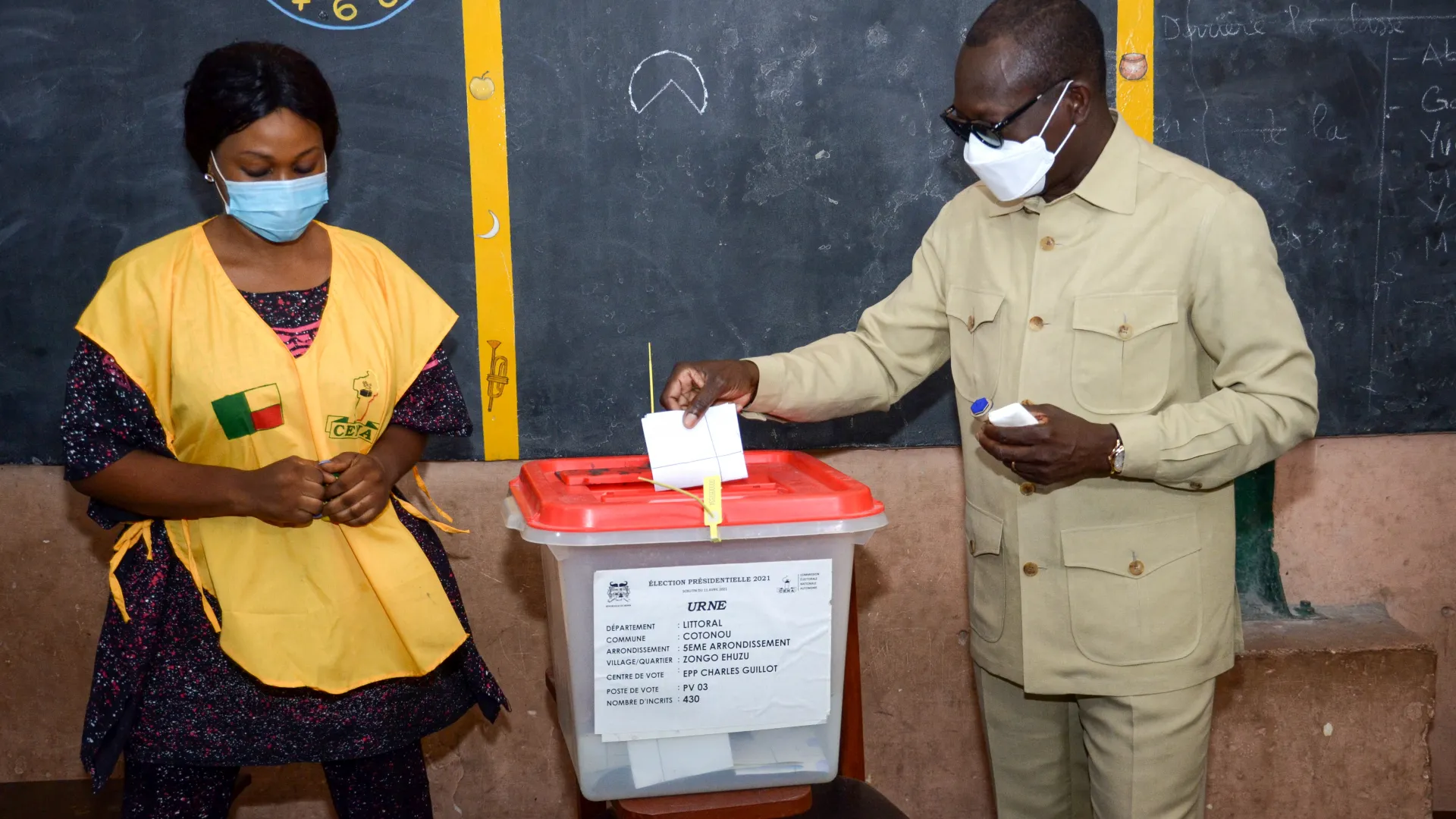
Benin Republic will hold parliamentary and local elections on Sunday, January 11, just one month after a failed military coup attempt in the country.
The vote is expected to shape the political landscape ahead of the presidential election scheduled for April 2026, serving as an early indicator of shifting power dynamics.
President Patrice Talon’s ruling coalition has tightened its grip on power following the exclusion of the main opposition Democrats Party from the local elections and the upcoming presidential race. The party was barred after failing to secure the required number of sponsorship signatures to validate its candidacy.
Although the Democrats Party will participate in Sunday’s parliamentary elections, analysts say it risks losing further ground to Talon’s three-party ruling bloc, which currently controls 81 of the 109 seats in the National Assembly.
Talon, who is nearing the end of his second five-year term, is constitutionally barred from seeking re-election. However, his preferred successor, Finance Minister Romuald Wadagni, is widely regarded as the frontrunner in April’s presidential race.
Wadagni is expected to face only one challenger – Paul Hounkpe, a moderate opposition figure from the smaller FCBE party, which has signed multiple cooperation agreements with parties aligned with the ruling bloc.
FCBE parliamentary candidates are also expected to form a coalition with the ruling alliance if elected on Sunday, further consolidating government control.
The upcoming elections are seen as a critical test for Benin’s political stability and democratic trajectory following the deadly coup attempt on December 7, 2025.



No Comments
Join the DiscussionBe the first to join the discussion!