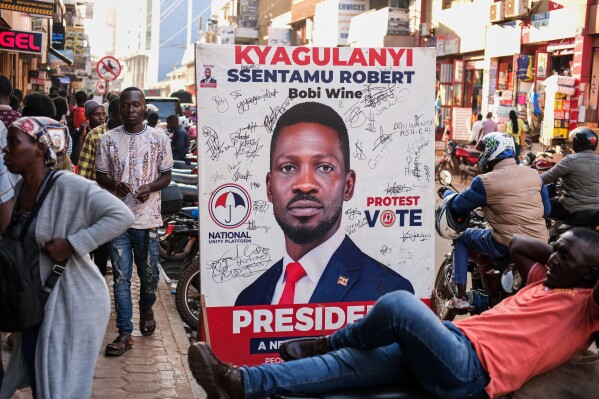
Ugandan opposition leader Robert Kyagulanyi, widely known as Bobi Wine, has formally rejected the results of the country’s presidential election, which declared a decisive victory for incumbent President Yoweri Museveni.
According to figures released by the Electoral Commission, President Museveni secured 7,643,778 votes, representing 71.88 percent of valid ballots cast. With results from 93.61 percent of polling stations tallied (47,499 out of 50,739), the commission said the incumbent had established an unassailable lead.
Bobi Wine, leader of the National Unity Platform (NUP), dismissed the outcome, alleging widespread electoral malpractice. He cited what he described as “ballot stuffing, a military takeover of the electoral process, the detention of political leaders and polling officials,” as well as systemic interference aimed at undermining the opposition.
Official results place Bobi Wine second with 2,601,150 votes, or 24.46 percent. Nandala Mafabi finished third with 202,802 votes (1.91 percent). Voter turnout stood at approximately 50 percent, with 10,898,099 ballots cast out of 21,649,067 registered voters.
The remaining candidates – including representatives from the Forum for Democratic Change (FDC), Alliance for National Transformation (ANT), and other smaller parties – collectively garnered less than four percent of the vote.
The 43-year-old opposition figure said electoral irregularities began on polling day, accusing authorities of orchestrating “massive ballot stuffing,” carrying out targeted arrests, and imposing restrictions on opposition activities. He also pointed to internet shutdowns, failures of biometric voter verification machines, and the alleged abduction or expulsion of opposition polling agents and supervisors.
Bobi Wine further condemned what he described as the killing of civilians who attempted to protest peacefully, accusing state authorities of subverting the will of voters in multiple constituencies.
The election has taken place amid heightened political tension and long-standing concerns by opposition groups and civil society organizations over electoral transparency, security force involvement, and the broader democratic environment in Uganda.



No Comments
Join the DiscussionBe the first to join the discussion!