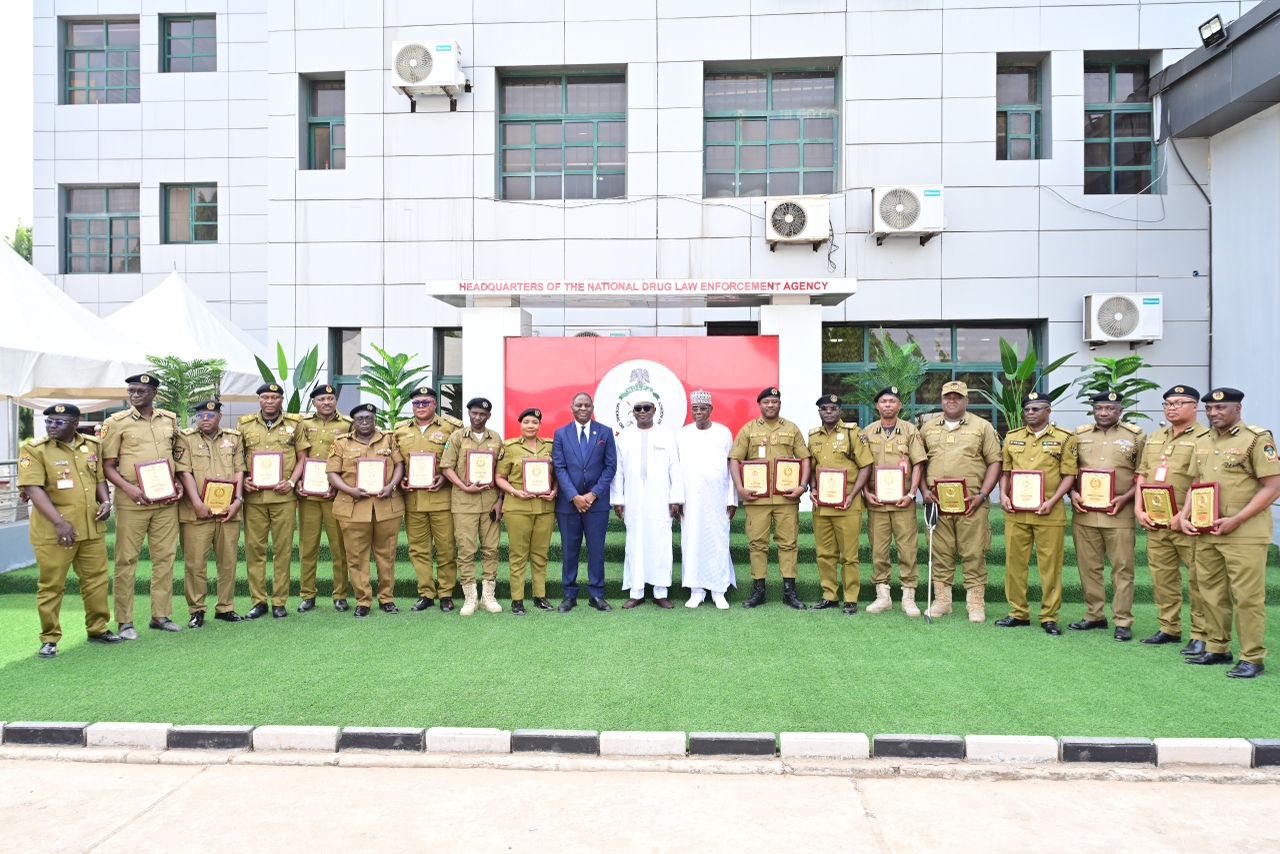
Nigeria’s National Drug Law Enforcement Agency (NDLEA) says it has recorded significant operational gains over the past five years, announcing the arrest of 77,792 suspects, including 128 alleged drug barons, alongside 14,225 convictions and the seizure of more than 14.8 million kilograms of illicit drugs nationwide.
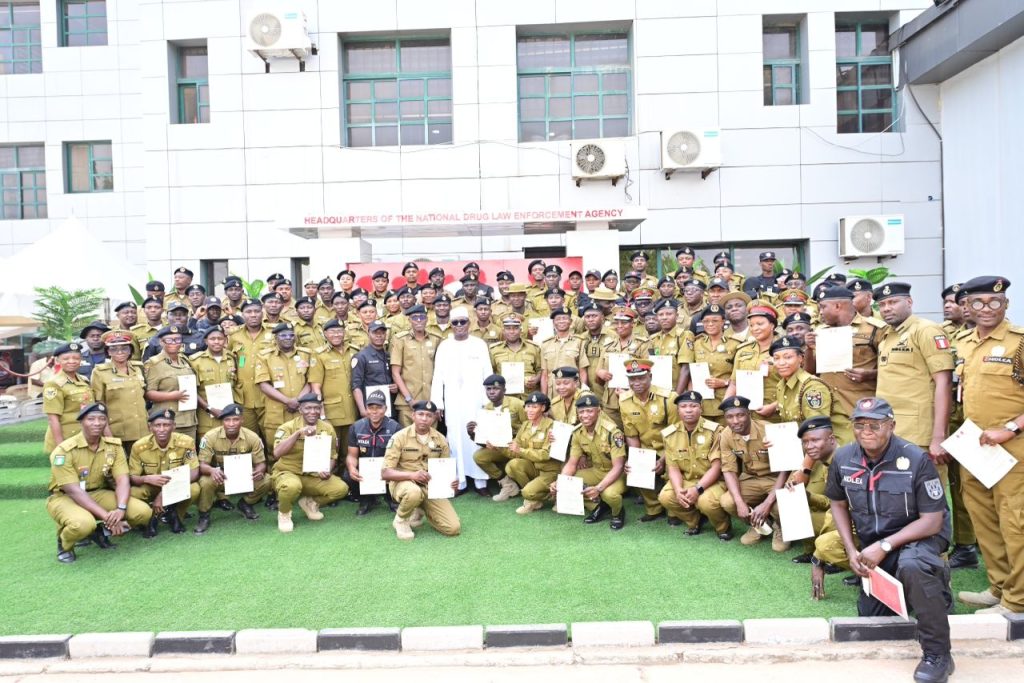
The figures were disclosed by the Chairman and Chief Executive Officer of the agency, Brigadier General Mohamed Buba Marwa (rtd), during the 11th Chairman/Chief Executive Officer Awards and Commendation Ceremony held at the NDLEA National Headquarters in Abuja.
Addressing officers and stakeholders at the event, Marwa declared that Nigeria would no longer be a permissive environment for drug trafficking networks, stressing that criminal syndicates would face increasingly decisive enforcement actions.
He said the agency is preparing for more intelligence-driven and tactically advanced operations targeting drug cartels, high-level traffickers, and their distribution networks in the coming years, particularly during his second term in office.
Reflecting on his tenure, the NDLEA boss recalled pledges made at the start of his leadership to confront drug trafficking at its roots. He said the outcomes recorded so far reflect sustained commitment, institutional reforms, and improved operational capacity within the agency.
Beyond enforcement, Marwa noted that the NDLEA adopted a balanced strategy by strengthening drug demand reduction efforts. According to him, 32,442 individuals struggling with substance abuse have benefited from structured treatment, counselling, and rehabilitation programmes coordinated by the agency.
He also revealed that 13,735 sensitisation campaigns were carried out under the War Against Drug Abuse (WADA) initiative. These outreach programmes targeted schools, motor parks, workplaces, religious centres, and local communities, with the aim of expanding public awareness and prevention efforts across the country.
Marwa acknowledged the contributions of international partners, sister security agencies, civil society organisations, and the media, describing their collaboration as vital to the agency’s progress. He called for stronger and more coordinated partnerships moving forward, stressing that collective action remains key to safeguarding the future of Nigeria’s children and communities.



No Comments
Join the DiscussionBe the first to join the discussion!