The African Union (AU) is considering lifting sanctions imposed on Guinea, signaling a possible return of the country to full participation in the continental bloc following recent political developments.
The move was discussed on Thursday during the 1325th meeting of the AU Peace and Security Council (PSC) in Addis Ababa, where the Chairperson of the AU Commission, Mahmoud Ali Youssouf, presented an assessment of Guinea’s political transition. He told council members that the country had reached a critical stage in restoring constitutional governance.
According to Youssouf, the adoption of a new constitution and the conduct of presidential elections in late 2025 marked decisive progress in Guinea’s transition process. He subsequently recommended that the PSC consider lifting the suspension placed on the country following the military takeover in 2021.
An official AU statement from the meeting indicated that the recommendation aligns with the Commission’s evaluation of developments on the ground. However, Youssouf stressed that the progress achieved should be consolidated through sustained efforts to strengthen democratic institutions, uphold the rule of law, and promote national cohesion. He reaffirmed the AU’s commitment to supporting Guinea as it works toward long-term peace, stability, and development.
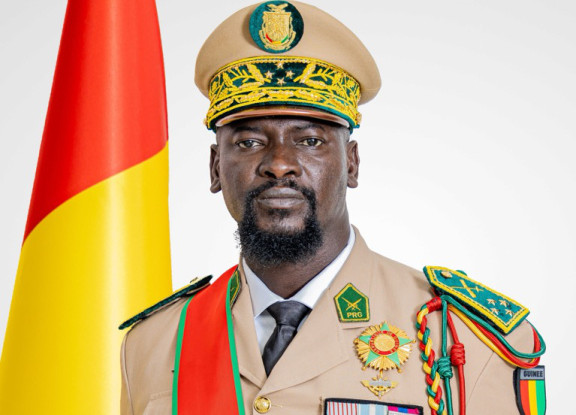
Guinea has been under military rule since September 5, 2021, when Colonel Mamady Doumbouya, then commander of the special forces, removed President Alpha Condé from power amid growing unrest linked to Condé’s contested third term. The coup led to the dissolution of state institutions and the suspension of the constitution, prompting sanctions from the AU, the Economic Community of West African States (ECOWAS), and other international partners.
Following the takeover, the transitional authorities pledged to implement reforms aimed at tackling corruption and economic hardship. While a transitional charter was introduced, electoral timelines were repeatedly delayed. In September 2025, a constitutional referendum approved a new legal framework with overwhelming official support, introducing a seven-year presidential term, a bicameral legislature, and provisions allowing members of the transitional government to contest elections.
These changes paved the way for presidential polls held on December 28, the first national elections since the coup. Official results, later validated by the Supreme Court, showed Doumbouya winning more than 86 percent of the vote. Election observers, including an AU mission, reported a generally orderly process, while calling for further steps such as legislative and local elections to ensure inclusive governance.
The AU’s deliberation represents a potential turning point for Guinea, a leading bauxite-producing nation, as it seeks to rebuild trust with regional and international partners. The bloc has reiterated its readiness to accompany the country as it navigates remaining governance challenges and works toward national reconciliation.



No Comments
Join the DiscussionBe the first to join the discussion!