
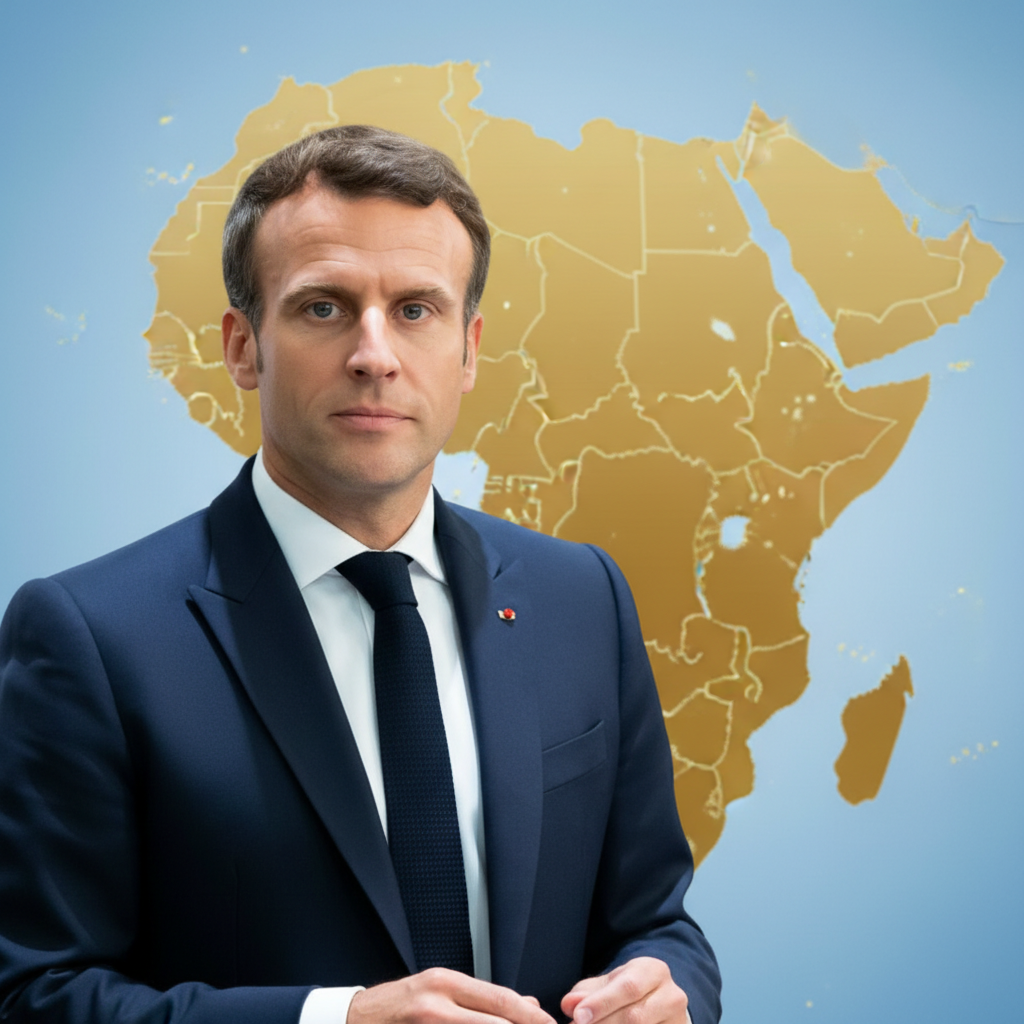
French President Emmanuel Macron has outlined his vision for a renewed partnership between France and African nations, highlighting the need to move beyond patterns inherited from the post-colonial era. His comments were made in the documentary “France-Africa, the Divorce?”, broadcast by the French National Assembly.
Macron presented himself as the first French president born after the period of colonisation, noting that the majority of Africa’s population today had no direct experience of that era. He stressed that his approach aims to acknowledge historical realities while fostering relations based on present-day cooperation rather than past conflicts.
The French president reaffirmed that his administration has progressively ended practices associated with post-colonial influence, rejecting the idea that France is withdrawing from the continent. He described certain criticisms as reflecting outdated expectations of interference or power struggles in which Paris no longer seeks involvement.
Macron highlighted that the French withdrawal from several Sahel countries coincided with these nations establishing security partnerships with Russia. He specifically mentioned Mali, where authorities who assumed power in a coup turned to Moscow to fill a “security vacuum” following the breakdown of cooperation with France. According to Macron, this trend illustrates weaknesses in local political systems, which struggle to address long-term security challenges, putting civilians at risk.
He criticised Russia’s role in the region, calling its security assistance, particularly through the Wagner Group, “neo-colonial”, arguing that it prioritises the protection of leaders in power in exchange for access to mineral resources and control over information networks, rather than supporting genuine development or cooperation.
In contrast, Macron stressed that France no longer intervenes to support or remove regimes or to engage in power struggles linked to the post-colonial period. He explained that when cooperation frameworks with local authorities are disrupted, France simply withdraws.
The president cited Benin as an example of a stable, constructive bilateral relationship. He said that cooperation with Cotonou has remained institutionalised, with ongoing political dialogue and security collaboration, even as neighbouring countries in the Sahel face instability and the rise of armed groups.
Addressing past controversies, Macron noted that informal remarks made to the Beninese president did not disrupt bilateral relations or lead to diplomatic tension. He used Benin to illustrate France’s approach: partnerships with African states that are willing to maintain cooperative frameworks, based on mutual recognition, forward-looking collaboration, and respect for sovereignty.
Through this approach, Macron positions France as a partner seeking stable, modern, and mutually beneficial relations with African nations, moving away from old patterns of interference and focusing on practical, long-term cooperation.



No Comments
Join the DiscussionBe the first to join the discussion!