
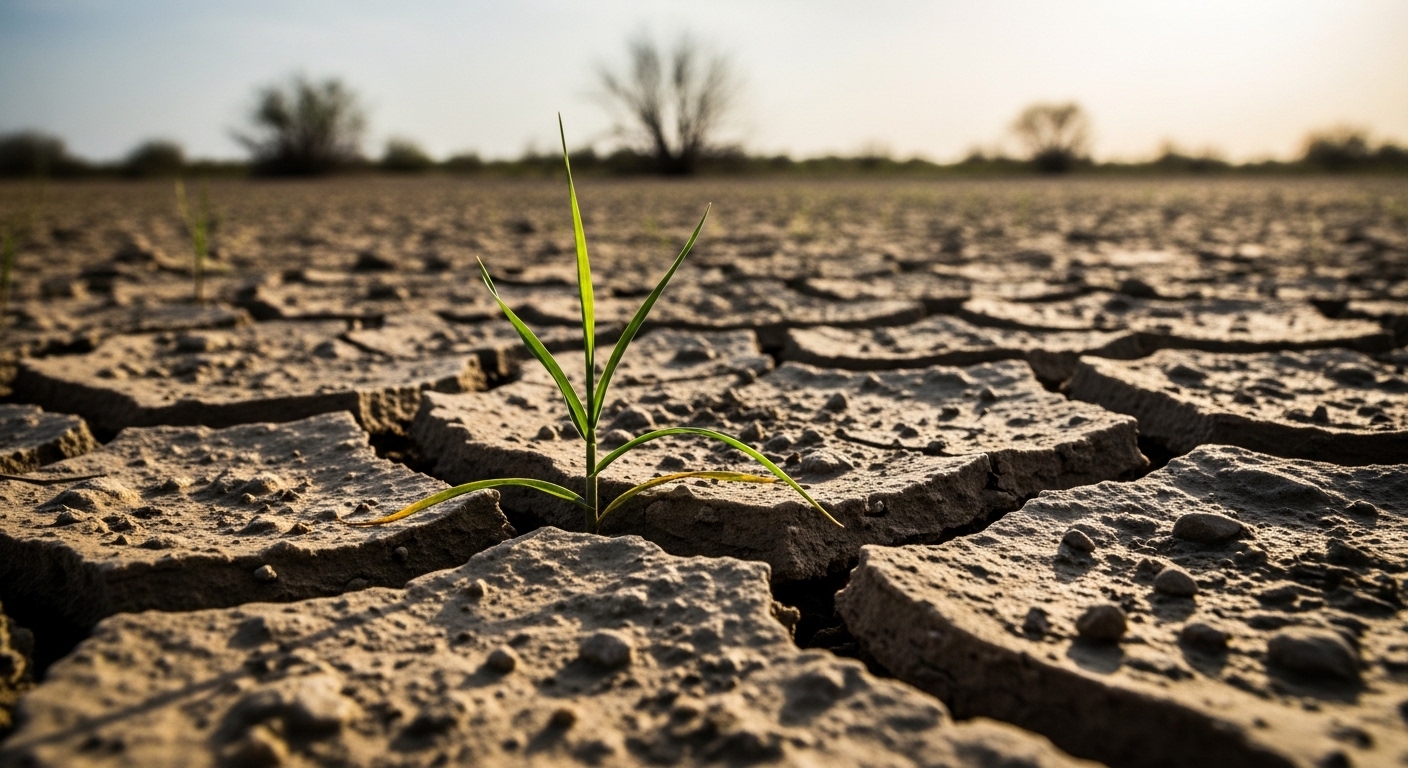
Climate Change is more than statistics, it’s more than data points. It’s more than net-zero targets. It’s about the people, it’s about the people who are being impacted right now – Vanessa Nakate, Climate activist, Uganda.
Climate change has increasingly dominated discussions in both regional and global forums. Its effects are visible through intensified environmental events, including torrential rainfall that causes devastating floods, extreme heatwaves, prolonged droughts, and rising sea levels. These challenges are interconnected, and Africa often bears the brunt, with severe impacts on populations and significant economic setbacks – especially in countries with limited capacity to mitigate the effects.
According to the World Meteorological Organization (WMO), African nations are losing an average of 2-5 per cent of their Gross Domestic Product (GDP) due to climate extremes, and some are diverting up to 9 per cent of their budgets to respond to disasters. In sub-Saharan Africa, adaptation costs are projected at US$30-50 billion annually over the next decade, equivalent to 2-3 per cent of the region’s GDP, the WMO State of the Climate in Africa 2023 report notes. The same report warns that by 2030, up to 118 million people living on less than US$1.90 a day could be exposed to drought, floods, and extreme heat if adequate measures are not implemented.
The ripple effects of climate change are already evident. African countries are struggling as the crisis disrupts livelihoods and slows economic growth. While it is impossible to examine every affected nation, this article highlights a few key cases to underscore the urgent need for climate awareness and collective action across the continent.
Despite Africa contributing less than 4 per cent of global greenhouse gas (GHG) emissions, it is one of the regions most vulnerable to climate variability and change.
Why Climate Change Discourse Matters
The importance of climate change discourse extends far beyond government and diplomatic discussions. It shapes public awareness, drives policy decisions, and influences economic and social planning. Open dialogue about climate challenges empowers communities, businesses, and civil society to understand risks, adopt sustainable practices, and hold leaders accountable for mitigation and adaptation efforts. In Africa and around the world, such discourse is crucial for fostering collective action to address one of the most urgent crises of our time.
Key Regional Impacts and Events
Tragically, despite growing awareness of climate change, several African countries have faced severe climate shocks in recent years, prompting urgent appeals for international support.
These regional events underscore the urgent need for better-implemented climate adaptation and mitigation policies across the continent. The following examples, based on findings from the World Weather Attribution (WWA), highlight how climate change is intensifying extreme weather across different regions of Africa.
Continental Impacts
Sahel and West Africa (Mali, Burkina Faso, Nigeria, Guinea, Niger, and Chad)
In April 2024, a deadly heatwave pushed temperatures beyond 45°C (113°F) across the Sahel, with Mali recording temperatures approaching 50°C. The extreme heat caused numerous fatalities. According to WWA analysis, the event was approximately 1.5°C hotter and ten times more likely to occur due to human-induced climate change.
South Sudan
In February 2025, extreme heat forced authorities to close schools nationwide for two weeks after several students collapsed from heatstroke, underscoring the growing public health risks linked to rising temperatures.
Southern Africa
In early 2024, Southern Africa experienced four extreme heat events, including two consecutive five-day heatwaves. Researchers found that such temperatures were up to nine times more likely because of climate change, highlighting the increasing frequency and intensity of heat extremes in the region.
Key Events
On 28 January 2026, devastating floods struck Malawi. While initial reports seemed like routine news, images and videos soon revealed the full scale of the disaster. At least 40 people were confirmed dead, and thousands more were displaced, left homeless, and in desperate need of assistance.
In response, the Malawian government called for immediate international support. Wilson Moleni, Commissioner of the Department of Disaster Management Affairs (DoDMA), described the situation as a national crisis:
“As a nation, we are overwhelmed by the rising daily needs of the affected people. Our economy is already overburdened. We cannot manage this situation on our own. We therefore appeal to our development partners to come to our rescue and complement our efforts.”
In North Africa, Morocco experienced one of its most severe climate crises in recent times, leading to the evacuation of over 100,000 people across four provinces. While no deaths were reported, authorities noted major road disruptions and widespread power and water outages. Almost the entire city was evacuated overnight as a precaution against flooding.
In Mali, climate disasters have caused thousands of displacements and deaths. The country ranks 169 out of 187 nations in the global climate adaptation index, making it one of the most vulnerable in the world, compounded by ongoing humanitarian and ecological crises.
According to a report by the UN Sustainable Development Group, Mali experienced 40 major climate shocks between 1970 and 2020, including recurring droughts and floods. Droughts have affected an estimated 400,000 people annually, resulting in approximately US$9.5 million in lost agricultural earnings each year.
Other notable impacts across the continent include cholera outbreaks in Mozambique, severe economic, social, and environmental damage in Nigeria, and multifaceted impacts in many other regions.
Besides flooding, Africa is increasingly experiencing extreme temperatures and heatwaves, with many regions reporting temperatures 5-10°C above seasonal averages. According to the WMO, in 2023, mean temperatures across Africa were 0.61°C higher than the 1991-2020 average and 1.23°C above the 1961-1990 baseline.
Several countries, including Mali, Morocco, the United Republic of Tanzania, and Uganda, reported their warmest year on record. Extreme heatwaves in July and August affected northern Africa, with Tunis, the capital of Tunisia, reaching 49.0°C, and Agadir, Morocco, recording a new maximum of 50.4°C.
Bridging the Climate Implementation Gap
The climate crisis affects everyone; its consequences are universal. It disrupts livelihoods, undermines businesses, and places significant strain on national economies. This underscores the urgent need for accountability from leaders to ensure that allocated funds are effectively directed toward climate mitigation and adaptation.
While numerous regional and national policies have been adopted, the critical question remains: how effectively are these measures implemented? Are sufficient resources being channelled into adaptation, renewable energy transitions, and disaster risk reduction?
On paper, many initiatives are ambitious and forward-looking. However, without transparent implementation, robust monitoring mechanisms, and measurable outcomes, they risk becoming symbolic commitments rather than transformative solutions. Effective climate governance requires consistent execution, responsible budget allocation, and clear accountability frameworks to ensure that commitments translate into tangible impacts for communities.
Continental Climate Frameworks and Initiatives
At the continental level, the African Union has adopted the AU Climate Change and Resilient Development Strategy (2022-2032), which outlines guiding principles to strengthen climate adaptation while leveraging mitigation opportunities across nine priority sectors. The strategy is designed to align Africa’s development agenda with long-term climate resilience goals.
The African Green Stimulus Programme (AGSP) was introduced to promote a green recovery after COVID-19, while simultaneously addressing broader environmental and climate challenges.
The Great Green Wall Initiative (GGW), stretching from Senegal to Djibouti, represents one of Africa’s most ambitious environmental restoration efforts, focusing on reforestation, sustainable land management, and rehabilitation of degraded landscapes in the Sahel region.
National Policies and Legislative Action
At the national level, climate governance has also gained traction. Fifty-three out of fifty-four African countries have submitted their Nationally Determined Contributions (NDCs) under the Paris Agreement framework, committing to both mitigation and adaptation targets, with strong emphasis on agriculture, land use, and energy transitions.
In East Africa, Kenya enacted the Climate Change Act – the first dedicated climate change law on the continent – providing the legal foundation for the National Climate Change Action Plan (NCCAP).
South Africa has introduced the Carbon Tax Act, institutionalising the “polluter pays” principle by placing a price on greenhouse gas emissions. The country also adopted the National Climate Change Adaptation Strategy (2019), aimed at reducing vulnerability across key economic sectors.
In West Africa, Nigeria introduced its National Action Plan on Gender and Climate Change, integrating gender considerations into climate policy to ensure more inclusive adaptation and mitigation strategies.
While not exhaustive, these initiatives illustrate structured efforts to strengthen Africa’s climate resilience and policy coordination.
Future Projections
By the end of the 21st century, many regions in Africa could experience 250–300 days of extreme heat annually. Without significant intervention, parts of the continent – particularly in the Sahel and North Africa – could become nearly uninhabitable. These projections are based on research published by Green Building Africa in a report titled “Heat with No End: Climate Model Sets Out an Unbearable Future for Parts of Africa.”
The study highlights that many areas could face almost continuous heatwaves, with little recovery time for human health, leading to heightened risks of heat-related illnesses, reduced labour productivity, and increased strain on already fragile health systems.
Solutions and Mitigation Strategies
According to the study, addressing climate-prone crises requires action on two fronts. Globally, reducing fossil fuel emissions is critical to slow long-term warming. Locally, land-use decisions can provide immediate protection against extreme heat.
Maintaining forests, restoring degraded vegetation, and adopting climate-smart agricultural practices – where crops and livestock are integrated with trees – are more than environmental measures. They function as public health defences, reducing the intensity and duration of heatwaves while supporting sustainable livelihoods.
Success Stories in African Climate Action
Despite the severe impacts of climate change, several African countries are emerging as regional leaders. Morocco, Kenya, Gabon, and Rwanda are frequently cited for their ambitious policies, renewable energy investments, and proactive adaptation strategies. As of late 2025, Morocco and Kenya were recognised as top performers in the Climate Change Performance Index (CCPI) for the region.
Conclusion
Africa stands at a critical crossroads in the fight against climate change. While the continent faces extreme environmental and socio-economic challenges – from heatwaves and floods to disrupted livelihoods – there are clear examples of proactive leadership, innovative policies, and ambitious adaptation strategies. Initiatives such as the AU Climate Change and Resilient Development Strategy, the Great Green Wall, and national programmes in Morocco, Kenya, Gabon, and Rwanda demonstrate that meaningful progress is possible.
However, the success of these initiatives hinges not on their formulation but on their implementation. Transparent governance, accountability, and effective allocation of resources are essential to translate policies into tangible benefits. Without sustained political will and rigorous oversight, even the most ambitious climate strategies risk remaining symbolic gestures rather than transformative solutions.
Ultimately, Africa’s response to climate change is not just a regional imperative – it is a global responsibility. Strengthening implementation, fostering collaboration, and ensuring accountability will determine whether the continent can protect its people, economies, and ecosystems from the escalating climate crisis.



No Comments
Join the DiscussionBe the first to join the discussion!