
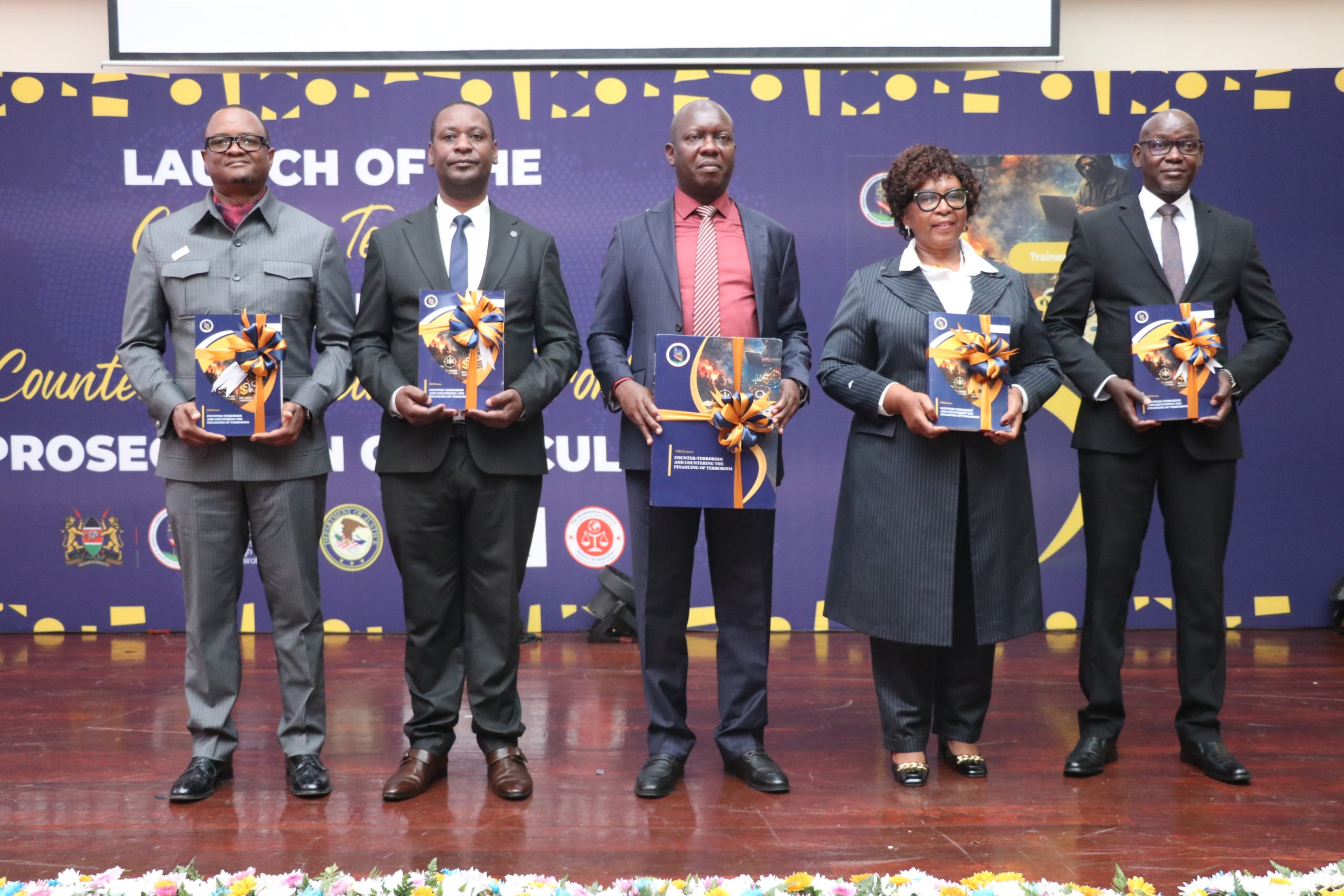
Kenya has introduced a specialised Counter-Terrorism and Countering the Financing of Terrorism (CT/CFT) prosecution curriculum aimed at improving how terrorism and terror-financing cases are handled, both domestically and across sub-Saharan Africa.
Speaking at the launch on Monday, Director of Public Prosecutions Renson Ingonga described the programme as a significant advancement for Kenya’s justice sector and a practical step toward reinforcing accountability in complex security cases.
He noted that the curriculum draws from lessons learned in high-profile counter-terrorism prosecutions, integrating real case experience into structured training designed to sharpen prosecutorial strategy and courtroom effectiveness.
The training framework also addresses evolving security threats, including the use of cryptocurrency in terror financing, management of digital evidence, transnational organised crime networks, and mechanisms for mutual legal assistance in cross-border investigations.
Officials said the initiative is expected to enhance prosecutorial capacity across the continent by equipping legal practitioners with the tools required to manage increasingly sophisticated terrorism-related cases.
Kenya’s Chief Justice, Martha Koome, underscored the urgency of strengthening Africa’s justice systems to respond effectively to transnational crimes, stressing that terrorism must be met with firm and consistent legal action.
She described the curriculum as a demonstration of commitment to professional standards, legal precision, and ethical responsibility in the prosecution of serious security offences.
The programme was developed with support from international partners, including the United Kingdom and the United States, with the goal of providing prosecutors with advanced investigative and litigation skills to dismantle extremist networks and disrupt their financial structures.
Beyond technical instruction, the curriculum incorporates trauma-aware approaches to assist prosecutors who handle distressing material, while also reinforcing victim-sensitive practices to ensure that justice processes remain both rigorous and humane.
Authorities further highlighted the importance of strengthened inter-agency cooperation and cross-border collaboration, acknowledging that terrorism and its financing operate beyond national frontiers and require coordinated regional responses.



No Comments
Join the DiscussionBe the first to join the discussion!