
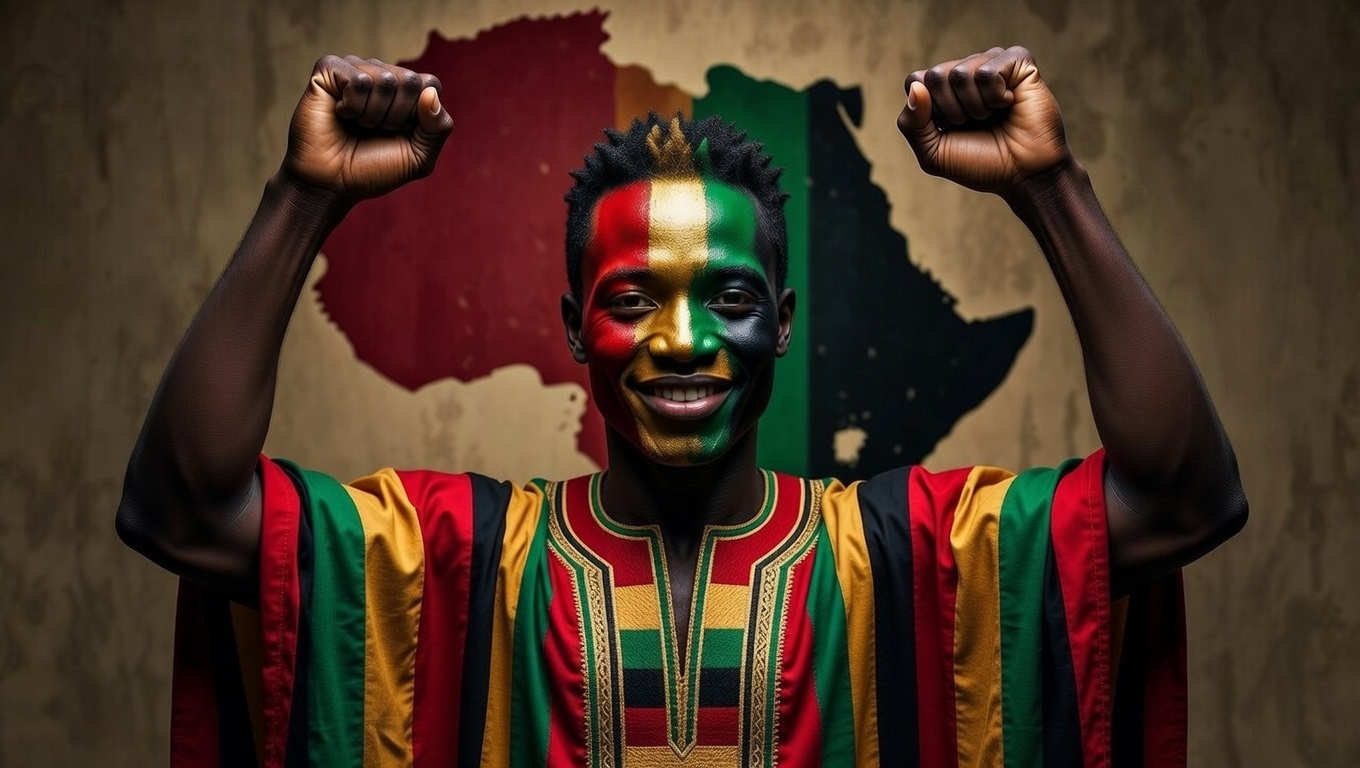
“Pan-Africanism seeks to redeem African people from the legacies of slavery, colonialism, and systemic racism.” – Mr. Kemesseng Sanneh
Africa’s history has been shaped by profound disruption. The continent’s long quest to recover from the scars of slavery and colonialism has been neither simple nor linear. As it continues to carve its own path, the question remains: what framework can truly restore dignity, unity, and self-determination?
In this article, we examine Pan-Africanism as a path and concept for redressing slavery and colonialism. According to anti-corruption activist Mr Kemesseng Sanneh, in a firm assessment of Pan-Africanism, he states:
“Pan-Africanism aims to strengthen bonds between indigenous Africans and people of African descent. It seeks to redeem African people from the legacies of slavery, colonialism, and systemic racism.”
These ideals are not new. Pan-Africanist thought began circulating in the mid-19th century in the United States, championed by African American intellectuals such as Martin Delany and Alexander Crummell. These early advocates sought to lay the groundwork for unity among people of African descent, rooted in shared identity and collective resistance to global oppression.
Over time, Pan-Africanism evolved into more than an oppositional ideology. It became a strategic and necessary movement through which Africans asserted a common identity, reclaimed a sense of selfhood, and confronted the structures of domination imposed by slavery and colonial rule.
What is Pan-Africanism?
The concept of Pan-Africanism is larger than any one individual. It is a mindset and an ideology that should be central to our daily lives as Africans. At its core, Pan-Africanism calls for the total acceptance of who we are as a people and a refusal to be defined as anything less.
It serves as a constant reminder; not only of the sacrifices made by those who came before us but also of the responsibility placed on the present generation to honour those struggles by shaping the future we desire. Pan-Africanism demands accountability to history while insisting on agency in the present.
More than a historical idea, Pan-Africanism is a declaration of resistance; a collective insistence that oppression, in all its forms, must be confronted and rejected. From the fight against slavery and colonial rule to ongoing struggles in contemporary times, it remains a call towards absolute liberation.
In his submission, Mr Sanneh elaborates on the pioneers of Pan-Africanism as it spread across Africa and evolved into a powerful political force. He explains how influential figures such as Kwame Nkrumah, Marcus Garvey, W. E. B. Du Bois, Jomo Kenyatta, and George Padmore, among others, called for the total liberation of Africa and its people from colonial domination. Their ideas laid the ideological foundation for independence movements across the continent.
This reflection brings us to one of the most defining moments in Pan-African history; a moment that marked a shift from a largely diaspora-led movement to a continent-focused struggle for unity and self-determination. In 1945, the Pan-African vision took concrete political form in a way that would permanently alter Africa’s trajectory.
Advancing the Pan-African Agenda: The Manchester Congress of 1945
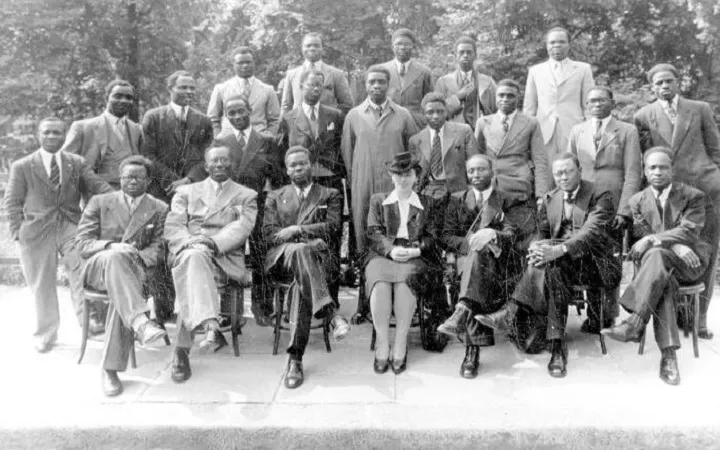
In October 1945, delegates from Africa and the African diaspora gathered at a town hall in Manchester, England, for a historic meeting that would redefine the Pan-African movement. Among those in attendance were future African presidents, including Kwame Nkrumah of Ghana, Jomo Kenyatta of Kenya, and Hastings Banda of Malawi, alongside feminist and human rights activist Amy Ashwood Garvey and Trinidadian intellectual George Padmore.
The gathering marked a decisive moment in Pan-African history, as the movement shifted from intellectual advocacy to organised political action against colonial rule. Manchester, then a centre of labour activism and anti-imperialist thought, provided a strategic setting for voices demanding self-determination and independence.
Initially called the “Fifth Pan-African Congress”, the meeting took place between 15 and 21 October 1945 and is widely regarded as a turning point in Africa’s liberation struggle. Many of its participants would later lead newly independent states, translating Pan-African ideals into political reality. In this sense, the Manchester Congress did more than advance an agenda; it positioned Pan-Africanism as a practical pathway towards redressing the historical injustices of slavery and colonialism.
The aftermath of this congress sparked a wave of declarations of independence across multiple African countries. It shifted the Pan-African movement from activism to concrete action, moving away from requests for colonial reform and towards demands for immediate independence.
Organization of African Unity (1963): Institutionalising the Pan-African Vision
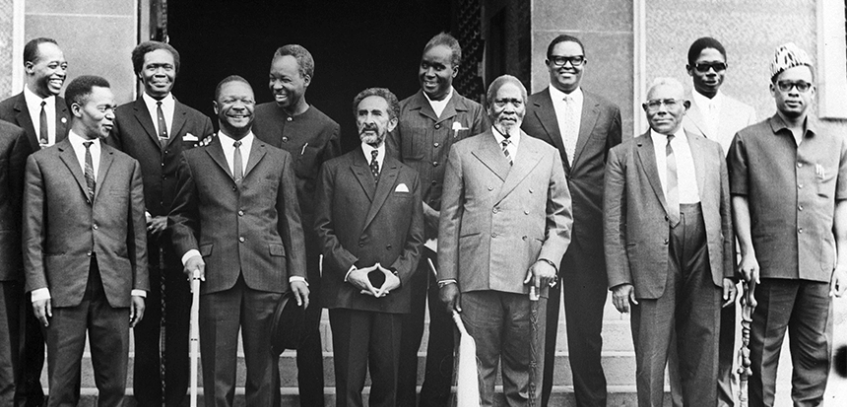
The establishment of the Organization of African Unity (OAU) in 1963 became necessary to institutionalise Pan-African ideals, promoting unity, solidarity, and a stronger stance against colonialism. It was the continent’s way of pooling the strengths of the 32 independent African countries that became members, fostering economic and political cooperation. The aim was simple: a unified organisation for a peaceful, integrated, and prosperous continent.
As Mr Sanneh asserts,
“One notable achievement registered under Pan-Africanism was the creation of the Organization of African Unity (OAU), now called the African Union (AU).”
The OAU became a unified voice to address the aftermath of colonialism and protect the interests of individual states, with its charter emphasising the sovereign equality of member states, non-interference in internal affairs, respect for territorial integrity, and peaceful settlement of disputes. This framework allowed member states to reclaim agency, rebuild what was lost during colonialism and apartheid, and reposition the continent towards self-determination.
However, 63 years later, questions remain about whether the African Union has fully lived up to its founding ideals. While the AU has achieved notable successes, such as asserting itself in global institutions and establishing initiatives like the African Continental Free Trade Area (AfCFTA), it faces criticism for weak policy implementation, rising security conflicts, and limited enforcement of democratic norms. Can we then say that the AU today truly reflects the ideals and struggles of Pan-Africanism?
The Significance of Ghana’s Independence in the Pan-African Movement
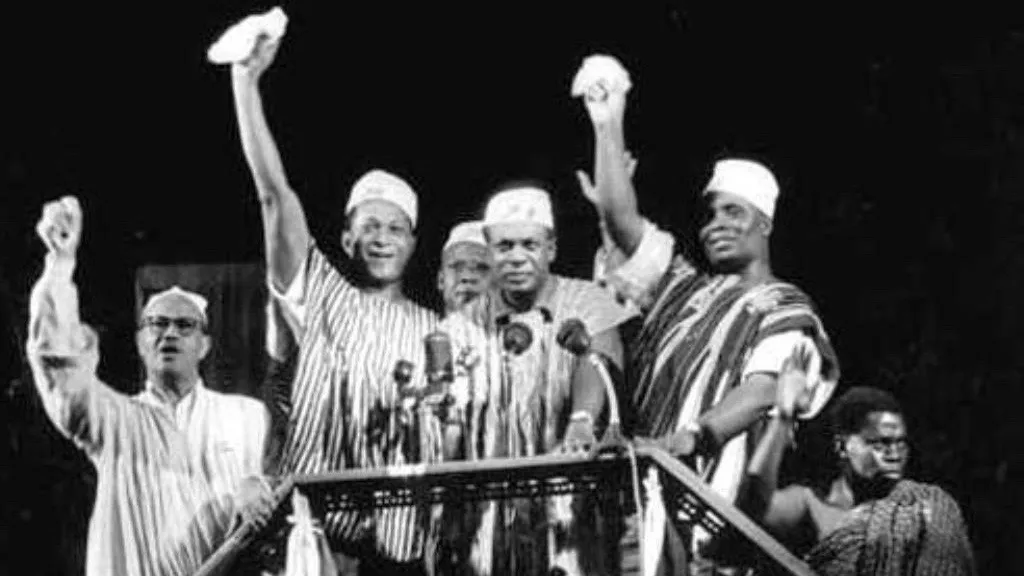
Going back to the aftermath of the Manchester Congress of 1945, one of the most significant outcomes was the wave of independence declarations across several African nations.
Ghana’s independence in 1957 was a major momentum-shifter for Africa. It demonstrated that the continent’s journey to independence was a long and complex process, shaped by centuries of colonial domination and foreign interference. While several African nations achieved forms of independence before the 1950s, these early milestones were often limited in practice. Egypt, for example, gained formal independence from Britain in 1922, but the British retained control over its military, foreign policy, and the strategic Suez Canal. Similarly, Liberia, which declared independence in 1847, remained heavily influenced by the United States, with political and economic oversight constraining its sovereignty.
Against this backdrop, Ghana’s independence in 1957 stands out as a transformative moment in African history. Under the leadership of Kwame Nkrumah, Ghana became the first sub-Saharan African country to achieve full sovereignty from European colonial rule. Unlike Egypt or Liberia, Ghana controlled its government, economy, and foreign relations, making its independence truly self-determined. Beyond its national significance, Ghana’s liberation inspired independence movements across the continent, providing a concrete example that colonial powers could be challenged successfully.
Ghana’s independence also represented a broader shift in the Pan-African movement. Whereas early Pan-African activism often focused on advocacy and calls for reform, Ghana’s achievement illustrated the possibility of translating ideology into action. This momentum culminated in the “Year of Africa” in 1960, when 17 nations gained independence, including Nigeria, Senegal, and the Democratic Republic of Congo. The wave of liberation continued over subsequent decades, with Angola and Mozambique in 1975, Namibia in 1990, and South Sudan in 2011. Each milestone reinforced Pan-African ideals of freedom, unity, and self-determination.
While countries like Egypt and Liberia laid important historical groundwork, it was Ghana’s fully realised independence that sparked a continental movement. Its liberation demonstrated the power of African agency, inspired generations of leaders and activists, and transformed Pan-Africanism from a set of ideas into a practical struggle for freedom and unity across the continent.
The Battle of Adwa: National Flags as a Bold Symbol of Pan-Africanism
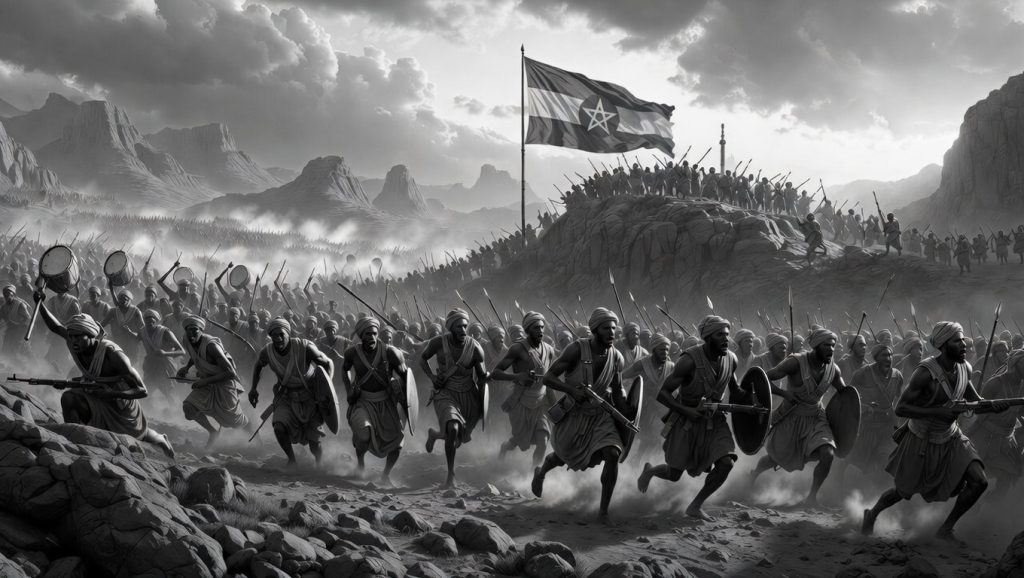
Green, yellow, black, and red are not just colours on our national flags; they carry the very essence of the Pan-African agenda. These colours were carefully chosen to reflect the spirit, identity, and unity of the African continent.
Many African flags, particularly those featuring green, yellow (or gold), and red, were inspired by the flag of Ethiopia. Ethiopia became a symbol of independence and sovereignty after successfully resisting Italian colonisation.
On 1 March 1896, Ethiopian forces led by Emperor Menelik II and Empress Taytu Betul decisively defeated an Italian invading army at the Battle of Adwa, securing Ethiopia’s sovereignty during Europe’s “Scramble for Africa.” This remarkable victory made Ethiopia the only African nation to successfully resist European colonisation at the time, becoming a powerful symbol of Pan-African pride.
Later, during the Second Italo-Ethiopian War (1935 – 1936), Ethiopia faced a second invasion by Italy. While the Italians temporarily occupied the capital, Emperor Haile Selassie continued to resist, and with international support – including from the British – Ethiopia eventually regained its independence.
Through these historic events, Ethiopia emerged as a beacon of freedom and resilience, inspiring many newly independent African nations in the mid-20th century to adopt its colours as a symbol of solidarity, resistance, and shared Pan-African identity.
These flags became not just national symbols but emblems of a continental ideology, a daily reminder that Africa’s past struggles against slavery, colonialism, and oppression were interconnected, and that the fight for dignity and self-determination continues.
Today, whenever one looks at the flags of Ghana, Senegal, Guinea, or several other African nations, the spirit of Adwa lives on – a bold declaration that Pan-African ideals are embedded not just in politics and ideology but in the very symbols that fly over our nations.
Conclusion
Pan-Africanism is not as complex as it is often portrayed. Admittedly, it faces contemporary challenges, particularly regarding its acceptance by the younger generation; sometimes referred to as the ‘woke generation’. This is why it is crucial for every African to understand their history. We need a wave of people who love the continent enough to embrace what truly defines them.
Beyond understanding, there must be collective action. Pan-Africanism is not a passive concept; it requires active participation in shaping the continent’s present and future. Every individual, community, and nation has a role to play in creating a continent that serves the interests of its people.
This means translating the Pan-African agenda into practical solutions for contemporary challenges: strengthening regional cooperation, asserting economic independence, defending cultural heritage, and upholding democratic principles. Only by embracing these responsibilities can Africans ensure that the continent no longer remains at the mercy of external powers, but instead charts its own destiny.



No Comments
Join the DiscussionBe the first to join the discussion!