
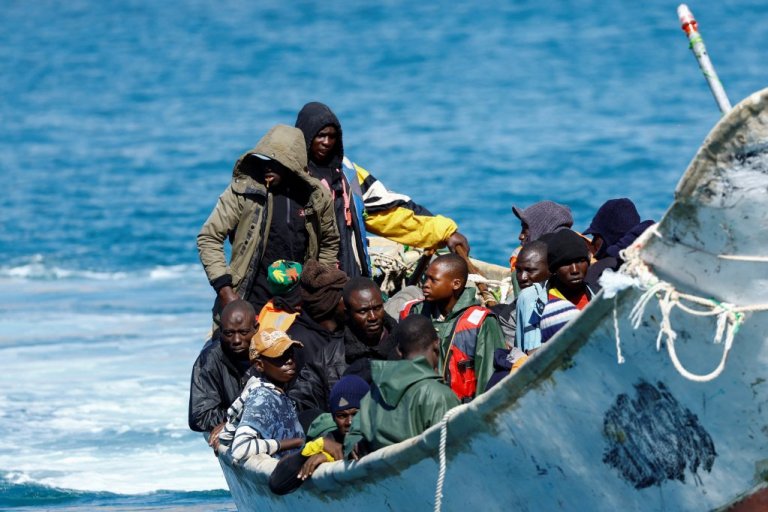
The Gambia’s Foreign Affairs Minister, Sering Modou Njie, has presented a statistical report on irregular migration from the country to Europe, covering the period from February 2017 to January 2026.
Speaking before Parliament, Minister Njie referenced data from the Gambia Immigration Department, the International Organization for Migration (IOM), and Frontex, which provided a clear overview of trends and developments in migration patterns.
The data revealed that over 33,000 Gambians reportedly reached Europe irregularly between 2015 and 2020. A sharp increase was observed between January 2025 and January 2026, particularly in the fourth quarter, when irregular migration routes experienced heightened pressure.
According to Minister Njie, nationwide interception operations intensified in 2025, with 77 operations resulting in 2,297 migrants being intercepted. The profile of those intercepted showed 1,939 males, 358 females, 146 minors, and 21 pregnant women.
“This confirms that migration remains predominantly male, and the increasing number of women and children raises serious protection concerns,” he said.
In January 2026 alone, eight interceptions were recorded, with 781 migrants received at the Tangier Reception Facilities.
Minister Njie reported that approximately 6,173 Gambians reached Europe irregularly in 2025. Tragically, 893 reportedly lost their lives, over 1,254 remained missing, and 46 boats disappeared without a trace.
He noted that The Gambia serves both as a country of origin and a transit point, with Senegalese and Guinean nationals making up a significant proportion of those intercepted alongside Gambians.
The Minister acknowledged the difficulty in compiling comprehensive migration data due to the clandestine nature of the activity and fragmented reporting across jurisdictions, but emphasized that available data provides a clear overview of trends and developments.
On government response, Minister Njie said irregular migration remains one of the country’s most pressing challenges. The government has adopted a comprehensive, coordinated, multi-sectoral strategy to address both immediate risks and underlying causes.
This includes intensified surveillance, coastal patrols, nationwide interception operations, strengthened border management, and collaboration with national institutions and international partners.



No Comments
Join the DiscussionBe the first to join the discussion!