
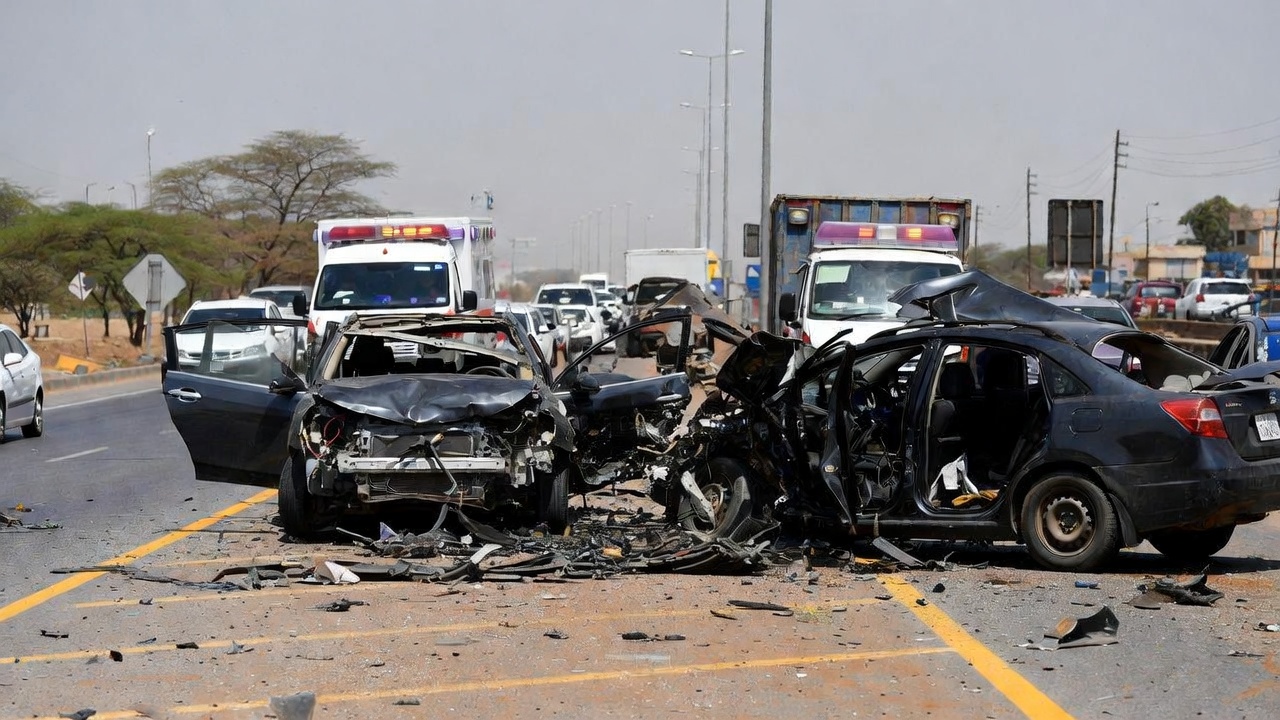
According to the World Health Organization, about 1.25 million people die annually from road traffic crashes, making road traffic injuries the leading cause of death among those aged 15-29. In Africa, this amounts to an estimated 225,000 people.
On major highways, death does not always occur at the moment of impact. In these crucial moments, survival often depends not on the severity of injuries but on delays -or the complete absence – of emergency medical care.
Too often, the injured are assisted out of wreckages by bystanders who naturally assume the position of first responders. Some survive the initial crash only to die from excessive blood loss, shock, or internal complications that emergency first aid might have slowed down or prevented.
A notable example of this was the accident involving Nigerian-born boxer Anthony Joshua, which occurred along the Lagos-Sagamu Expressway in South-West Nigeria. This incident drew global attention due to the graphic wreckage and tragic loss of lives, yet in that critical moment, trained paramedics were nowhere to be found.
Footage of the boxer circulated widely online, capturing the confusion that followed the crash. Surrounded by bystanders, Joshua was helped out of the wreckage by police officers and rushed to a Lagos hospital. His companions, Sina Ghami and Abdulateef Ayodele, lost their lives in the accident and were transported to a morgue in a Federal Road Safety vehicle.
But the question remained: where were the paramedics?
Before examining the broader impact on the African continent, let us digress to a controversial incident that occurred in Nigeria in late January, which once again brought the country’s response to medical emergencies under scrutiny.
CONTROVERSIAL ANTI-SNAKE VENOM SHORTAGES IN NIGERIA RAISE QUESTIONS ON EMERGENCY PREPAREDNESS
In late January, Nigeria’s handling of a medical crisis came under intense scrutiny following the tragic death of rising music star Ifunanya Nwangene, whose life was cut short after a snakebite.
The controversy surrounding her death centred on the reported lack of anti-venom in multiple medical centres, despite Nigeria being among the countries with the highest incidence of snakebites worldwide. Access to life-saving treatment remains limited in many health facilities, particularly outside major cities.
Polyvalent anti-snake venom – the standard therapy designed to neutralise venom from multiple species – now costs between ₦180,000 and ₦250,000 (approximately $128-$130) per vial as of February 2026, amid soaring demand and persistent supply shortages.
Nwangene, a Nigerian singer and former contestant on The Voice Nigeria, was bitten by a cobra at her home. She was reportedly taken to a nearby clinic that lacked anti-snake venom before being transferred to the Federal Medical Centre (FMC), Jabi, in Nigeria’s capital, Abuja.
Conflicting accounts later emerged regarding the availability of anti-snake venom at FMC Jabi. While her family alleged it was unavailable, hospital management stated that emergency care was promptly administered, including resuscitation, oxygen therapy, intravenous fluids, and polyvalent anti-venom.
Her death prompted lawmakers to call for urgent reforms to improve access to life-saving medicines in emergency situations, including anti-venom, adrenaline, insulin, and antibiotics. Data from the National Bureau of Statistics indicate that Nigeria records approximately 2.4 million deaths annually, with nearly 50% considered “avoidable” if an effective emergency medical services system were in place.
EMERGENCY MEDICAL SERVICES FUNDING AND COVERAGE IN NIGERIA
A major factor contributing to underdeveloped emergency medical services is inadequate funding. Emergency care requires substantial investment in ambulances, medical equipment, communication systems, and trained personnel.
In Nigeria, these services are primarily funded by the federal government through the National Emergency Medical Services and Ambulance System (NEMSAS), which utilises the Basic Health Care Provision Fund (BHCPF) to cover the first 48 hours of emergency care.
Currently active in 30 states, NEMSAS offers 24/7 emergency response through the 112 toll-free number, focusing on reducing maternal mortality and providing critical care for patients without health insurance.
This tragic incident highlights the critical gaps in emergency medical response in Nigeria. While it involved a snakebite at home, similar deficiencies are evident on the country’s roads, where every second counts.
Road accidents, like other medical emergencies, demand rapid and effective intervention. They are not confined to highways, yet the frequency and severity of crashes underscore the importance of well-equipped and timely emergency medical services.
Indeed, road collisions have caused greater loss of life and property than many major communicable diseases combined. Studies show that most crashes arise from three main factors: human error, mechanical failure, and environmental conditions.
I. HUMAN ERROR
Human errors account for about 90 per cent of road accidents, with approximately 80 per cent of these linked to driver behaviour.
- Overconfidence
Some motorists are overly confident in their driving skills, overlooking the possibility of sudden mechanical failures such as tyre blowouts or brake failure.
- Speeding
At 100 km/h, a vehicle travels about 28 metres per second. This means that losing control for just one second could carry the vehicle well beyond the average road width of approximately 12 metres. Oncoming or overtaken vehicles may behave unpredictably, swerving, stopping abruptly, or maneuvering around potholes.
- Distractions
Distractions behind the wheel can be deadly. Talking, texting, eating, or even changing the radio can take a driver’s focus off the road. A sudden stop ahead or a pedestrian darting across the street can leave a distracted driver powerless to avoid a crash.
- Fatigue
Some commercial drivers work extended hours each day, with shifts sometimes exceeding 12 hours. Driving immediately after a heavy meal can also be risky, as increased blood flow to the stomach during digestion may lead to drowsiness.
- Driving While Intoxicated
Alcohol significantly reduces a driver’s ability to control a vehicle, impairing judgment, coordination, and reaction time. Drunk driving is a major cause of crashes worldwide. Many countries enforce strict laws and conduct alcohol tests to identify drivers who are unfit to operate vehicles safely.
- Indiscriminate Parking
Drivers of broken-down vehicles sometimes fail to place proper warning signs or reflective triangles to alert approaching motorists, increasing the risk of collisions. Furthermore, objects placed on the road to divert traffic during repairs are sometimes left behind, creating additional hazards for other vehicles.
- Reckless Overtaking Manoeuvres
Careless overtaking, driven by impatience or poor assessment of road conditions – particularly in low visibility – significantly increases the likelihood of head-on and side-impact collisions.
- Pedestrians
When pedestrians disregard traffic rules, they put themselves at high risk of collisions, which can result in severe injuries or fatalities.
II. MECHANICAL FAILURE
Neglecting routine vehicle maintenance can result in breakdowns or the development of mechanical faults that compromise control, especially at high speeds. Factors contributing to this include:
Mechanical Failures
- Overheated engines
- Brake failure
- Poor steering mechanism
- Tyre bursts
- Faulty wheel balancing and alignment
Safety Equipment & Accessories Faults
- Faulty wipers
- Defective lighting systems
- Defective horns
- Absence of rearview mirrors
- Absence of reflective triangles
- Lack of functional seatbelts
Hazardous Substances & Emissions
- Spilled engine oil leading to road hazards
- Leaking fuel that may cause fire outbreaks
- Exhaust fumes causing temporary road blindness
- Electrical faults
III. ENVIRONMENTAL CONDITIONS
Although poor road conditions are often blamed for accidents, newly constructed roads also record higher crash rates, largely due to increased travel speeds and drivers’ unfamiliarity with the route. Key environmental factors include:
- Improperly placed or missing road signs
- Potholes and uneven surfaces
- Poor road design (narrow, dusty, or winding roads)
- Heavy rainfall
- Harmattan haze reducing visibility
- Absence of road markings
- Collapsed or poorly maintained bridges
- Fallen trees or other obstructions
- River overflow or flash floods
According to the World Health Organization, about 1.25 million people die annually from road traffic crashes, making road traffic injuries the leading cause of death among those aged 15–29. In Africa, this amounts to an estimated 225,000 people.
ROAD CRASH STATISTICS IN AFRICA
West Africa
There are approximately 1,000 registered ambulances in Nigeria. With an estimated population of 230 million, this ratio falls to 0.4 ambulances per 100,000 people. Nigeria’s Federal Road Safety Corps (FRSC) recorded 7,715 road traffic crashes between January and September 2025, resulting in 3,915 deaths and 24,674 injuries.
In Ghana, 9,626 road traffic crashes were reported between January and August 2025, involving 16,348 vehicles. These incidents resulted in 1,937 fatalities and 10,957 injuries.
East Africa
Kenya’s National Transport and Safety Authority (NTSA) recorded 3,890 road traffic fatalities. In 2024, more than 5,144 deaths were reported on Uganda’s roads, while Tanzania recorded 1,715 road accident deaths during the same period.
Southern Africa
South Africa recorded 9,674 crashes resulting in 11,418 fatalities in 2025, according to the Ministry of Transport. With an estimated 4,000 ambulances serving a population of about 60 million, that amounts to roughly one ambulance for every 15,500 citizens.
In Namibia, the National Road Safety Authority (NRSA) recorded 2,793 road crashes between January and November 2025. These crashes resulted in 488 fatalities and 4,565 injuries. The country operates approximately 120 ambulances serving a population of over 2.6 million people – roughly one ambulance for every 21,000 citizens.
EMERGENCY CARE IN HOSPITALS
Emergency medical care does not end with paramedics; it extends to hospital personnel, who need formal training in trauma management. Ineffective communication between first responders and hospitals can leave emergency departments unprepared, compromising patient care.
Many hospitals and clinics in Nigeria still face shortages in critical resources such as oxygen, stable electricity, and emergency medications.
ADVANCEMENTS IN EMERGENCY MEDICAL SERVICES IN AFRICA
While gaps in emergency response persist in many African countries, there have been notable strides in others to strengthen their emergency medical systems. From better-trained personnel to rapid deployment capabilities, these advancements aim to reduce preventable deaths from road accidents, disasters, and other medical emergencies. Highlighting these efforts demonstrates that with strategic investment, coordination, and innovation, the continent can significantly improve outcomes for its citizens during critical moments.
SENEGAL
In 2024, Senegal became the first African country to receive World Health Organization (WHO) certification for developing the capacity of its Emergency Medical Team (EMT) to deploy and respond to global health crises. This historic milestone significantly strengthened Africa’s emergency response capabilities.
The certification enables Senegal’s EMT to deploy to emergencies worldwide within 72 hours of activation and establish a 30-bed hospital capable of providing medical and surgical care for up to 2,500 patients per month. Senegal’s team is now the 49th certified EMT globally, with 130 others still in the process of certification.
Senegal’s medical team has demonstrated a strong operational track record, which includes:
i. Support during the Ebola outbreak in the Democratic Republic of Congo (DRC) in 2018.
ii. Deployment within 72 hours of a fatal petrol tanker explosion in Freetown, Sierra Leone, providing specialised burn care in 2021.
iii. Support for regional responses in Guinea and other West African countries, with capabilities to manage infectious disease outbreaks and trauma cases.
ETHIOPIA
Building on the foundation of the National Disaster Medical Assistance Team launched in 2018, Ethiopia has strengthened its emergency response system, making it more efficient, coordinated, and better prepared for complex emergencies.
In April 2021, Ethiopia partnered with the WHO to establish Africa’s first Emergency Medical Team Training Centre. Based in a repurposed COVID-19 field hospital in Addis Ababa, it delivers simulation-based training on real-time emergencies, command systems, and cross-functional coordination.
Using a “train-the-trainer” model, Ethiopia supports the development of national emergency teams across Africa capable of collaborating effectively during regional crises.
Ethiopia’s Emergency Medical Team (EMT) has participated in major crises, including:
i. The Tigray conflict (2020–2022)
ii. The COVID-19 pandemic (2020)
iii. The mass displacement in the Amhara region, where over 560,000 internally displaced persons (IDPs) required urgent shelter and assistance as of early 2025.
RECOMMENDATIONS TO ENHANCE THE EFFECTIVENESS OF EMERGENCY MEDICAL SERVICES (EMS)
- Ambulance dispatch systems should be linked directly to hospitals to prepare trauma teams before patients arrive.
- National recruitment of volunteers to be trained as community-based first responders, paramedics, drivers, dispatch operators, and technical support personnel.
- Public awareness is critical to effective implementation, as many citizens are unfamiliar with national toll-free short codes (112 in Nigeria), while others remain sceptical of their reliability.
- Basic first aid should be incorporated into the curriculum of both public and private schools.
- Emergency care should be included in National Health Insurance Schemes to ensure coverage for emergency transportation, surgery, and medication.
- Ambulances should be strategically stationed at regular intervals along major highways, supported by trained responders and well-equipped trauma centres.
PAN-AFRICAN PERSPECTIVE
HOW CAN AFRICAN NATIONS COLLABORATE TO ADVANCE EMERGENCY MEDICAL SERVICES?
Road traffic injuries and other medical emergencies are not confined by borders, and the challenges faced by one nation often mirror those across the continent. To build a more resilient and effective emergency response system, African countries must strengthen regional collaboration and partnerships.
Key strategies include:
- Shared Training and Certification Programmes: Establish continental standards for emergency medical teams and offer joint training exercises to ensure cross-border interoperability.
- Regional Resource Sharing: Pool equipment, ambulances, and specialised personnel to support countries facing acute emergencies, particularly in under-resourced areas.
- Data Collection and Research Collaboration: Develop integrated platforms for tracking accident statistics, response times, and outcomes to inform evidence-based policy across Africa.
- Harmonised Policies and Protocols: Standardise emergency care protocols, dispatch systems, and public awareness campaigns to ensure consistency across borders.
- Cross-Border Rapid Response Mechanisms: Create joint task forces capable of deploying swiftly during large-scale disasters or epidemics that affect multiple countries.
By prioritising partnerships, knowledge sharing, and coordinated planning, African nations can collectively reduce preventable deaths, improve trauma care, and strengthen public health resilience. A Pan-African approach ensures that the continent is not only responding to emergencies more effectively but also preparing for future challenges together.
CONCLUSION
The consequences of underdeveloped emergency medical services are severe, resulting in higher mortality rates, increased disability, overcrowded hospitals, and added strain on already struggling healthcare systems.
Hospitals remain central to effective emergency medical care, but their performance depends on sufficient funding, competent staff, dependable infrastructure, and efficient pre-hospital coordination. Without strengthening hospital capacity, preventable deaths and poor emergency outcomes will persist.
Poor road infrastructure and inadequate enforcement of traffic laws also contribute to this. Safeguarding lives on the roads requires a collective commitment not just from governments and healthcare providers but also from citizens, who must enforce and abide by road safety regulations.
This means respecting speed limits, avoiding reckless driving, using seatbelts and helmets, and refraining from driving under the influence of intoxicants. Recognising that road safety is a shared responsibility encourages people to become active participants rather than passive observers.



No Comments
Join the DiscussionBe the first to join the discussion!