

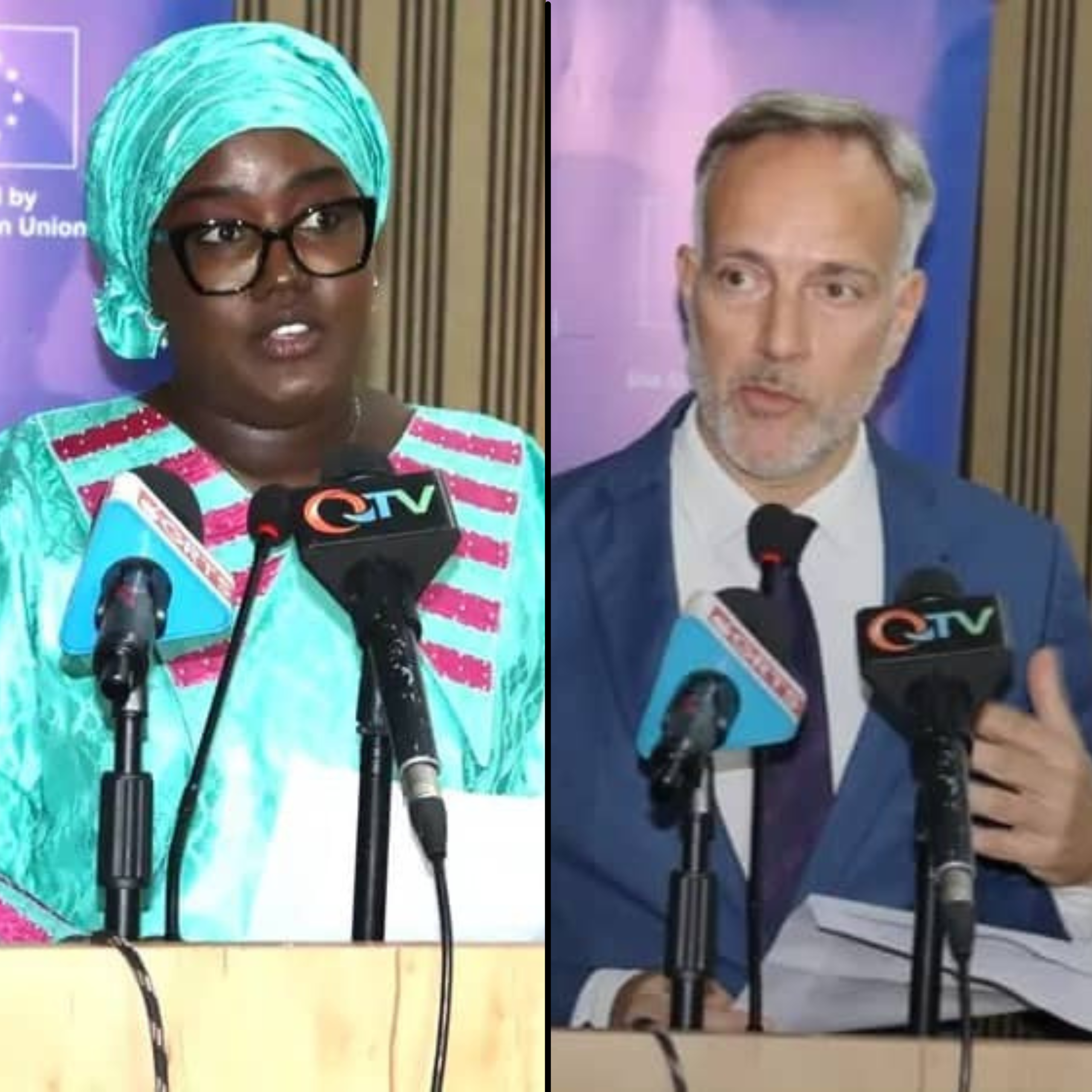
The International Institute for Democracy and Electoral Assistance (International IDEA) has engaged the Gender Committee of the Gambian Parliament on a bill that seeks to increase the representation of women and persons with disabilities (PWDs) in the National Assembly.
The bill, developed and introduced by the committee was jointly reviewed by stakeholders during a three-day consultative meeting held from 21 to 23 January 2026.
Speaking during the engagement, the Head of the IDEA office in The Gambia, Madam Jainaba Fye, described the consultation as a significant step towards strengthening inclusive governance. She explained that the bill proposes the creation of 14 reserved seats for women and two seats for persons with disabilities, describing it as a crucial move towards a more representative and inclusive democratic system.
Madam Fye also highlighted the outcomes of the National Conference on Women’s Political Participation and Representation held in December 2025, noting that the bill aligns with calls from the conference to address the persistent underrepresentation of women in political institutions. She urged the adoption of concrete measures to make the country’s democratic system more responsive, innovative, and resilient.
EU Deputy Head of Mission, Raphael Brigandi, described the proposed constitutional amendment as bold and visionary, noting that it directly confronts the reality of women’s marginal presence in the National Assembly. He added that the bill seeks to correct existing democratic imbalances and introduces legal mechanisms to compel political parties to comply with gender quota requirements.
The Speaker of the Gambian Parliament, Hon. Fabakary Tombong Jatta, also welcomed the proposal, acknowledging that The Gambia’s political system has long been characterised by significant gender disparities in representation. He noted that women make up half of the country’s population and play a vital role in sustaining communities and the national economy.
Currently, The Gambia ranks among the lowest globally in women’s parliamentary representation, with women occupying only 8.6 per cent of the 58 seats in the National Assembly, despite comprising more than half of the population.
By Bakary Touray Jr.



No Comments
Join the DiscussionBe the first to join the discussion!