

Members of the National Assembly’s Public Finance Committee (PEC) have raised concerns over the absence of a formal dividend policy at The Gambia Ports Authority (GPA) after the state-owned enterprise disclosed that it paid out hundreds of millions of dalasi to the government in recent years.
During deliberations on the follow-up performance audit of cargo handling operations at the Port of Banjul, GPA management confirmed that dividend payments were made based on board decisions and industry practice rather than a codified national framework.
Officials told lawmakers that the authority paid D170 million as dividend for 2023 and has already paid an interim dividend of D100 million for 2024.
The disclosure prompted questions from committee members, who asked why payments of such magnitude were not guided by a clearly established policy approved by the government and aligned with existing laws.
Auditors had earlier flagged the issue, noting that the continued declaration of dividends without a formal structure could weaken transparency and consistency in public financial management.
Responding to the concerns, the Managing Director explained that in the absence of a written policy, the board relied on an industry benchmark of distributing 25 per cent of net profit.
“In the absence of a formal dividend policy, the board used standard practice,” he told members.
However, lawmakers insisted that decisions involving public funds should not depend solely on discretion and called for the urgent development of a clear dividend framework to guide future payments.
They urged the authority to work closely with its line ministry and the Ministry of Finance to establish rules that determine how profits are calculated, declared and transferred to the government.
Beyond the dividend issue, GPA officials outlined steps taken to strengthen internal oversight, including the creation of a Monitoring and Evaluation unit, quarterly performance reviews and key performance indicators under a formal performance contract with the government.
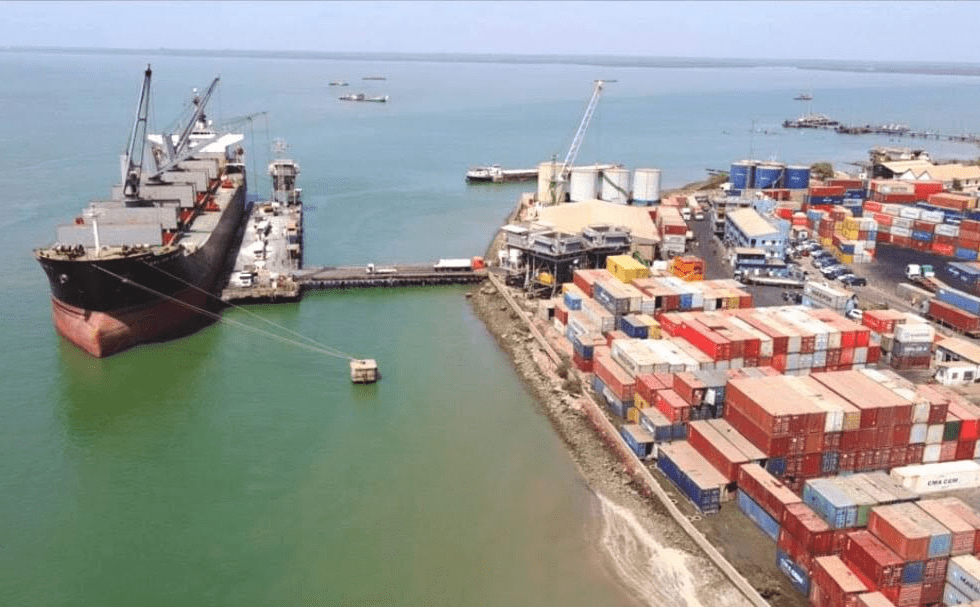
The Port of Banjul remains the country’s main gateway for imports and exports, making the authority one of the most strategic state-owned enterprises.
For legislators, the message was clear: stronger governance and defined policies must accompany the port’s growing revenues to safeguard public resources and ensure accountability.
Kebba AF Touray



No Comments
Join the DiscussionBe the first to join the discussion!