

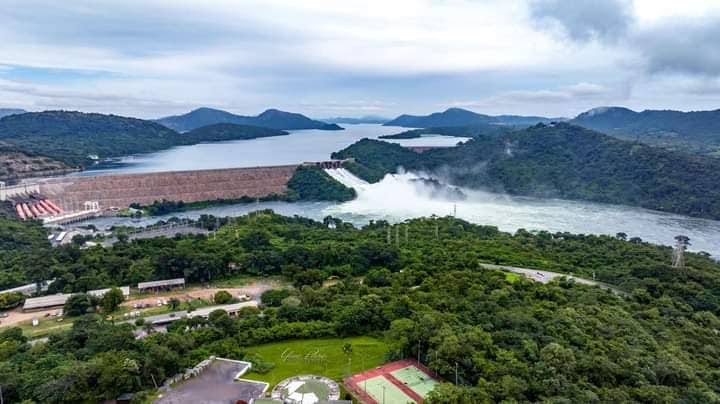
The Acacia and the Daggers
Imagine a single, magnificent acacia tree, its roots running deep into the ancient African soil, providing the only patch of shade in a vast, scorching desert. Beneath its sprawling canopy sit three brothers. For centuries, this tree has been their sanctuary, keeping them alive when the world around them was parched, offering its leaves to their livestock, and its shelter to their families. But as the heat of the midday sun intensifies and water becomes scarce, the brothers draw their daggers. They begin to argue over who owns the roots, who claims the branches, and who has the absolute, historical right to drink the morning dew from its leaves.
In their blind, defensive fury, they stop looking at each other as kin and begin to see each other as existential threats. Driven by fear, they raise their axes and start hacking away at the trunk, each trying to carve out his sovereign piece of the tree. The wood splinters, the deep roots groan, and the tree crashes violently to the earth. It crushes all three brothers beneath its massive weight, leaving their children to perish in the merciless, unshaded sun.
This is the terrifying reality facing Egypt, Ethiopia, and Sudan as geopolitical tensions simmer over the Grand Ethiopian Renaissance Dam (GERD) and the shared waters of the Nile River Basin. A kinetic conflict over the Nile would not merely be a war of borders or a standard military engagement; it would be a regional suicide pact. It would poison the ancient waters with the wordless tragedy of brother fighting brother, displace tens of millions of innocent families into a spiral of permanent displacement, destroy critical infrastructure from Addis Ababa to Cairo, and turn the world’s longest river into a vast, flowing cemetery. When the life-giver is transformed into a graveyard, no one wins.
The river does not take sides; it simply flows. If it is forced to run red, the civilizations built along its banks will wash away with it. As the timeless Sudanese proverb wisely warns: “If a river is cutting a path through the forest, it does not mean the trees are fighting; it means they must learn to bend together.”
The Myth of Ownership vs. The Wisdom of the Elders
For well over a decade, the discourse surrounding the Nile has been trapped in a toxic matrix of blame, legal gridlock, and rigid, uncompromising nationalism. Each nation has retreated into its own historical bunker, weaponizing its grievances. Egypt points to its historic water security, relying on the Nile for 95% of its total fresh water needs. To Cairo, any unilateral fluctuation in the river’s flow is not a political disagreement; it is an absolute threat to the survival of over 100 million people.
On the upper reaches of the river, Ethiopia points to its sovereign right to development, seeking to lift 65 million of its citizens out of darkness and energy poverty through the clean hydroelectric power generated by the GERD. Sudan, caught in the geographic and political middle, oscillates between fear of dam failures and hope for regulated flood control and cheap electricity.
Yet, point-of-finger diplomacy yields nothing but bitter wind and empty riverbeds. When we look closely at the rhetoric of absolute ownership, we see a fragile house built on shifting sands. The Egyptian proverb reminds us: “A house built on water will wash away.” If the foundations of our regional agreements are built only on fear, unilateral decisions, and old grievances, they will inevitably collapse under the compounding pressures of climate change, population growth, and ecological decay.
THE ZERO-SUM HYDRO-MATRIX
THE DOWNSTREAM IMPERATIVE
- Egypt: 95% reliance on Nile water
- Absolute fear of flow reduction
- Demands rigid, historic guarantees
VS
THE UPSTREAM IMPERATIVE
- Ethiopia: 60M+ without electricity
- Sovereign right to utilize rainfall
- Rejection of colonial arrangements
We must stop asking who owns the Nile, and instead ask how we can collectively serve the Nile. The river does not belong to the mapmakers, the politicians, or the military generals; it belongs to the generations yet unborn. To move forward, we must let go of colonial-era absolute positions that treat water as a zero-sum game where one brother’s drink is another brother’s dehydration. The Ethiopian proverb cuts directly to the heart of this necessary compromise: “When two wise men disagree, they build a bridge; when two fools disagree, they break the path.”
The Colonial Contamination of African Hydrology
To fully understand the scholarly gravity of this dispute, one must examine the legal contamination introduced by European imperialism. The current crisis is not an organic African disagreement; it is the lingering ghost of British hydro-hegemony. The legal architecture that Egypt historically cites relies on two main pillars: the 1929 Anglo-Egyptian Treaty and the 1959 Nile Waters Treaty.
The 1929 agreement, brokered by Great Britain on behalf of its East African colonies, allocated 48 billion cubic meters of water annually to Egypt and granted Cairo an absolute veto over any upstream construction projects. The 1959 treaty, signed exclusively between Egypt and Sudan, increased Egypt’s share to 55.5 billion cubic meters and Sudan’s to 18.5 billion cubic meters.
THE COLONIAL WATER ALLOCATION MONOPOLY
| Nation | Allocation | Share |
|---|---|---|
| Egypt | 55.5 bcm | 75% |
| Sudan | 18.5 bcm | 25% |
| Ethiopia (source of 85% of the water) | 0 bcm | 0% |
The fatal flaw of this framework is glaring: Ethiopia, which contributes roughly 85% of the Nile’s flow via the Blue Nile, was completely excluded from both treaties.
From a modern legal perspective, these treaties violate the foundational principles of international water law, specifically the doctrine of equitable and reasonable utilization and the no-harm rule codified in the 1997 UN Convention on the Law of the Non-Navigational Uses of International Watercourses. By maintaining that these colonial-era monopolies are permanent, downstream nations inadvertently validate the very chains that once bound the continent. International law cannot be used as a shield to perpetuate historical injustice.
The Blind Eyes of International Arbiters
While this catastrophe looms, the highly funded international bodies that claim to champion global security and human rights remain unconscionably indifferent. The United Nations Security Council, the World Bank, and other global institutions treat this profound African crisis with bureaucratic apathy. They offer empty press releases, generic calls for restraint, and circular legal debates rather than active, heavy-lifting diplomatic intervention. They view the Horn of Africa through a lens of perpetual crisis management rather than preventative peace-building, acting only after the blood has run into the soil and the refugee camps are already overflowing.
This systemic inaction by international arbiters is not accidental; it is a symptom of a global architecture that values status quo stability over genuine, equitable justice. When the world’s so-called guardians act adamant, Africa must remember its own strength and look inward for salvation. We cannot wait for foreign empires or Western superpowers to save us from a fire they originally helped kindle through colonial-era divisions, arbitrary legal treaties, and fragmented maps. Another Sudanese proverb reminds us: “The teeth can chew the bone only when the jaw stays united.” Africa must become its own mediator, unlocking its internal diplomatic genius to settle its own house before outsiders dismantle it completely.
The African Precedent: The Triumphs of the Senegal and Zambezi Rivers
Those who argue that resource scarcity must inevitably lead to war are blind to the deep, historical reservoirs of African diplomacy. We have solved these riddles before, proving that the African continent possesses deep-rooted structures of cooperative excellence. We do not need to look to Western legal frameworks or European treaties for guidance; our own soil holds the blueprints for peace.
In the 1970s, during a period of catastrophic West African droughts, Senegal, Mali, Mauritania, and Guinea found themselves on the verge of a brutal, resource-driven conflict over the waters of the Senegal River. The river was drying up, crops were failing, and national populations were desperate. Instead of deploying troops to their borders or engaging in destructive proxy wars, the leadership of these nations chose the path of dialogue. They did something revolutionary for their time: they created the Senegal River Basin Organization (OMVS).
THE OMVS TRANSBOUNDARY BLUEPRINT
1. INTERNATIONAL RIVER STATUS
The river belongs equally to all states.
2. JOINT INFRASTRUCTURE
Dams are owned collectively, regardless of map.
3. COST-BENEFIT HARMONY
Financial inputs match economic extraction.
They formally declared the Senegal River an “International River,” introducing a system of joint infrastructure ownership. Under this framework, a major asset like the Manantali Dam—though physically located entirely inside the borders of Mali—is jointly owned, managed, and financed by Mali, Senegal, and Mauritania. Costs and benefits are shared based precisely on how much economic value each nation extracts from the river, and no single nation has the right to alter the river’s flow without the unanimous consent of the others.
Similarly, in Southern Africa, nations along the Zambezi River bypassed potential water wars by establishing the Zambezi Watercourse Commission (ZAMCOM), turning a highly contested transboundary river into a corridor of shared economic development. If our brothers in the West and South could trade their weapons for water-sharing treaties during times of immense ecological stress, the brilliant minds of East Africa and the Nile Delta can surely do the same today.
Pragmatic Blueprints for Regional Unity
To transform the Nile from an imminent flashpoint into a permanent fountain of peace, Egypt, Ethiopia, and Sudan must move past the paradigm of “feeling and fighting.” They must implement concrete, highly actionable, and cooperative strategies that shift the regional relationship from competition to absolute economic codependency.
1. The “Water-for-Energy” Barter Treaty
Instead of viewing water volumes as a static, zero-sum equation, the nations of the Nile must leverage their distinct, complementary economic strengths. Ethiopia possesses the unique, mountainous geography required to produce massive amounts of incredibly cheap, clean hydroelectric power. Egypt, on the other hand, boasts world-class infrastructure in digital technology, heavy manufacturing, natural gas, and project management.
A binding, long-term trade pact should be signed where Ethiopia guarantees a steady, predictable downstream water flow to protect Egypt’s agricultural security. In return, Egypt would provide Ethiopia with heavily discounted manufactured goods, fertilizer, and technical grid synchronization support to distribute its new power across East Africa. By linking Ethiopia’s electricity generation directly to Egypt’s industrial supply chains, both nations are locked into a relationship of mutual economic survival. If one falls, both fall; therefore, both must protect each other.
2. An Interconnected “Virtual Water” Market
Egypt is a fundamentally water-scarce nation that spends enormous, unsustainable amounts of its limited Nile allocation attempting to grow highly thirsty crops like wheat and alfalfa in reclaimed desert lands. Conversely, Ethiopia enjoys abundant, reliable rainfall and fertile, underutilized highlands. Through a pan-African “virtual water” framework, Egypt can lease agricultural land in Ethiopia, using Ethiopia’s natural rain to grow its strategic food reserves, which are then shipped directly down to Cairo.
This strategy saves Egypt billions of cubic meters of Nile water that would otherwise evaporate in desert irrigation, while simultaneously pumping billions of Egyptian investment dollars directly into the infrastructure of the rural Ethiopian economy. The water stays in the basin, the food enters the market, and wealth is shared equitably.
3. A Joint Nile Basin Sovereign Wealth Fund
Fear in the Nile Basin is often fueled by economic vulnerability to the unpredictable cycles of climate change. Droughts are inevitable, but catastrophe is optional. By pooling their financial resources, Egypt, Ethiopia, and Sudan can establish a joint sovereign wealth fund—backed by a small tariff on Nile-generated electricity and augmented by international climate finance.
This fund would be used exclusively to finance climate-resilient engineering projects across all three borders. It would fund the installation of modern drip irrigation systems in the Nile Delta, upgrade water treatment and purification plants in Sudan, and finance massive, cross-border reforestation programs in the Ethiopian highlands to prevent soil erosion from clogging downstream reservoirs.
THE TRI-NATIONAL ENGINEERING COMMAND
| Pillar | What it means |
|---|---|
| Real-Time Hydrological Sharing | No secrets, no sudden unilateral operations |
| Shared Control Rooms | Joint operations at GERD & Aswan Dam |
| Demilitarized River Management | Technical science over politics |
4. A Tri-National Engineering Command
Fear thrives in secrecy and unilateralism. To permanently eliminate the terrifying political specter of “water blocking,” “reservoir withholding,” or “dam sabotage,” the day-to-day operational mechanics of the river must be completely demilitarized and unified. A permanent, joint team of Egyptian, Sudanese, and Ethiopian engineers, hydrologists, and environmental scientists must be stationed inside the control rooms of both the GERD in Ethiopia and the Aswan High Dam in Egypt.
When engineers from all three countries sit at the exact same desks, view the same real-time hydrological data, and turn the water valves together based on scientific reality rather than political grandstanding, manipulation becomes impossible. Trust is not built on political handshakes; it is built on shared data and collective operational control.
The Legal Framework: Embracing the Cooperative Framework Agreement (CFA)
For an agreement to endure scholastic scrutiny and satisfy the legal demands of all nations, it must be anchored in a robust multilateral framework. The Nile Basin Initiative (NBI) spent decades developing the Cooperative Framework Agreement (CFA), also known as the Entebbe Agreement. The CFA seeks to replace the obsolete colonial-era treaties with a modern, inclusive commission that manages the river based on principles of fair allocation, sustainability, and mutual benefit.
THE CORE PILLARS OF MODERN COOPERATION
EQUITABLE & REASONABLE UTILIZATION
Allocates water based on geography, population, and economic options, ending historical structural exclusion.
PREVENTION OF SIGNIFICANT HARM
Upstream developments must actively mitigate downstream ecological and domestic disruptions.
Historically, downstream nations resisted the CFA, fearing it would dilute their acquired water rights. However, entering into this multilateral agreement offers the safest path forward. By transitioning the CFA from a source of diplomatic division into a functional legal platform, the basin states can establish an institutional arbiter that depoliticizes future technical adjustments.
The Path Forward: Necessary Compromises
A genuine consensus cannot be reached without mutual, courageous concessions. For this Pan-African vision to work, all sides must step away from their historical absolute positions and recognize that sovereignty is not diminished by cooperation, but amplified by it.
- Ethiopia’s Historic Compromise: Addis Ababa must accept a legally binding treaty under international law regarding the long-term, multi-year operation of the dam, rather than relying on non-binding, flexible guidelines. Furthermore, Ethiopia must commit to a strict, clear drought-mitigation protocol. This protocol must guarantee minimum water releases to its downstream neighbors during multi-year droughts, even if doing so temporarily slows its own domestic power generation. True hydro-leadership requires protecting those downstream when nature fails.
- Egypt and Sudan’s Historic Compromise: Cairo and Khartoum must formally, legally recognize that colonial-era water treaties—specifically the 1929 Anglo-Egyptian Treaty and the 1959 Nile Waters Treaty, which completely excluded upstream nations—are obsolete relics of a divided past. They must respect Ethiopia’s sovereign right to develop its natural resources and actively adapt the operations of their own downstream infrastructure to coordinate dynamically with the GERD’s seasonal patterns.
Furthermore, any future Ethiopian dam projects on the Blue Nile—such as the proposed Kadobi, Mandaya, and Beco Abo sites—must be managed peacefully through the mechanisms of the CFA. By ensuring that all future upstream projects focus strictly on “non-consumptive” hydroelectric power—where water merely passes through turbines to generate energy and flows immediately back into the river system—and are subjected to joint, transparent environmental impact assessments, future friction can be avoided entirely.
Conclusion: One River, One Destiny
The Nile River is not a blue line drawn on a map to divide us; it is the great, flowing artery that connects our collective African hearts. We are all children of the same African mother, nourished by the same ancient waters. When the family home is threatened by fire, brothers do not stand around arguing over who owns the bucket or who fetched the water; they grab the bucket together and extinguish the flames.
Consider a final, simple analogy: A single, isolated thread is easily snapped by the slightest gust of wind. It has no structural integrity, no resilience, and no power to withstand a storm. But when thousands of individual threads are spun, twisted, and woven tightly together, they form a magnificent fabric—a tapestry strong enough to withstand the fiercest gales and beautiful enough to be passed down through the ages.
Egypt, Ethiopia, and Sudan are those individual threads. Woven together through economic integration, scientific transparency, and pan-African love, they form an unbreakable tapestry of continental prosperity, setting a standard for the entire global South. Broken apart by narrow nationalism and foreign proxy interference, they will become nothing but rags torn and scattered by the winds of war.
Let us close our ears to the drums of war and open our hearts to the quiet wisdom of our ancestors. We must remember the beautiful, universal African proverb that rings across our villages from the Mediterranean coast to the highlands of East Africa: “If you want to go fast, go alone. If you want to go far, go together.” Let the Nile flow in peace, let the lights come on in every village, and let unity reign supreme from the source to the sea.



No Comments
Join the DiscussionBe the first to join the discussion!