

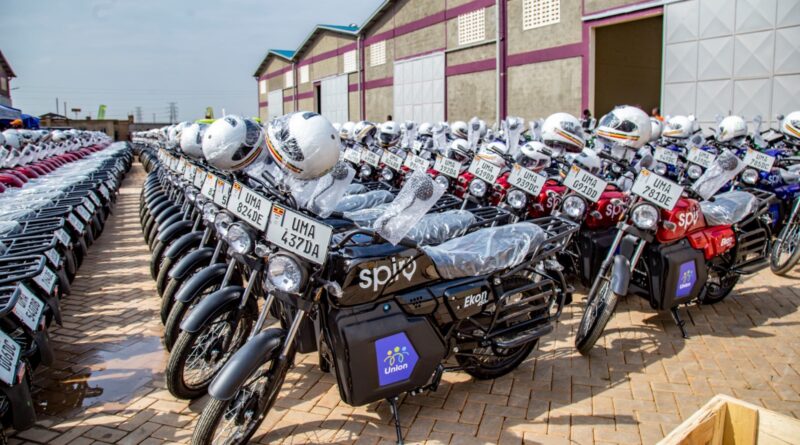
Kampala City authorities and motorcycle leaders, locally known as boda-boda, have unveiled an ambitious plan to deploy 50,000 electric motorcycles across Greater Kampala by June 2026, marking one of Uganda’s most aggressive moves yet toward phasing out petrol-powered bikes.
The initiative, launched under the “Zuukuka – Make the Smart Move” campaign, brings together the Kampala Capital City Authority (KCCA), the Uganda Boda-Boda Riders Co-operative Union, and electric mobility firm Spiro.
State Minister for Kampala Metropolitan Affairs, Kabuye Kyofatogabye, said the transition is urgent, citing mounting emissions from the more than 200,000 petrol-powered boda-bodas operating in the capital.
“With over 200,000 petrol-powered boda-bodas on our streets, each emitting approximately 5.7kg of carbon dioxide daily, we are choking our own city,” the minister said, warning that Kampala frequently falls short of air quality standards set by the World Health Organization.
Officials project that full implementation could cut Kampala’s pollution levels by up to 15%, reduce respiratory-related deaths by nearly 20%, and eliminate up to 200,000 metric tonnes of carbon dioxide emissions annually.
The shift is also expected to cut noise pollution and remove tailpipe emissions, a major contributor to deteriorating urban air quality.
Union leaders say the programme has been structured to lower entry barriers for riders. According to union business adviser Fred Ssennoga, a prospective rider requires an initial 120,000 Uganda Shillings commitment and recommendations from three union members to access an electric motorcycle.
Within one year of operation, the union says it has already distributed 12,000 electric motorcycles under a pilot phase, facilitated benchmarking visits abroad, and is planning a housing scheme for members.
The rollout aligns with the Government’s 2030 target to transition public transport to electric mobility under the National Resistance Movement administration.
As Kampala accelerates toward its 2030 phaseout target, the success of the transition will depend on infrastructure readiness, regulatory enforcement, rider adoption, and sustained private sector investment.



No Comments
Join the DiscussionBe the first to join the discussion!