

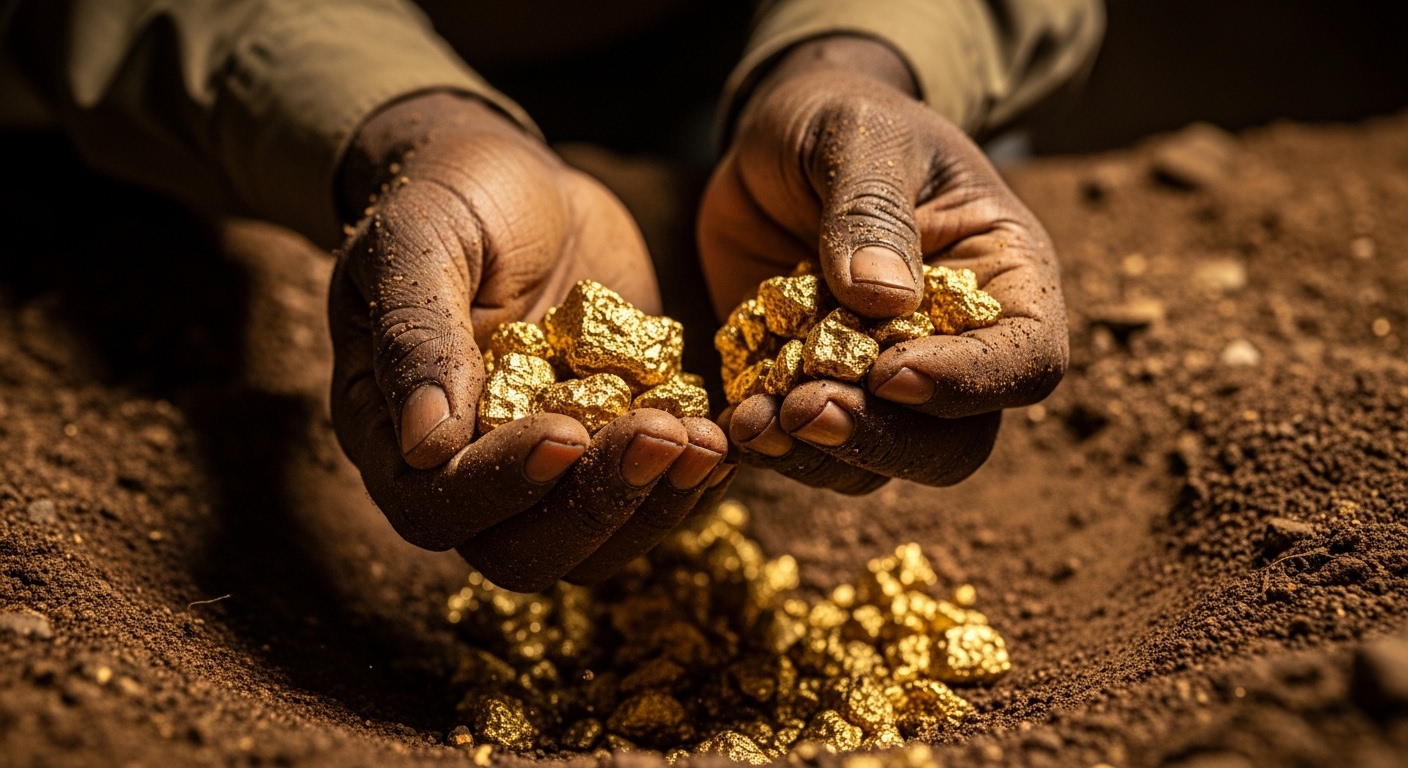
Despite its resource abundance, many African countries – particularly in the Sahel – continue to struggle with poverty, weak infrastructure, and fragile institutions.
Introduction
Across the vast Sahel region, beneath landscapes often associated with drought and insecurity, lies one of the world’s most significant mineral reserves. Gold, uranium, lithium, and other valuable resources have turned the region into a strategic frontier for global mining and energy markets.
At a time when the global economy is accelerating its transition toward clean energy and critical minerals, Africa has become central to the future supply of these resources. The continent holds nearly 30 percent of the world’s mineral reserves essential for decarbonization, including more than half of global cobalt reserves and most of the world’s platinum, according to Statista.
Despite its resource abundance, many African countries – particularly in the Sahel – continue to struggle with poverty, weak infrastructure, and fragile institutions. Without structural reforms, analysts warn that the mining boom risks repeating the continent’s long-standing “resource curse,” where exports grow while local development stagnates.
The Sahel Emerges as a Major Gold Producer
Gold has become the economic backbone of several Sahelian economies. Countries such as Mali, Burkina Faso, and Niger are increasingly influential in the global gold market.
Together, the three countries produced over 120 tonnes of gold in 2023, making the Sahel one of Africa’s most dynamic mining zones.
In Mali, gold is the country’s most important export commodity and a major contributor to public finances. The sector accounts for a significant share of national revenue and employment, supporting hundreds of thousands of livelihoods directly and indirectly.
Large industrial projects such as the Loulo-Gounkoto Gold Complex have helped position Mali among Africa’s leading gold producers, while major sites in Burkina Faso – including the Essakane Mine – continue to expand production.
Niger, traditionally dependent on uranium exports, is also exploring gold deposits as part of efforts to diversify its economy.
Despite this rapid growth, much of the gold extracted in the region leaves Africa with minimal processing, limiting the local economic benefits.
The Extractive Model: Wealth Without Transformation
For decades, the mining sector in the Sahel has largely followed a traditional extractive model: raw materials are mined and exported abroad for processing and refinement.
This approach generates export revenues but captures only a small portion of the value chain. Once minerals leave the region, the economic benefits – including refining, manufacturing, and high-value services – are realized elsewhere.
Experts argue that local processing could dramatically increase economic returns. Refining gold or other minerals domestically would create skilled jobs, strengthen industrial capacity, and increase tax revenues.
However, the lack of refining facilities, limited industrial infrastructure, and inconsistent regulatory frameworks continue to hinder these ambitions.
Security Risks and the Rise of “Conflict Gold”
Mining operations in the Sahel also operate within a complex security environment. Parts of the region face persistent threats from armed groups and organized criminal networks.
Artisanal gold mining – while providing income for millions of people – has in some areas become linked to illicit activities. Armed groups have reportedly targeted mining zones or taxed informal miners to finance their operations.
The spread of unregulated mining sites has created additional challenges. Governments often struggle to control remote areas where thousands of informal miners work outside official oversight.
This situation has raised concerns that gold extracted from these sites could enter international supply chains through smuggling networks spanning West Africa and the Middle East.
Environmental and Social Consequences
Beyond security concerns, the environmental impact of gold mining is becoming increasingly visible across the Sahel.
Artisanal mining frequently relies on hazardous chemicals such as mercury and cyanide to extract gold from ore. These substances contaminate soil and water sources, posing long-term health risks for nearby communities.
Large-scale industrial mining also contributes to land degradation, deforestation, and biodiversity loss. Open-pit mines can transform landscapes and disrupt traditional livelihoods such as farming and pastoralism.
Social challenges are also widespread. Child labour, unsafe working conditions, and fatal accidents have been reported at poorly regulated mining sites.
Balancing economic growth with environmental protection remains one of the sector’s most pressing challenges.
Governance and the Struggle for Fair Revenues
Another major issue facing Sahelian governments is ensuring that mining wealth translates into meaningful public revenue.
Many multinational mining companies operating in the region benefit from tax incentives designed to attract foreign investment. While these policies have helped develop the sector, critics argue that they often limit the share of profits retained by host countries.
Profit shifting, tax exemptions, and opaque contracts have fueled public debates over whether mining companies are paying their fair share.
In response, several governments are reviewing their mining codes and seeking to renegotiate contracts to increase national participation and promote local content, including the use of domestic suppliers and workforce development.
Initiatives such as the Extractive Industries Transparency Initiative aim to improve transparency in revenue flows, though implementation remains uneven.
Toward Greater Mining Sovereignty
In recent years, Sahelian states have increasingly emphasized resource sovereignty and regional cooperation.
Some governments are pushing for local gold refining, while regional frameworks such as the Economic Community of West African States (ECOWAS) and the African Continental Free Trade Area could facilitate the development of regional value chains.
Closer cooperation between neighboring countries could prevent harmful competition, where governments lower taxes or regulations to attract mining investors.
By harmonizing policies, Sahelian states may gain greater negotiating power with global mining companies.
A Pan-African Pact for Resource Sovereignty and Shared Prosperity
Africa possesses one of the largest concentrations of natural resources in the world, yet the continent continues to capture only a small fraction of the wealth generated from them.
Some of these resources are globally dominant. According to the International Institute for Democracy and Electoral Assistance (IDEA), Africa accounts for around 73% of global cobalt production, largely from the Democratic Republic of Congo. The continent also produces more than 65% of the world’s manganese and about 43% of global diamonds.
Similarly, industry analysis published by Mining Technology indicates that Africa contains nearly 80% of the world’s platinum group metal reserves and more than 60% of global chromium reserves, underscoring the continent’s strategic importance in global industrial supply chains.
Despite this extraordinary resource base, Africa largely exports raw or semi-processed minerals, leaving the higher-value refining, manufacturing, and technological industries to countries outside the continent. According to the Brookings Institution, the growing global demand for critical minerals used in electric vehicles, renewable energy infrastructure, and advanced technologies is rapidly increasing Africa’s geopolitical importance.
Without coordinated continental action, the continent risks repeating a long-standing pattern in which resource wealth fuels industrial growth elsewhere while African economies capture only marginal benefits.
Transforming Mineral Wealth into Continental Power
Gold and other strategic minerals present Africa – and particularly the Sahel – with a historic opportunity to transform natural wealth into long-term prosperity.
Achieving this goal requires more than national reforms; it demands a coordinated continental strategy capable of strengthening Africa’s bargaining power and safeguarding its resources.
First, African countries must deepen regional collaboration to prevent destructive competition for foreign investment. When nations lower tax rates or weaken regulations to attract mining companies, they collectively lose leverage. By harmonizing mining codes and fiscal policies through regional bodies such as the African Union, SADC, ECOWAS, and other sub-regional blocs, African states could negotiate from a position of strength and ensure fairer contracts.
Second, the continent must prioritize the development of regional mineral processing and refining industries. Instead of exporting raw gold and other minerals, African nations could jointly establish refining hubs and industrial corridors under frameworks such as the African Continental Free Trade Area. This would allow countries to capture more value from their resources while creating skilled employment and strengthening intra-African trade.
Third, greater cooperation is needed to combat illicit mineral flows and smuggling networks that drain billions of dollars from African economies each year. Cross-border intelligence sharing, coordinated customs controls, and digital traceability systems could help ensure that mineral exports are properly documented and taxed.
Finally, African governments must place communities and environmental protection at the center of mining policies. A shared continental framework for responsible mining – aligned with the Africa Mining Vision – could ensure that mineral exploitation contributes to sustainable development rather than ecological damage and social instability.
Ultimately, the future of Africa’s mineral wealth will depend on whether the continent can move beyond fragmented national approaches toward a unified strategy. Through solidarity, stronger institutions, and strategic cooperation, Africa has the opportunity to transform its vast geological resources into a foundation for economic sovereignty and shared prosperity.
Conclusion: Turning Resources Into Development
The Sahel’s gold sector is more than a source of revenue; it is a potential catalyst for structural transformation. Beyond immediate profits, it could support industrial development, strengthen regional value chains, and foster local entrepreneurship. Realizing this potential will demand a shift from extractive models toward approaches that integrate social priorities, environmental stewardship, and community engagement.
Success will depend not only on government policies but also on partnerships that prioritize long-term sustainability over short-term gain. Transparent frameworks, innovative financing, and regional coordination can help ensure that mining contributes to resilient economies rather than deepening existing inequalities.
In this sense, the true measure of progress will be whether gold mining becomes a foundation for shared prosperity, innovation, and stability across the Sahel, rather than merely a conduit for external capital. If managed effectively, gold could help finance infrastructure, education, and economic diversification. But without stronger regulation, regional cooperation, and transparent governance, the region risks seeing its resources continue to flow outward while local populations reap only limited benefits.
The future of the Sahel’s mining sector will ultimately depend on whether governments, companies, and international partners can align economic interests with social and environmental responsibility.



No Comments
Join the DiscussionBe the first to join the discussion!