MONROVIA – There are moments in the history of a nation when a single event becomes bigger than the individuals at the center of it.
The arrest and imprisonment of former Liberian Vice President Jewel Howard-Taylor is one of those moments.
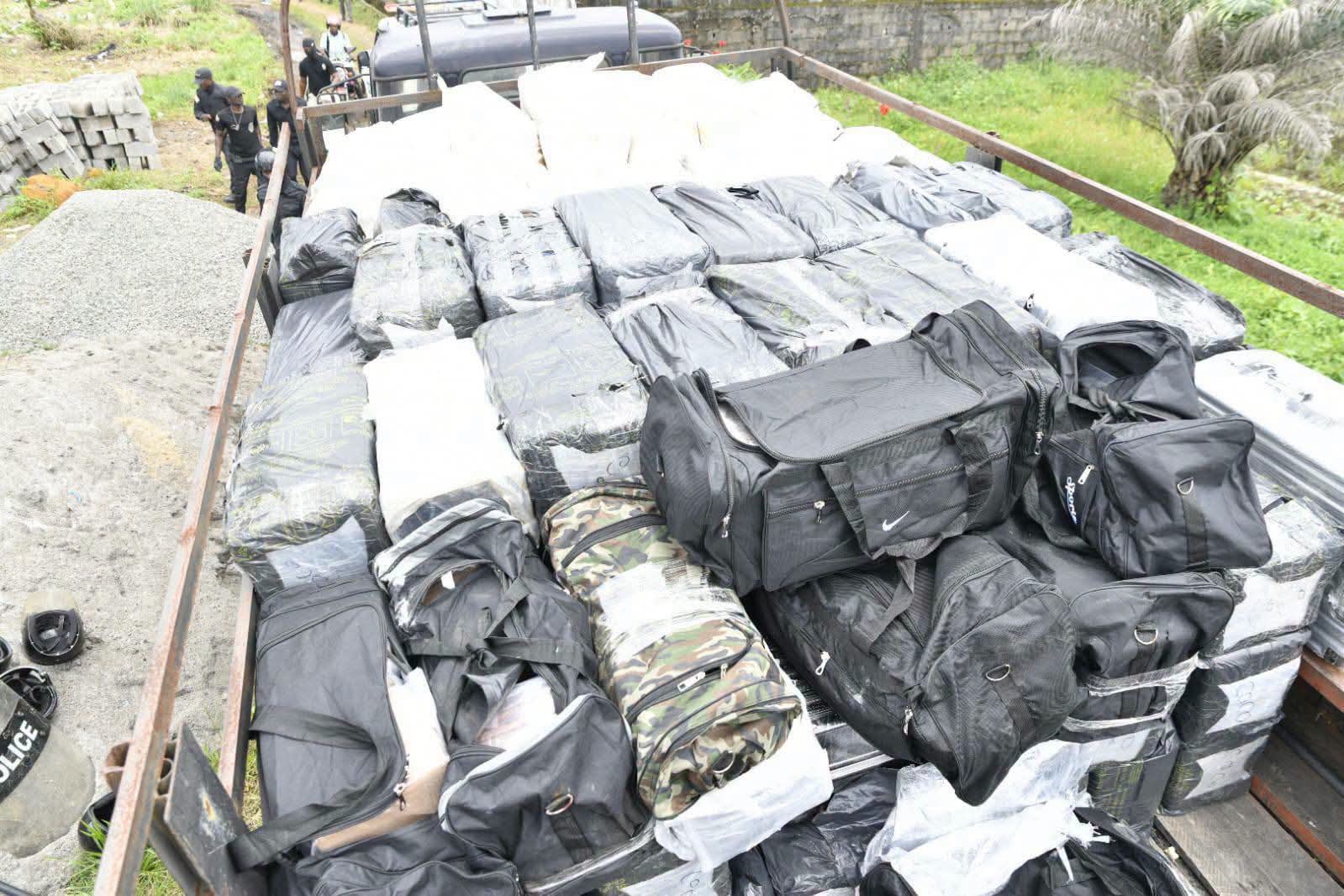
A woman who once occupied one of the highest political offices in the Republic of Liberia now sits behind prison walls, facing serious allegations arising from an investigation into an alleged international narcotics network connected to a cocaine seizure valued by authorities at approximately US$317 million.
For Liberia, this is not simply another criminal case. It is a test of the country’s democracy. It is a test of its justice system. It is a test of political accountability.
The former Liberia Vice President was arrested at Roberts International Airport on August 19 and later remanded to Monrovia Central Prison. She faces charges including drug trafficking, money laundering, criminal conspiracy and criminal facilitation. She has denied wrongdoing, and the allegations remain allegations until tested in court.
US$317 MILLION: FOLLOW THE MONEY
Liberia is reportedly dealing with one of the largest drug seizures in its history.
Approximately four metric tons of cocaine were seized, with authorities putting the value at roughly US$317 million.
The question should not end with:
“Who was arrested?”
The real question is:
“Who built the network?”
A shipment of that magnitude does not simply appear in a country. Someone finances it. Someone transports it. Someone receives it. Someone protects it. Someone makes phone calls. Someone provides information. And someone benefits.
This is why Liberia must resist the temptation to make Jewel Howard-Taylor the beginning and the end of this investigation.
She may be a suspect, but she cannot be the whole story.
If a sophisticated international narcotics network operated through Liberia, then Liberians deserve to know how deeply it penetrated the country’s political, business, security and financial institutions.
Follow the money. Follow the connections. Follow the evidence. And wherever that evidence leads, let the law follow.
THE TAYLOR NAME: LIBERIA’S UNFINISHED HISTORY
The irony of Howard-Taylor’s current predicament cannot be separated entirely from Liberia’s painful political history.
She was once married to Charles McArthur Ghankay Taylor, Liberia’s former president.
Charles Taylor’s political journey began amid the chaos of Liberia’s civil war and ultimately carried him into the Executive Mansion, making his presidency deeply controversial.
The conflict in Liberia devastated communities, displaced hundreds of thousands of people and left a generation scarred by violence.
Taylor was later convicted by the Special Court for Sierra Leone on 11 counts relating to war crimes and crimes against humanity and sentenced to 50 years in prison.
He became the first former African head of state to be convicted by an international court since the Nuremberg trials.
That history remains part of Liberia’s national memory.
CHUCKIE TAYLOR: ANOTHER DARK CHAPTER
Then there is Charles “Chuckie” Taylor Jr., Charles Taylor’s son.
Chuckie became commander of Liberia’s Anti-Terrorist Unit during his father’s presidency.
He was later prosecuted in the United States for torture committed in Liberia.
In 2009, he was sentenced to 97 years in prison after being convicted of torture-related offenses.
His case remains one of the most disturbing reminders of the brutality associated with Liberia’s wartime political era.
So when Jewel Howard-Taylor’s name appears today in an international narcotics investigation, many Liberians inevitably see a familiar family name resurfacing in another chapter of the country’s troubled history.
But history should inform us, not prejudge us.
A surname is not evidence, family connection is not a conviction, and the courtroom must determine guilt.
THE AFRICA WE WANT
The founders of Pan-Africanism dreamed of an Africa that would control its own destiny.
Kwame Nkrumah spoke of political independence as a necessary foundation for African progress.
But political independence without institutional accountability is incomplete independence.
A country cannot truly be free when corruption determines who gets justice.
Liberia’s drug case therefore presents an opportunity.
LIBERIA MUST NOT ARREST THE HEAD AND IGNORE THE BODY
Perhaps the greatest danger is that Liberia arrests one prominent individual, holds press conferences, and then declares victory.
That would be a mistake.
A US$317 million narcotics investigation demands a much larger investigation.
Who are the financiers?
Who are the international partners?
Who facilitated entry into Liberia?
Who moved the money?
They are questions for investigators.
And the Liberian people deserve answers.
THE POWERFUL MUST LEARN WHAT THE ORDINARY CITIZEN ALREADY KNOWS
For decades, ordinary Liberians have lived with the reality that the law can be unforgiving when you are poor and strangely gentle when you are powerful.
A young Liberian caught with a small quantity of drugs can find himself behind bars.
But what happens when the alleged operation involves millions of dollars and people with political connections? That is the question this case must answer.
If the law is truly blind, then it must remain blind even when the accused once occupied the Executive Mansion.
THE REAL TRIAL IS LIBERIA’S
Jewel Howard-Taylor will have her day in court.
The prosecution will present its case.
The defense will respond.
A judge will ultimately determine what the evidence proves.
But beyond that courtroom is another trial.
The trial of Liberia’s institutions.
Can Liberia prosecute the powerful without fear?
Can Liberia protect the innocent without political pressure?
Can Liberia dismantle an international criminal network rather than simply arresting its visible faces?
Can Liberia demonstrate that the Taylor era’s culture of impunity belongs to history?
And can Liberia show the rest of Africa that political power does not come with immunity from the law?
These are the questions that matter.
THE MOMENT OF TRUTH
Jewel Howard-Taylor may ultimately be found guilty.
She may ultimately be acquitted.
The courts must decide. But regardless of the outcome, Liberia must use this moment to confront the bigger problem.
US$317 million worth of alleged narcotics cannot enter a country without exposing weaknesses somewhere.
Those weaknesses must be identified.
Those responsible must be held accountable.



No Comments
Join the DiscussionBe the first to join the discussion!