

Why Africa’s Longest-Serving Executives Must Ultimately Pass the Baton
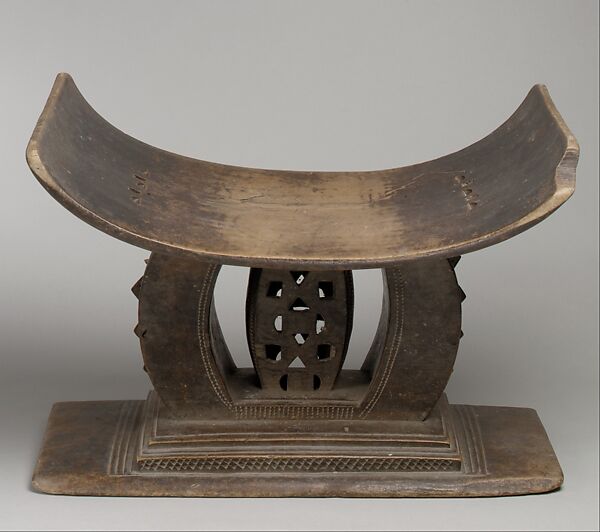
“The hand that carves the stool knows how to sit upon it; but if it sits forever, the wood beneath it will eventually weaken.”
There is an old African wisdom embedded in the making of a stool: the person who fashions it understands its strength, its balance and the place where it may bear the greatest weight. But no matter how skilled the carver, the stool was never made for one person to possess forever.
The same principle applies to the modern African state.
A constitutional republic may benefit enormously from the experience, discipline and vision of a long-serving leader. A president who inherits a fractured state may need years to rebuild institutions. Another may require decades to complete infrastructure projects, consolidate peace or implement an economic transformation whose results cannot be measured within a single electoral cycle.
But there is a line between continuity and dependency.
When the stability of a republic becomes inseparable from the continued presence of one individual, the very stability being protected can become its greatest vulnerability.
The central question, therefore, is not whether Africa’s longest-serving presidents have accomplished anything.
Some unquestionably have.
The deeper question is this:
Can an achievement truly be considered complete if the institution created to sustain it cannot survive the departure of its creator?
That is the question Africa must confront as it seeks to build integrated economies, continental infrastructure, digital markets and institutions capable of carrying the African Union’s ambitions into the twenty-first century.
The African state must become larger than the individual who occupies its highest office.
Because a bridge designed to carry millions cannot rest upon a single pillar.
PART I — THE LEDGER OF ACHIEVEMENT
Before the Baton Is Passed, Credit Must Be Given
“No matter how long the night, the dawn deserves credit for arriving.”
A serious examination of long-serving African executives cannot begin with condemnation.
History deserves balance.
Many of the leaders whose longevity now raises questions about succession came to power during extraordinarily difficult periods. Some inherited countries emerging from war, economic collapse, authoritarian rule, institutional weakness or political fragmentation.
Their records therefore contain genuine achievements alongside serious controversies.
To acknowledge those achievements is not to excuse every subsequent decision.
It is to tell the whole story.
1. Teodoro Obiang Nguema Mbasogo — Equatorial Guinea
Teodoro Obiang Nguema Mbasogo has been in power since 1979, making him one of the world’s longest-serving heads of state. Equatorial Guinea’s transformation after the discovery and exploitation of major oil reserves is undeniable: the country experienced extraordinary increases in national income and invested heavily in roads, ports, public buildings and other physical infrastructure. The World Bank reports that the country’s produced capital increased more than one hundredfold between 1995 and 2020, with major infrastructure investment particularly visible during the oil-boom years.
That transformation deserves recognition.
But it also illustrates the central paradox of resource-driven development.
Infrastructure can rise rapidly while institutional diversification lags behind.
The World Bank now notes that declining hydrocarbon production and revenues, combined with insufficient diversification, have contributed to prolonged economic difficulty.
The lesson is therefore larger than Obiang himself.
A leader may build impressive physical structures, but the ultimate test is whether the institutions underneath those structures can continue producing prosperity after the leader has gone.
2. Paul Biya — Cameroon
Paul Biya assumed the presidency of Cameroon in November 1982 and remains one of Africa’s longest-serving presidents. His government presided over periods of political and economic change, including the restoration of multiparty politics in 1990.
Cameroon’s physical position has also given successive governments a major regional responsibility.
The Port of Douala became an important commercial gateway not only for Cameroon but also for landlocked neighbours including Chad and the Central African Republic. World Bank documentation describes it as a natural regional hub and a major route for the movement of goods into Central Africa.
But here again lies the distinction between a country’s strategic importance and the permanence of an individual leader.
Cameroon’s institutions, ports, roads, economy and diplomatic relationships belong to the Cameroonian state.
They do not belong to one president.
The state must therefore possess enough institutional depth to renew itself regardless of who occupies the presidential palace.
3. Yoweri Museveni — Uganda
When Yoweri Museveni came to power in 1986, Uganda was emerging from years of political violence, economic deterioration and institutional destruction.
The economic reforms implemented under his government became an important case study in macroeconomic stabilization and structural reform. World Bank assessments have described Uganda’s reform programme as a significant example of macroeconomic stabilization, fiscal and exchange-rate reform, trade liberalisation and poverty reduction.
Uganda also achieved major progress in its response to HIV/AIDS, although such outcomes should properly be understood as the product of government policy, public-health institutions, civil society, communities and international partnerships rather than the achievement of one individual alone. World Bank data document the country’s long-term progress in HIV-related indicators.
That distinction matters.
A president may provide leadership.
But when the outcome becomes a national achievement, the institution must receive some of the credit.
4. Denis Sassou Nguesso — Republic of the Congo
The Republic of the Congo offers an even more complicated example.
Denis Sassou Nguesso has occupied the presidency across two periods, interrupted by the 1990s political transition and civil wars. Congo’s civil conflicts caused enormous human and economic damage, and the post-conflict period required the rebuilding of state institutions and political order. World Bank documentation records the devastating effects of the wars and the subsequent efforts to restore state capacity and consolidate peace.
The country has also invested substantially in infrastructure and remains heavily dependent on oil.
Yet the Congolese case demonstrates why peace, infrastructure and institutional renewal cannot be reduced to the personality of the president.
A country emerging from conflict needs continuity.
But eventually it also needs renewal.
The two are not enemies.
They are stages.
5. The Mobutu Warning: When the Leader Becomes the State
Mobutu Sese Seko’s three-decade rule of Zaire stands as one of Africa’s starkest warnings about unchecked political longevity. Rising to power amid the Congo Crisis and supported by Western powers that viewed him as a valuable Cold War ally, Mobutu gradually transformed the state into a personal political empire.
For roughly 32 years, his regime fused political power with personal wealth. His government became synonymous with authoritarianism, patronage and kleptocracy, while billions of dollars in national wealth were allegedly diverted into private fortunes. Meanwhile, infrastructure deteriorated, public institutions weakened, workers went unpaid and the economy collapsed under extraordinary inflation and mismanagement.
The tragedy was not simply that Mobutu ruled for decades. It was that decades of personal rule hollowed out the institutions meant to survive him.
His story therefore offers Africa a timeless warning: when a leader becomes convinced that only he can preserve the nation, the nation may eventually become incapable of surviving without him.
A great leader builds a country; an indispensable leader may build a dependency.
PART II — WHEN CONTINUITY BECOMES DEPENDENCY
“The tree that refuses to shed its old leaves eventually hides the young leaves from the sun.”
There is nothing inherently wrong with political longevity.
A leader who wins successive elections within a genuinely competitive constitutional system is not automatically illegitimate merely because he or she has served for many years.
The problem begins elsewhere.
It begins when the state becomes personalized.
Consider the progression:
LONG INCUMBENCY
       ↓
CONCENTRATION OF DECISION-MAKING
       ↓
DEPENDENCE ON ONE POLITICAL NETWORK
       ↓
WEAKER SUCCESSION MECHANISMS
       ↓
FEAR OF TRANSITION
       ↓
THE LEADER BECOMES "INDISPENSABLE"
       ↓
THE INSTITUTION BECOMES FRAGILE
This is the paradox.
The longer a leader remains at the centre of political life, the easier it can become for the political system to convince itself that stability depends upon that person’s continued presence.
Eventually, a dangerous sentence enters the national imagination:
“Who else can do it?”
That question is not evidence of indispensability.
It may be evidence that succession has been neglected.
THE PERSONAL STATE
A personal state emerges when institutions increasingly revolve around the personality, networks and preferences of the incumbent.
The parliament may still exist.
The courts may still exist.
The civil service may still exist.
Elections may still take place.
But the practical centre of gravity moves toward the individual.
And once that happens, the country develops what might be called the succession tax.
The succession tax is the political, economic and institutional uncertainty a country accumulates when it has failed to prepare adequately for leadership transition.
Investors begin asking:
Who comes next?
The ruling party asks:
Who can hold the coalition together?
The military asks:
Will the next government preserve the existing security arrangements?
The civil service asks:
Will our positions survive?
Citizens ask:
Will the country remain stable?
And the departing leader may ask:
What happens to me when I leave?
When these questions remain unanswered, departure becomes frightening.
And when departure becomes frightening, leaders have greater incentives to remain.
Thus the cycle continues.
PART III — THE BIOLOGY OF OFFICE AND THE TECHNOLOGY OF GOVERNANCE
“A wise farmer does not insult the old tree; he simply knows when to plant another.”
There is a legitimate place for experience in government.
Africa should not fall into the opposite error of treating youth as a substitute for competence.
An experienced statesman can possess institutional memory that a newly elected president simply cannot acquire overnight.
But experience is not immortality.
And political office is not an exemption from human biology.
The more sophisticated argument is therefore not that older leaders are incapable of governing.
It is that no state should design its survival around the indefinite physical and cognitive availability of one human being.
Modern government has become extraordinarily complex.
A contemporary president must engage simultaneously with:
- artificial intelligence;
- cyber-security;
- digital currencies;
- global supply chains;
- climate finance;
- biotechnology;
- semiconductor competition;
- cross-border terrorism;
- demographic transformation;
- social-media ecosystems;
- regional trade agreements;
- energy transitions;
- automated logistics.
The challenge is not whether an older leader can understand these developments.
Of course one can.
The challenge is whether the institution itself possesses enough intellectual diversity and generational renewal to remain adaptable.
That is the real issue.
THE ECHO-CHAMBER PROBLEM
Long incumbency can also produce another danger: information distortion.
The longer a leader remains at the apex of power, the greater the possibility that political survival becomes intertwined with the survival of those around him.
The minister who tells the president what he wants to hear becomes safer than the minister who tells him what he needs to hear.
The official who reports failure risks becoming the bearer of bad news.
The official who reports success becomes useful.
Slowly, the palace begins to hear an edited version of the country.
This is not uniquely African.
It is a universal danger of concentrated political power.
But African states cannot afford it.
The continent is already confronting enormous structural challenges. It needs governments capable of hearing uncomfortable truths quickly.
A leader does not become indispensable because everyone around him says so.
Sometimes the opposite is true.
PART IV — THE SUCCESSION TEST
The Real Measure of Leadership
“The baobab does not prove its greatness by preventing other trees from growing.”
Here is perhaps the most important test:
If a leader leaves tomorrow, will the country continue tomorrow?
If the answer is yes, the leader built institutions.
If the answer is no, the leader may have built dependency.
That distinction should become central to African political thinking.
A president’s greatest achievement should not be that nobody can replace him.
It should be that many competent people can succeed him without destroying what he built.
That is the difference between a personal legacy and an institutional legacy.
PART V — AFRICAN LEADERS WHO UNDERSTOOD THE ART OF DEPARTURE
Africa’s history provides important examples of leaders who understood that leaving office could itself become part of their legacy.
Nelson Mandela — South Africa
Nelson Mandela entered office with extraordinary moral authority.
After 27 years in prison and the historic transition from apartheid to democratic government, he possessed political capital that few leaders in modern history have matched.
Yet Mandela served one presidential term and retired from the presidency in June 1999. The South African government records his retirement from the presidency and his subsequent continued public service.
His departure did not diminish his authority.
It magnified it.
He demonstrated that a leader could leave the presidential office without leaving the national imagination.
Julius Nyerere — Tanzania
Julius Nyerere governed Tanzania for more than two decades and played a foundational role in constructing the post-independence Tanzanian state.
Yet in 1985 he voluntarily stepped down.
Tanzanian historical records describe his retirement as a deliberate act that helped establish a political tradition of voluntary succession.
Nyerere did not cease being an elder because he ceased being president.
Indeed, leaving office allowed him to become something different:
an elder of the nation rather than merely its occupant of power.
Alpha Oumar Konaré — Mali
Alpha Oumar Konaré provides another instructive example.
He served as Mali’s president from 1992 to 2002 and did not seek another term after completing the constitutional limit. The United Nations records his presidency from 1992 to 2002 and his subsequent service as Chairperson of the African Union Commission from 2003 to 2008.
His departure matters precisely because it demonstrated something simple:
a political career can continue after a presidential career ends.
The presidency is an office.
It is not an identity.
PART VI — THE COUNTERARGUMENT
But What If Continuity Really Is Stability?
A fair argument must confront its strongest opponent.
What if the leader is still competent?
What if the country is peaceful?
What if citizens continue to vote for the incumbent?
What if opposition parties are weak?
What if removing an experienced leader creates instability?
These are legitimate questions.
Africa should not embrace a simplistic doctrine that says:
“Long service is automatically bad.”
That would be intellectually lazy.
Some countries require continuity because their institutions are fragile.
Some presidents genuinely retain substantial public support.
Some developmental programmes require time.
And premature political turnover can itself produce instability.
The answer, therefore, is not perpetual turnover for its own sake.
The answer is institutional continuity without personal dependency.
A country should be able to preserve a successful development programme while changing its president.
It should be able to preserve its foreign policy while changing its president.
It should be able to preserve its infrastructure strategy while changing its president.
It should be able to preserve its peace while changing its president.
That is what institutions are for.
PART VII — THE CONSTITUTIONAL BLUEPRINT
“You do not strengthen the house by making the first builder its permanent owner.”
Africa therefore needs more than moral appeals for leaders to retire.
It needs systems that make succession normal, dignified and safe.
1. Constitutional Term Limits Must Be Difficult to Manipulate
Term limits should not be treated as disposable political furniture.
Where constitutional systems establish presidential limits, attempts to remove or reset those limits should require exceptionally strong constitutional safeguards, public scrutiny and, where appropriate, judicial review.
Regional organisations should also develop clearer democratic safeguards against constitutional manipulation.
But sanctions must be carefully designed.
Punishing citizens because their political leaders attempted to manipulate a constitution can deepen hardship without necessarily changing elite behaviour.
The objective should therefore be:
Protect constitutional order without turning ordinary citizens into collateral damage.
2. Build an Honourable Exit Ramp
Africa must confront a difficult truth.
Some leaders may fear leaving because they fear:
- prosecution;
- political revenge;
- loss of wealth;
- humiliation;
- persecution of their families;
- destruction of their political legacy.
If retirement means immediate political annihilation, leaders have incentives to remain.
The continent therefore needs carefully designed ethical transition frameworks.
Retired heads of state could receive:
- dignified pensions;
- security arrangements proportionate to legitimate risks;
- access to mediation and diplomatic roles;
- opportunities to serve as continental elder statesmen;
- institutional roles in peacebuilding and African diplomacy.
But there must be an important boundary:
Retirement cannot become immunity from accountability.
Serious crimes, corruption and human-rights violations cannot simply be erased by a presidential departure.
The objective is not impunity.
It is to make constitutional retirement compatible with dignity.
3. Create a Continental Elder Statesmen Network
Africa has an extraordinary reservoir of political experience.
Former presidents should not disappear into silence.
They could become:
- mediators in regional disputes;
- mentors for emerging leaders;
- advisers on peacebuilding;
- ambassadors for African integration;
- chairs of continental development initiatives;
- representatives in international negotiations.
Imagine a continent where a departing president does not ask:
“How do I remain in power?”
but:
“Where can my experience now serve Africa best?”
That is a healthier political culture.
4. Institutionalise Generational Renewal
The solution is not to replace every experienced official with someone young.
That would be another form of political romanticism.
Instead, African governments should deliberately create mixed-generation leadership teams.
A ministry should be able to contain:
- an experienced permanent secretary;
- a younger technology specialist;
- a seasoned policy adviser;
- a data scientist;
- an economist;
- a regional integration expert.
The old should not be discarded.
The young should not be excluded.
The wisdom of the elder and the imagination of the youth should sit at the same table.
As another African wisdom teaches:
“The old broom knows the corners; the new broom knows the dust.”
A wise household needs both.
PART VIII — FROM PERSONAL STATES TO INSTITUTIONAL STATES
Consider two models.
THE PERSONAL STATE
One dominant leader
        ↓
Political loyalty
        ↓
Centralised decisions
        ↓
Weak succession
        ↓
Uncertainty after departure
THE INSTITUTIONAL STATE
Strong institutions
        ↓
Distributed expertise
        ↓
Competitive political succession
        ↓
Continuity of policy
        ↓
Stable transition
        ↓
National resilience
The second model is what Africa should build.
Not because African presidents are uniquely incapable.
But because African countries are too important to gamble their futures on the mortality, health, judgement or political fortunes of individual human beings.
PART IX — THE AFRICAN SUCCESSION TAX
There is another reason this matters.
Africa wants:
- continental free trade;
- integrated infrastructure;
- high-speed rail;
- digital markets;
- energy interconnection;
- regional industrialisation;
- common financial systems;
- a stronger African Union;
- deeper intra-African trade.
But integration requires institutional predictability.
A businessman moving capital from Accra to Abidjan should not have to wonder whether a presidential transition will destabilise an entire economic corridor.
An investor financing a railway from Nairobi to Kampala should not be betting on the political longevity of one individual.
A regional electricity project should not depend on whether two presidents personally trust each other.
A continental market cannot be constructed on personal friendships.
It must be constructed on institutions.
That is why leadership succession is not merely a democratic question.
It is an economic question.
PART X — AFRICA’S MOST IMPORTANT INFRASTRUCTURE MAY BE SUCCESSION
We often speak about Africa’s infrastructure deficit.
We count:
- kilometres of roads;
- megawatts of electricity;
- railway lines;
- bridges;
- ports;
- airports;
- fibre-optic cables.
But there is another infrastructure deficit that receives far less attention:
the infrastructure of succession.
A country needs systems for transferring power as much as it needs systems for transferring electricity.
It needs political bridges as much as physical bridges.
It needs institutional roads connecting one administration to the next.
And it needs constitutional guardrails strong enough to prevent the entire national vehicle from falling into a ditch whenever its driver changes.
This is why the question of presidential succession belongs at the heart of Africa’s development conversation.
THE FINAL DESTINATION
When the Leader Becomes the Legacy
The highest form of leadership is not permanent occupancy.
It is successful departure.
A great leader does not ask:
“How long can I remain?”
The greater question is:
“What will remain when I am gone?”
Will the roads remain?
Will the schools remain?
Will the institutions remain?
Will the courts remain independent?
Will the civil service remain competent?
Will the economy remain productive?
Will the constitution remain stronger than political personalities?
Will the next generation inherit a country—or merely inherit a political succession crisis?
That is the true test.
Africa does not need to hate its long-serving leaders.
It does not need to erase their achievements.
It does not need to pretend that every new generation automatically possesses greater wisdom than the previous one.
Africa needs something more mature.
It needs to honour achievement without worshipping incumbency.
It needs to respect experience without confusing experience with indispensability.
It needs elders who know when to speak, younger leaders who know when to listen, institutions strong enough to survive both, and constitutions strong enough to belong to neither.
The president is temporary.
The republic must be permanent.
The administration is temporary.
The institution must endure.
The leader is a chapter.
The nation is the book.
And perhaps that is the deepest lesson Africa can draw from the old stool:
The wise elder does not sit on the stool until it breaks. He rises while it is still strong, teaches another where to sit, and leaves behind a stool sturdy enough for generations.
For the true measure of a leader is not how long the people can live with his presence, but how confidently the nation can continue after his departure.



No Comments
Join the DiscussionBe the first to join the discussion!