

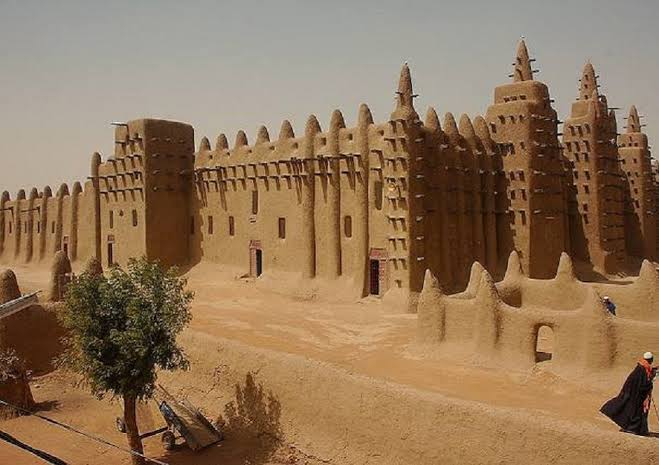
For centuries, global history has been written through a single, distorted lens. We are taught that human advancement began in Greece, flourished in Rome, and was charitably exported to the rest of the world via European colonization. When the technical achievements of Africa are mentioned at all, they are framed as anomalies, historical footnotes, or accidental discoveries.
But history tells a radically different story. Long before European ships arrived on African shores, African kingdoms, philosophers, and communities had already engineered complex, ingenious solutions to the fundamental problems of human civilization. They did not just live; they thrived—developing sophisticated systems of mathematics, metallurgy, medicine, architecture, and finance that civilized their communities on their own terms.
The denial of this legacy is not an accident of time; it is a deliberate consequence of vocabulary. Because Africans were not the ones who named, patented, or globalized these concepts under Western frameworks, their genius has been systematically undermined. But as the famous African proverb reminds us: “Until the lions have their own historians, the tale of the hunt will always glorify the hunter.” It is time for the lions to write.
Part I: The Cartography of Genius — African Pioneers Across the Disciplines
To understand the depth of African advancement, we must look directly at the empirical evidence across the continent—long before European contact.
1. Mathematics and the Foundations of Logic
The standard academic narrative traces the birth of mathematics to classical Greece. Yet, tens of thousands of years before Pythagoras or Euclid drew their first geometric lines, African ancestors were recording complex mathematical data.
- The Lebombo and Ishango Bones: Found in modern Eswatini and the Democratic Republic of Congo (dating from 35,000 BCE to 20,000 BCE), these baboon fibulas represent humanity’s oldest known calculating instruments. They are not random scratches; they are highly structured tally systems tracking prime numbers, lunar cycles, and advanced multiplication.
- The Rhind Mathematical Papyrus: In Ancient Egypt (Kemet), mathematicians formulated precise rules for calculating the area of triangles, the volume of cylinders, and the use of fractions to build architectural wonders that still defy modern replication.
2. High-Heat Industrial Metallurgy
While medieval Europe struggled with brittle iron tools, East and West African societies were independently mastering advanced chemical metallurgy.
- The Haya Metalworkers (Tanzania & Uganda): Nearly 2,000 years ago, Haya engineers constructed pre-heated, forced-draft blast furnaces. By blowing air through clay blowpipes into a charcoal-and-reeds mixture, they reached temperatures exceeding 1,800°C. This process allowed them to forge high-carbon steel centuries before the European Industrial Revolution figured out how to do the same.
- The Nok Culture (Nigeria): As early as 1,000 BCE, the Nok people operated highly organized iron-smelting networks, seamlessly merging artistic sculpture with industrial-grade metalwork.
3. Advanced Surgery and Global Immunology
The history of medicine is routinely credited to European figures like Hippocrates or Edward Jenner. In reality, African medical practitioners were executing advanced clinical procedures with astonishing survival rates.
- The Banyoro Surgeons (Uganda): In 1879, British medical missionary Robert Felkin witnessed a routine Caesarean section in the Great Lakes region. In Europe at the time, C-sections were almost always fatal. The Ugandan surgeon utilized a brilliant protocol: washing his hands and the mother’s abdomen with fermented banana wine (acting as a pre-modern antiseptic decades before Joseph Lister’s work was widely accepted), utilizing a heated iron rod to cauterize blood vessels and prevent hemorrhaging, and stitching the wound with precision bone needles.
- Variolation and Inoculation: Decades before Edward Jenner “discovered” vaccines in 1796, an enslaved West African man named Onesimus saved the city of Boston during the 1721 smallpox epidemic. He taught his enslaver, Cotton Mather, the ancient West African practice of extracting fluid from an active virus sore and scratching it into healthy skin to grant lifelong immunity.
4. Institutional Higher Education and the Degree System
The “university model” is frequently claimed as an exclusively European invention, pointing to Bologna or Oxford. However, North and West Africa pioneered the institutional university centuries prior.
- The University of al-Qarawiyyin (Morocco): Founded in 859 CE by a visionary Tunisian woman named Fatima al-Fihri, this campus is recognized by UNESCO as the oldest continually operating university in human history. It featured a rigorous system of awarding the Ijazah—the precursor to the modern university degree or diploma.
- The Timbuktu University System (Mali): Under the wealthy patronage of rulers like Mansa Musa, universities like Sankore housed over 25,000 global students. It operated a thriving book economy where imported manuscripts fetched higher prices than gold or salt, preserving advanced treatises on astronomy, trigonometry, and philosophy.
5. Architectural Engineering and Fractal Urban Planning
European explorers frequently claimed that sub-Saharan Africa lacked permanent urban architecture, an ideology used to justify colonization.
- Great Zimbabwe: Built by the Shona people between the 11th and 15th centuries, this massive stone city features multi-tiered granite walls constructed entirely without mortar. Early European colonizers were so blinded by bias that they claimed it must have been built by mythical Phoenicians or biblical figures, refusing to believe African architects were capable of such precision engineering.
- The Walls of Benin: The Kingdom of Benin (modern Nigeria) built the largest continuous earthwork fortification network in human history. More brilliantly, the entire city layout was designed using fractal mathematics—repeating self-similar geometric patterns that beautifully balanced military defense, social organization, and commerce.
6. Maritime Navigation and Astronomical Instruments
The “Age of Discovery” frames deep-sea navigation as a Portuguese and Spanish triumph.
- Swahili Coast Dhows: East African maritime societies engineered sleek, sewn-plank dhows capable of riding the Indian Ocean monsoon winds. They navigated vast trade circuits to India and China using the Mariner’s Astrolabe, a heavy brass analog computer redesigned by North African astronomers like Mariam al-Astrolabiya to calculate latitude on a rocking ship.
- The Dogon Cosmologists (Mali): The Dogon people mapped the highly complex orbital patterns of the Sirius star system centuries before Western telescopes could even detect its companion star, Sirius B.
7. Monetary Logistics and Economic Networks
- The Esusu Banking System: West African societies pioneered decentralized micro-finance through the Esusu—rotational credit unions where communities pooled capital to fund massive commercial expeditions. This indigenous credit structure bypassed the top-down control of centralized banks and still serves as the logical blueprint for modern global peer-to-peer fintech apps.
Part II: The Tyranny of the Label — How Eurocentric Names Undermine African Genius
Why are these historical truths missing from standard textbooks? Why is a child in Accra, Lagos, or London taught about Isaac Newton and Galileo, but never about Fatima al-Fihri or the Banyoro surgeons?
The answer lies in a structural trick of language: The power to name is the power to claim.
Because these breakthroughs were not cataloged using European terminology, or patented in Western courts, they were dismissed as “primitive folk traditions” or “witchcraft.” When European scholars like Fibonacci traveled to North Africa to study mathematics, they returned to Europe and published Liber Abaci (1202 CE). Fibonacci openly credited his education in Béjaïa (Algeria) for teaching him the positional numeral system (0, 1, 2, 3…) that replaced awkward Roman numerals. Yet today, the world calls this mathematics, but forgets the African classroom where it was taught.
When Western pharmaceutical corporations realized that the indigenous San people of the Kalahari Desert had used the Hoodia plant for thousands of years to suppress hunger, or that Malagasy healers in Madagascar used the Rosy Periwinkle to cure ailments, they didn’t honor the traditional botanists. Instead, they isolated the active chemical compounds, slapped a Western patent on them, and built multi-billion dollar weight-loss supplements and chemotherapy drugs (like Vincristine) while giving virtually no credit or royalties back to Africa.
This is a form of structural theft. The West systematically studied African innovations, translated them into Latin, applied their own labels, and then claimed ownership over civilization itself.
Part III: Shifting the Standard — De-linking Civilization from European Measures
We must boldly reject the idea that European standards are the universal gauge of human value. A civilization should not be judged by how closely its architecture resembles a Roman pillar, or whether its laws match British common law.
If an idea helps a community heal its sick, feed its populace, organize its cities, balance its economy, and live in harmony with the environment, that idea is civilized.
By using European labels as the absolute baseline, the West created a false ideological ladder where they sit at the top and Africa is forced to climb from the bottom. This layout is exposed by a wise Western proverb: “The thief thinks everyone steals.” Because the European imperial project relied on conquering, renaming, and exploiting, its historians assumed that any society without a standing imperial army or an iron-fisted central bank was “undeveloped.”
But African kingdoms operated on philosophies of balance, community, and sustainability. The Benin urban planners used fractal math not to build oppressive skyscrapers, but to create harmonious living spaces. The Esusu banking system was designed to lift an entire community simultaneously, rather than concentrating wealth in the hands of a predatory few. To call these systems “primitive” because they do not mimic Western capitalism is a failure of intellect. As the Yoruba proverb states: “A person who does not know another’s field believes their own is the only one that exists.”
Part IV: Preserving the Fire — The Imperative for Future Generations
The preservation of this historical reality is not an exercise in historical nostalgia or empty pride. It is a matter of psychological and economic survival for the African continent.
When you strip a people of their history, you strip them of their trajectory. If a young African is led to believe that their ancestors contributed nothing to global science, medicine, or architecture, they are conditioned to look outside their continent for solutions. They are taught to believe that they must copy the West to be successful.
But when we preserve the records of the Timbuktu manuscripts, the surgical precision of Uganda, and the monetary brilliance of the Esusu, we offer future generations a foundational truth: Africa was already living a beautiful, comfortable, highly advanced life long before the first European ship ever appeared on the horizon.
We must protect and digitize our own archives, rewrite our school curricula, and boldly teach our children that their ancestors were the architects of human progress. We do not need the West to validate our history, nor do we need their labels to define our genius.
Let us close with the timeless truth of an African proverb: “Clear understanding is the fingernail that scratches the itch.” Once we clearly understand who we were, we will finally have the power to define who we will become.
Part V: The Irrefutable Dossier — Empirical & Peer-Reviewed Historical Evidence
To silence academic skepticism, we must anchor these claims in undeniable archaeological, physical, and textual evidence. The following primary artifacts, records, and globally curated data sets stand as empirical proof of pre-colonial African genius, recognized by the highest global academic institutions:
1. Mathematical Artifacts
- The Ishango Bone (National Museum of Natural Sciences, Brussels): Excavated by Belgian archaeologist Jean de Heinzelin in 1960 in the Democratic Republic of Congo, this dark brown bone contains a sharp piece of quartz fixed to one end. Carbon-dated to ~20,000 BCE, microscopic analysis confirms that the notches are clustered in distinct groups of prime numbers (11, 13, 17, 19) and doubling patterns (3 to 6, 4 to 8, 5 to 10). It stands as the oldest concrete mathematical slide-rule in history.
- The Moscow and Rhind Mathematical Papyri (British Museum, London): Dated to 1850 BCE and 1550 BCE respectively, these texts are physical, handwritten scrolls from Kemet (Ancient Egypt). The Rhind Papyrus contains 84 complex algebraic and geometric problems, including equations showing how to calculate the area of a circle by approximating the value of π as 3.1605—long before the birth of European mathematics.
2. Metallurgical Engineering Proof
- The Haya Blast Furnace Excavations (Peter Schmidt, Archaeologist): In 1978, American anthropologist Peter Schmidt and Tanzanian engineer Donald Avery published empirical findings in the journal Science. Through extensive archaeological digs on the western shores of Lake Victoria, they uncovered physical remnants of 2,000-year-old smelting sites. Using carbon dating and metallurgical spectrometry, they proved that these pre-heated forced-draft mud furnaces produced high-carbon steel at temperatures exceeding 1,800°C, a feat European smelters could not reliably reproduce until the mid-19th century.
3. Medical Case Logs
- The Felkin Surgical Witness Report (The Edinburgh Medical Journal, 1884): Dr. Robert W. Felkin, an English missionary surgeon, published a highly detailed clinical eyewitness account titled “Labour in Central Africa” (Vol. 29). Felkin included real-time sketches and vital sign logs of the Caesarean section he witnessed in Kahura, Uganda, in 1879. His published medical charts conclusively showed that the mother’s temperature dropped back to normal and her wound healed completely within 11 days, proving that the African indigenous use of fermented banana wine as an antiseptic was medically flawless.
4. Written Texts and Literary Archives
- The Timbuktu Manuscripts (Ahmed Baba Institute / SAVAMA-DCI, Mali): Over 300,000 physical manuscripts written in local African variants of Arabic calligraphy are preserved in private family vaults and libraries in Mali. These are not oral myths; they are physical ink-on-paper documents. In 2022, a joint digitization project with global archivists uploaded tens of thousands of pages showing detailed astronomical calculations of solar eclipses, geometric layouts, and codified human-rights laws written by West African scholars during the Malian and Songhai Empires.
5. Architectural and Urban Blueprints
- The Great Zimbabwe Granite Survey (UNESCO World Heritage Site): Extensive archaeological evaluations conducted by David Randall-MacIver (1905) and Gertrude Caton-Thompson (1929) thoroughly debunked racist colonial narratives that argued local Africans could not have built Great Zimbabwe. Their excavation reports confirmed that the pottery, weapons, and foundations found beneath the mortarless stone walls were entirely indigenous Bantu/Shona artifacts, dating continuously back to the 11th century.
- The British Museum Benin Bronzes and Royal Navy Records (1897): When the British military executed the Punitive Expedition against the Kingdom of Benin in 1897, Captain Alan Boisragon and other military leaders wrote extensive diaries describing Benin City. They noted a city with a highly advanced design, wide streets, and a complete system of street lighting. The thousands of sophisticated brass plaques and ivory carvings looted from the palace—now held in museums across Europe—prove that the Kingdom possessed metallurgy and geometric casting technologies that rivaled European Renaissance artists.



No Comments
Join the DiscussionBe the first to join the discussion!