Imagine a wealthy merchant who owns a sprawling estate filled with priceless treasures. To protect his interests, he hires two men. The first man locks the gates, demands that the merchant pay a fair price for the goods he takes, and insists that the estate’s workers be fed first. The merchant brands this man a thief, calls for his removal, and ensures he meets a tragic end. The second man leaves the gates wide open, allows the merchant to cart away gold by the wagonload, and pockets a massive share for himself while the workers starve. This second man is invited to the merchant’s grandest banquets, given keys to the mansion, and praised as a model of order and sophistication.
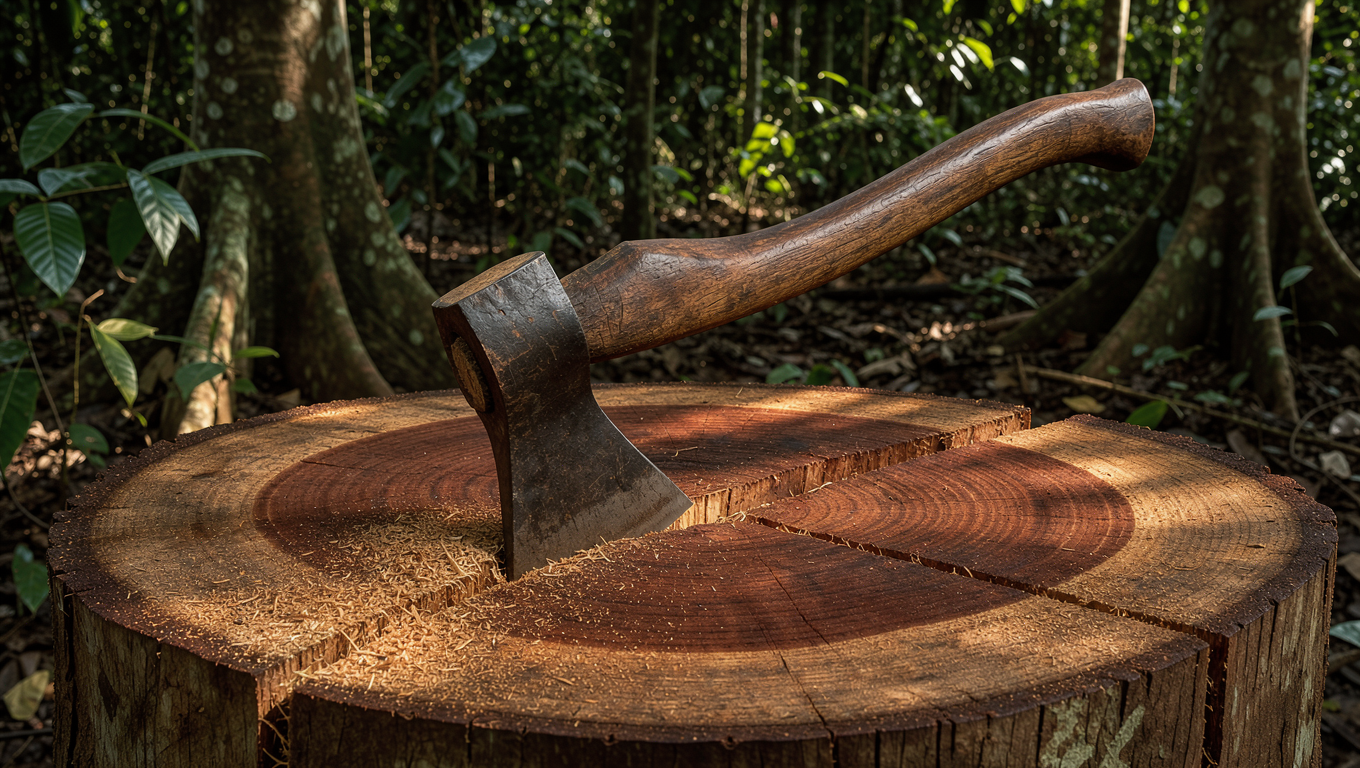
For decades, this parable has played out across the African continent. As an old African proverb warns, “When the axe came into the forest, the trees said, ‘The handle is one of us.'” Time and again, the tragedy of post-colonial Africa has been the stark contrast in how Western powers treat two distinct types of leaders: the plunderers who keep the gates of extraction open, and the visionaries who dare to lock them.
Central Africa: The King of Kleptocracy and the Martyr of Independence
Nowhere is this double standard more glaring than in the heart of the continent. In the Democratic Republic of the Congo (then Zaire), Mobutu Sese Seko became the global archetype of the kleptocrat. Over 32 years, he siphoned an estimated $4 billion to $5 billion from state coffers while roads crumbled and hospitals ran out of medicine. Yet, because he kept Congo’s vast cobalt, copper, and diamond reserves accessible to Western corporations and served as a Cold War bulwark, he was treated like royalty. He was hosted at the White House by multiple U.S. presidents, welcomed at Buckingham Palace by Queen Elizabeth II, and received at the Élysée Palace in Paris.
Contrast this red-carpet treatment with Patrice Lumumba, Congo’s first democratically elected Prime Minister. Lumumba insisted that Congo’s mineral wealth should uplift the Congolese people rather than enrich foreign capitals. Within months of taking office in 1960, he was ousted, handed over to his enemies with Western complicity, executed by firing squad, and dissolved in acid.
Nearby in the Central African Republic, Jean-Bédel Bokassa drained his nation’s treasury to crown himself Emperor in a lavish $20 million ceremony modeled after Napoleon. French President Valéry Giscard d’Estaing famously called Bokassa a “friend” and “family member,” gladly accepting gifts of diamonds while Bokassa’s regime brutalized its citizens. Similarly, Gabon’s Omar Bongo ruled for 41 years, amassing dozens of luxury properties in Paris and millions in foreign bank accounts. Because he ensured French oil giant Elf Aquitaine maintained its monopoly, he was a fixture of Parisian high society until his death.
“Until the lions have their own historians, the history of the hunt will always glorify the hunter.” To the Western establishment, Mobutu, Bokassa, and Bongo were “friends of the free world,” while Lumumba was labeled a dangerous radical.
West Africa: The Stooges of Françafrique and the Upright Man
In West Africa, the post-colonial system known as Françafrique rewarded loyalty to Paris above all else. Félix Houphouët-Boigny of Côte d’Ivoire maintained tight economic and military ties with France for over three decades, building the world’s largest basilica in his hometown while French businesses dominated the Ivorian economy. He was revered in Paris as a sage statesman. In Togo, Gnassingbé Eyadéma seized power in a bloody coup—personally implicated in the 1963 assassination of independence leader Sylvanus Olympio—and ruled with an iron fist for 38 years, all while being celebrated in European capitals as a guarantor of stability.
Meanwhile, Sani Abacha of Nigeria looted up to $5 billion during his brutal five-year military rule in the 1990s. Even as his regime executed activists like Ken Saro-Wiwa, Western financial institutions in London, Zurich, and New York willingly laundered and stored his stolen billions, keeping silent as long as crude oil flowed uninterrupted from the Niger Delta.
Now look at the fate of West Africa’s true patriots. Kwame Nkrumah, the visionary founding father of Ghana who championed African unity and economic self-reliance, was undermined by Western intelligence agencies and overthrown in a 1966 coup while abroad. Sylvanus Olympio of Togo, who planned to exit the French-controlled CFA franc currency and print an independent Togolese currency, was gunned down outside the U.S. embassy gates in Lomé just days before the new currency was set to launch.
Perhaps the sharpest contrast lies in Burkina Faso. Thomas Sankara refused foreign aid that came with strings attached, banned luxury government cars, vaccinated millions of children, and made his nation food self-sufficient in just four years. He was assassinated in 1987 in a coup led by his former friend, Blaise Compaoré. While Sankara was buried in a shallow, unmarked grave, Compaoré was immediately embraced by Paris and Washington, welcomed into Europe’s highest presidential offices for 27 years while Burkina Faso remained one of the poorest nations on earth.
As the Yoruba people wisely say, “A river that forgets its source will eventually dry up.” Leaders like Sankara and Nkrumah tried to reconnect Africa to its own strength, and for that, they could not be allowed to survive.
East Africa: Cold War Pawns and Silenced Visionaries
In East Africa, the pattern repeated with ruthless precision. When Idi Amin seized power in Uganda in 1971, overthrowing the socialist-leaning Milton Obote, Britain and Israel initially welcomed him. Queen Elizabeth II hosted Amin for lunch at Buckingham Palace, and British officials praised him as a “staunch friend” before his regime devolved into catastrophic economic ruin and mass murder. In Ethiopia, Emperor Haile Selassie was lauded across Western capitals and received grand state visits in Washington and London, even as a devastating famine killed hundreds of thousands of his subjects and feudal inequality choked the country.
Yet, when leaders in the region sought genuine independence from Western financial control, the reception turned icy. Julius Nyerere of Tanzania, who championed Ujamaa (African socialism), refused to bow to International Monetary Fund (IMF) structural adjustment programs that demanded cuts to healthcare and education. Western media and diplomats frequently painted him as an economic failure and a stubborn idealist, starving his government of the financial backing freely given to compliant autocrats. Similarly, Patrice Lumumba’s ideological ally in Burundi, Prince Louis Rwagasore, won a landslide election on a platform of true independence from Belgian rule—only to be assassinated in 1961, just weeks after becoming Prime Minister, in a plot linked to colonial administrators.
“He who swallows a whole coconut has complete trust in his throat.” Western powers eagerly swallowed the lies of brutal dictators who promised compliance, while choking on the integrity of leaders who demanded equality.
Southern Africa: The Plunderers of Apartheid and the Fall of the Liberators
In Southern Africa, the hypocrisy reached historic heights during the Cold War. For decades, the Apartheid regime in South Africa brutalized the Black majority and plundered the region’s resources. Yet, because Pretoria was fiercely anti-communist and kept gold and diamonds flowing to London and New York, South African prime ministers were received in Western capitals, and leaders like Margaret Thatcher and Ronald Reagan actively blocked comprehensive economic sanctions, labeling Nelson Mandela and the African National Congress (ANC) as “terrorists.”
In Angola, José Eduardo dos Santos ruled for 38 years, turning his family into billionaires—his daughter Isabel became Africa’s richest woman through state-backed monopolies—while millions of Angolans lived in abject poverty without clean water. Because dos Santos ensured Western oil majors like Chevron, Total, and BP had uninterrupted access to Angola’s offshore oil, he was welcomed in Madrid, Paris, and Washington as a strategic partner.
In contrast, Samora Machel, the charismatic founding president of Mozambique who supported liberation movements across Southern Africa and resisted foreign domination, died in a mysterious 1986 plane crash just inside the South African border—an incident widely suspected to have been orchestrated by the Apartheid intelligence apparatus. Even Robert Mugabe of Zimbabwe was celebrated in London and awarded an honorary knighthood by Queen Elizabeth II in 1994—long after his forces had committed the Gukurahundi massacres in Matabeleland. He only became a Western pariah in the 2000s when he initiated the seizure of white-owned commercial farms.
“The eye never forgets what the heart has seen.” The people of Southern Africa witnessed firsthand that human rights only mattered to Western capitals when property rights were threatened.
North Africa: The Shifting Sands of Expediency
North Africa offers the ultimate lesson in Western transactionalism. In Tunisia, Zine El Abidine Ben Ali and his extended family turned the nation into a personal mafia enterprise, skimming billions from banking, telecommunications, and real estate while running a suffocating police state. Yet, Paris hailed Ben Ali as a bulwark against extremism and an economic miracle worker. French ministers even vacationed on his yachts, and just days before he was ousted in the 2011 Arab Spring, the French government offered to send riot gear to help him crush his own protesting citizens. In Egypt, Hosni Mubarak ruled under emergency law for 30 years, overseeing rampant crony capitalism and torture chambers, while receiving billions in U.S. aid and annual red-carpet welcomes in Washington.
Then there is Muammar Gaddafi of Libya. For decades, he was branded a tyrant for nationalizing Libya’s oil and funding anti-colonial movements. In the 2000s, after he agreed to dismantle his weapons programs and open Libya’s oil sector to Western firms, he was suddenly rehabilitated. He pitched his Bedouin tent on the grounds of the Élysée Palace in Paris, shook hands with Tony Blair in Tripoli, and was embraced in Rome by Silvio Berlusconi. However, the moment Gaddafi pushed to replace the Western-dominated CFA franc and U.S. dollar in African trade with a gold-backed African dinar—and sought to create a unified African telecommunications satellite to end European monopolies—the script flipped. In 2011, NATO bombed Libya for seven months, leaving the country shattered and Gaddafi dead in a drainage pipe.
“If you want to know who controls you, look at who you are not allowed to criticize.” In North Africa, leaders were permitted to oppress their people indefinitely, provided they never challenged the global financial architecture.
The Ultimate Irony: Fear of an Awakened Giant
Across East, West, North, South, and Central Africa, the verdict of history is undeniable. The labels of “statesman” and “dictator” handed out by Western capitals have rarely been moral judgments; they have been receipts for services rendered. Those who emptied their nations’ treasuries into European banks were toasted in marble halls. Those who tried to keep Africa’s wealth in African hands were met with bullets, coups, and bombs.
It is a profound irony that the very leaders who envisioned the gigantic, transformative progress of Africa—men like Nkrumah, Lumumba, Sankara, and Gaddafi—were never truly regarded or respected by Western powers. On the contrary, they were feared, undermined, and eliminated.
When we look at the historical record matter-of-factly, the reason becomes undeniable: imperial systems are built on dependency, not partnership. An industrialized, self-sufficient, and united Africa that processes its own minerals, controls its own currency, and feeds its own people has no need for predatory foreign loans or lopsided trade deals. True African progress does not serve imperial interests; it ends them.
As the Igbo proverb wisely observes, “A man who makes trouble for others is also making trouble for himself.” By systematically dismantling Africa’s builders and propping up its looters, Western powers ensured decades of instability—creating the very crises of poverty, conflict, and mass migration they now claim to solve.
Yet, history is not static, and a new generation across the continent is awakening to this reality. As the Swahili proverb reminds us, “However long the night, the dawn will break.” In the end, a bird does not ask the hunter for permission to fly. Africa’s true progress will never be validated in Washington, Paris, London, or Brussels—because it was never meant to be built for their approval.



No Comments
Join the DiscussionBe the first to join the discussion!