

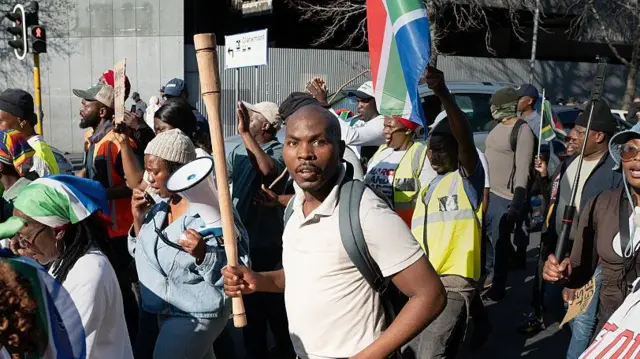
MONROVIA – South Africa’s democratic victory in 1994 was never solely a South African achievement. It was the culmination of decades of sacrifice by Africans who believed that the freedom of one nation was the freedom of the entire continent. From Nigeria’s financial support for the African National Congress to Zambia and Tanzania sheltering liberation fighters, to Ghana offering asylum to ANC political leaders, issuing diplomatic passports, providing military training, and Liberia and many other African states mobilising diplomatic solidarity against apartheid, Africa stood together.
Today, that legacy is being tested.
The recent wave of anti-immigrant demonstrations and attacks targeting African migrants has forced thousands of people from countries including Zimbabwe, Mozambique, Malawi, Nigeria and Ghana to flee communities they once called home. While President Cyril Ramaphosa has condemned vigilantism and reaffirmed that immigration enforcement belongs to the state, fear continues to grip many migrant communities.
This is not simply an immigration debate. It is a Pan-African crisis.
Pan-Africanism teaches that a shared history, common struggles and a collective destiny bind Africa together. It rejects the notion that an African becomes a stranger simply by crossing a colonial border. The movement envisioned by Kwame Nkrumah, Julius Nyerere, Patrice Lumumba, Haile Selassie and Nelson Mandela called for an Africa where unity would triumph over division, where no African would be treated as an outsider on African soil.
Yet the recurring waves of xenophobic violence, from 2008 to 2015, 2019, and now 2026, raise difficult questions about whether the continent is living up to those ideals. South Africa’s economic hardships, unemployment, crime and inequality are genuine challenges.
However, blaming vulnerable migrants cannot solve structural problems rooted in corruption, weak governance and decades of inequality. Innocent people should never become scapegoats for national frustrations.
The African Union’s vision of “An Integrated, Prosperous and Peaceful Africa” demands more than speeches. It requires member states to defend human dignity, strengthen regional cooperation and ensure that disputes over migration are resolved through law rather than violence. Likewise, SADC, ECOWAS and other regional bodies should deepen diplomatic engagement to protect African citizens while supporting peaceful solutions.
WHY AFRICA IS CAPABLE OF HANDLING ITS OWN PROBLEM?
It is also telling that the international response has largely been limited to statements of concern, while the African Union has struggled to project decisive leadership on an issue that directly affects African citizens. Although external partners such as the European Union may offer humanitarian support, technical assistance or diplomatic encouragement, the responsibility for resolving this crisis must remain with Africans and their institutions.
Xenophobia is an African challenge that requires African solutions, rooted in the principles of solidarity, mutual respect and shared responsibility.
The African Union, supported by regional economic communities such as ECOWAS and SADC, should take the lead in facilitating dialogue, strengthening cross-border cooperation and ensuring that member states uphold their obligations to protect all Africans.
Allowing Africans to address their own challenges through African institutions will not only preserve the continent’s dignity but also strengthen confidence in the vision of African-led solutions to African problems.
Governments also have a duty to protect their nationals abroad through active diplomacy, timely consular support and continuous engagement with South African authorities. At the same time, political leaders across the continent must reject inflammatory rhetoric that fuels division instead of dialogue.
The media, religious institutions and civil society equally carry a responsibility to promote truth, tolerance and African solidarity. Pan-Africanism cannot survive if fear and misinformation are allowed to define relationships between Africans.
The struggle against apartheid united the continent because Africans understood that injustice anywhere threatened justice everywhere. That same conviction must guide Africa today.
If Africans could unite to dismantle apartheid, they can unite to defeat xenophobia.
The future of Pan-Africanism will not be measured by commemorations or political declarations. It will be measured by how Africans treat one another in times of peace, in moments of crisis and across every border inherited from colonial rule. Africa’s strength has always been its unity. Protecting that unity is the unfinished task of this generation.
The Way Forward: Reclaiming the Pan-African Vision
Xenophobia cannot be defeated by condemnation alone. It requires political courage, economic reforms and a renewed commitment to the ideals of Pan-Africanism. South Africa must continue to enforce its immigration laws fairly while ensuring that every person, regardless of nationality, is protected under the Constitution.
Criminal acts should be punished, but no community should be collectively blamed for the actions of a few.



No Comments
Join the DiscussionBe the first to join the discussion!