

Imagine waking in the dead of night to discover a burglar ransacking your home.
He overpowers you, smashes open your cabinets and disappears into the darkness carrying your most precious family heirlooms: your late grandmother’s wedding ring, your family’s historic ledger and the sacred portraits of your ancestors.
Decades pass.
The burglar’s descendants now live comfortably, partly benefiting from displaying your stolen possessions behind glass in their parlour and charging visitors to admire them.
Then, one day, after years of politely asking for your property back, the burglar’s grandson knocks on your door.
He holds your grandmother’s ring in his palm.
You reach for it.
But before you can take it, he produces a contract.
“I cannot give this to you permanently,” he says. “My family adopted a rule in 1963 that prevents us from disposing of what we possess. But because I am a generous and progressive man, I am prepared to lend your grandmother’s ring back to you for three years. At the end of the three years, you must return it to my house.”
Absurd?
It should be.
Yet, stripped of the domestic analogy, this is remarkably close to the moral predicament surrounding some African cultural objects held by major European museums.
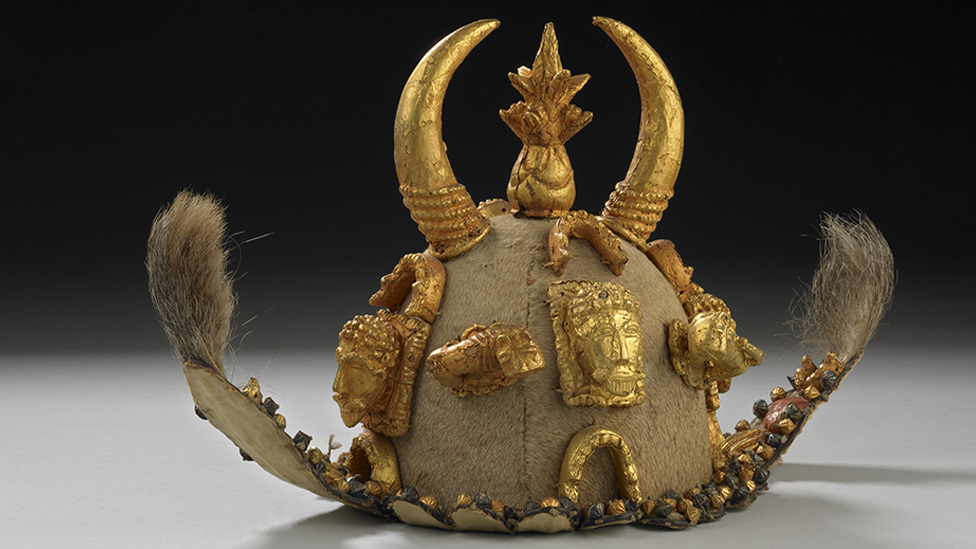
In 2024, the British Museum and the Victoria and Albert Museum agreed to lend 32 Asante royal objects to Ghana for exhibition in Kumasi. Among them were objects of profound historical and cultural significance, including the Mponponsuo sword of state and other royal regalia.
Their return was undoubtedly significant.
But it raises a question that cannot be avoided:
When an object was taken from a conquered kingdom under circumstances that make its permanent restitution a compelling matter of justice, why should its return be described as a loan?
To loan a person what was wrongfully taken from him is not the same thing as returning it.
That distinction is not semantic.
It goes to the heart of justice.
The Problem With a Legal Shield
Whenever demands for the permanent restitution of African cultural heritage reach Britain’s major national museums, the British Museum Act 1963 inevitably enters the conversation.
The Act places significant restrictions on the British Museum’s ability to dispose of objects within its collection. In practice, this has contributed to the legal difficulty surrounding permanent restitution.
But here is the fundamental problem:
A law is not a moral verdict.
A statute can determine what an institution is legally permitted to do. It cannot, by itself, determine what justice requires.
The British Museum Act was created by Parliament.
Parliament can therefore amend it.
That simple fact deserves to be stated plainly.
Statutes created by human hands can be rewritten by human hands.
If a legal framework creates an obstacle to the permanent return of cultural property acquired through colonial violence, the existence of that obstacle cannot itself become the justification for preserving the injustice.
Otherwise, law ceases to be an instrument for justice and becomes an instrument for preserving historical outcomes simply because they have been institutionalised.
That is an uncomfortable proposition.
But discomfort is sometimes the beginning of moral clarity.
Legal Possession Is Not the End of the Moral Question
This is where the restitution debate requires intellectual honesty.
There is a distinction between legal possession, legal title, historical provenance and moral legitimacy.
A museum may have lawful possession of an object today.
That does not necessarily settle the historical question of whether the circumstances under which the object entered the collection were just.
Nor does present-day legality automatically erase the moral claim of the community from which the object was taken.
This distinction matters enormously.
If an object was acquired through voluntary exchange, its history raises different questions from an object confiscated during a punitive military expedition.
If an object was purchased freely, that is different from an object taken from a royal treasury after the defeat of a sovereign kingdom.
Not every African object in a European collection has the same provenance.
Not every claim of restitution is identical.
But where historical evidence demonstrates military seizure, punitive confiscation or other forms of coercive acquisition, the moral case for restitution is fundamentally different from that surrounding an object demonstrably acquired through voluntary exchange.
The debate should therefore not be reduced to a simplistic question of:
“Who legally possesses it today?”
The deeper question is:
“How did it get there, and what does justice require now?”
The Insult of the Loan
This is why the language of the “loan” is so troubling.
A loan is perfectly reasonable when one owner voluntarily lends an object to another institution.
But the moral symbolism becomes profoundly different when the receiving community is the community from which the object originated and the historical circumstances surrounding its departure are contested or demonstrably coercive.
In such circumstances, a temporary loan can create an unsettling inversion.
The institution that currently possesses the object becomes the lender.
The community from which the object originated becomes the borrower.
And the descendants of those who lost the object are placed in the position of having to receive their own heritage on terms determined elsewhere.
The legal terminology may be technically defensible.
The moral symbolism is far more difficult to defend.
True justice cannot be leased.
It must be confronted honestly, and where restitution is justified, it must ultimately be returned.
A History Written in Fire
The Asante case cannot be understood without confronting the history that placed many of these objects in British collections.
In 1874, British forces under Sir Garnet Wolseley invaded Kumasi during the Anglo-Asante conflict commonly known as the Sagrenti War.
The British army entered the Asante capital.
The royal palace was attacked.
Buildings were destroyed.
The city was set ablaze.
The royal treasury was looted.
Objects associated with Asante political authority, court life and ritual significance were removed from the kingdom.
Some were subsequently sold, dispersed through private hands and eventually entered European collections.
The historical meaning of these objects therefore cannot be separated from the violence through which they were acquired.
These were not merely decorative commodities.
Some represented sovereignty.
Some were associated with royal authority.
Some belonged to ceremonial and spiritual traditions.
Some embodied the institutional memory of a civilisation.
To remove such objects from their cultural setting was therefore not simply to remove things.
It was to remove pieces of a political and cultural world.
That is why restitution cannot be reduced to a debate about museum shelves.
It is a debate about historical memory.
It is a debate about dignity.
It is a debate about whether the end of colonial rule also requires the correction of some of colonialism’s enduring material consequences.
The Violence Was Not Unique to Asante
The Asante experience forms part of a much larger history.
In 1897, the British punitive expedition against Benin resulted in the destruction of Benin City and the seizure of thousands of objects now commonly known as the Benin Bronzes.
In 1868, British forces at Maqdala in Ethiopia seized royal and religious treasures following the defeat of Emperor Tewodros II.
Across the continent, colonial conquest and imperial expansion transformed African cultural heritage into objects for foreign collections.
But the point is not to collapse every object into a single narrative.
History demands distinctions.
Some objects were looted.
Some were confiscated.
Some were purchased.
Some were given.
Some changed hands through complicated colonial networks.
The serious restitution debate therefore requires provenance research, object by object and collection by collection.
Yet where the evidence establishes coercive acquisition, the moral question becomes unavoidable.
Why should the passage of time convert the fruits of injustice into permanent entitlement?
When a Sword Is More Than a Sword
Consider the Mponponsuo.
To view it simply as an artefact is to misunderstand it.
A royal sword of state is not merely metal.
It can embody authority.
It can represent sovereignty.
It can carry memory.
It can belong to a political and ceremonial tradition extending across generations.
This is why museums must be careful when describing such objects merely as “collections.”
Collections are made of objects.
Cultures are made of relationships.
A museum may preserve the physical object.
But the community preserves the meaning.
The two are not necessarily interchangeable.
And when the physical object has been separated from the community that created, used and revered it, preservation alone cannot answer every question of justice.
The Universal Museum Argument
European museums have often defended their collections by presenting themselves as guardians of the world’s heritage.
There is genuine value in museums preserving and displaying humanity’s cultural inheritance.
But the concept of the “universal museum” cannot become a universal exemption from historical accountability.
Humanity does not exist outside history.
An object does not become morally neutral merely because it is placed inside a museum.
A glass cabinet can protect an artefact from physical deterioration.
It cannot automatically resolve the circumstances through which that artefact was acquired.
Preservation and restitution are not always opposites.
An object can be preserved after restitution.
A museum can collaborate with another museum after restitution.
Digital records can be shared.
Research can continue.
Exhibitions can travel.
Conservation expertise can be exchanged.
Scholars can collaborate across borders.
Permanent restitution does not have to mean the end of international cultural cooperation.
Indeed, it can become the beginning of a healthier form of it.
Africa Does Not Need to Prove That It Can Care for Its Own Heritage
For generations, one argument has repeatedly appeared in restitution debates:
Can African institutions properly preserve these objects?
That question deserves to be taken seriously wherever conservation capacity is genuinely at issue.
But it must never become a permanent presumption that African societies are incapable of caring for their own heritage.
Ghana has institutions dedicated to preserving its cultural history.
The Manhyia Palace Museum in Kumasi represents an important example of the continuing capacity to preserve and interpret Asante heritage within its own historical environment.
And international examples demonstrate that restitution and professional conservation are compatible.
The Fowler Museum at UCLA, for example, has returned Asante royal objects permanently rather than treating restitution as an inherently impossible proposition.
The relevant question, therefore, should not be:
“Can Africa preserve its heritage?”
It should be:
“What resources, partnerships and institutional investments are required to ensure that every returned object is preserved to the highest possible standard?”
That is a constructive question.
And it is one Ghana and other African states should be prepared to answer.
The Moral Test of a Great Institution
Great institutions are not measured only by what they are capable of keeping.
They are also measured by what they are courageous enough to relinquish when justice demands it.
A museum does not diminish itself by acknowledging that an object does not belong in its permanent collection.
It can strengthen its moral authority.
There is a profound European maxim:
“Fiat justitia, ruat caelum.”
Let justice be done, though the heavens fall.
The principle is ancient.
But its relevance is contemporary.
If a legal framework prevents an institution from doing what justice requires, the answer should not automatically be:
“Then justice must wait.”
Sometimes the answer must be:
“Then the framework must change.”
A Clean Conscience Is a Soft Pillow
There is an old proverb:
“A clean conscience is a soft pillow.”
The restitution debate is ultimately a question of conscience as much as collections.
For how long can institutions celebrate the universality of humanity while retaining objects whose journeys into their galleries were shaped by conquest?
For how long can the descendants of colonised societies be told that their heritage belongs to everyone while the power to decide where it permanently resides remains concentrated elsewhere?
And for how long can a temporary return be presented as sufficient when the deeper demand is restitution?
A loan can be generous.
But generosity is not the same thing as justice.
Returning an object temporarily can acknowledge its significance.
Returning it permanently can acknowledge the legitimacy of the historical claim.
Those are not the same gesture.
The Fowler Question
There is an important lesson in institutions that have already chosen permanent restitution.
When the Fowler Museum returned Asante royal objects, it demonstrated that another model is possible.
The question therefore changes.
It is no longer:
“Can restitution happen?”
It becomes:
“Why should restitution be impossible in one institution merely because its governing law makes it difficult?”
This is where Britain must confront the consequences of its own legal architecture.
The answer need not be hostility toward museums.
It need not be hostility toward Britain.
It need not be a rejection of scholarship, conservation or international cooperation.
It requires something simpler:
A willingness to distinguish stewardship from ownership, preservation from entitlement, and legality from justice.
Imagine if the Tables Were Turned
Now invert the story.
Imagine that during a fictional foreign invasion, the royal treasures of Britain were violently seized.
Imagine the Crown Jewels, the Magna Carta and other foundational British historical objects were transported to museums in Accra or Abuja.
Imagine that they remained there for generations.
Imagine British citizens travelled to Africa requesting their permanent return.
And imagine an African museum director responding:
“We cannot give them back because our parliament adopted a law decades ago preventing us from disposing of objects in our collection. But we are willing to lend the Crown Jewels to you for thirty-six months.”
The British public would understandably ask:
“Why are we borrowing our own history?”
That question should be universal.
Justice cannot depend on which side of the historical encounter one occupies.
If a principle is right when applied to Britain, it should remain right when applied to Africa.
That is the essence of moral consistency.
The African Answer
There is an Akan wisdom that speaks powerfully to the moral consequences of retaining what does not belong to us:
“Korie nnye, na ɛwɔ sɛ bɛbiara bɛyɛ pɛ; na sɛ wofa adeɛ a ɛnyɛ wo dea a, wo mma nni afɔbuo.”
Its underlying moral warning is profound:
When something does not belong to you, keeping it does not end with you; its consequences can pass to those who come after you.
That is precisely the historical question before Britain.
What inheritance does one generation leave to the next?
A museum system that says:
“We inherited it, therefore we keep it”
is not necessarily an argument for justice.
Sometimes inheritance requires correction.
Sometimes the most honourable inheritance is the courage to repair what previous generations got wrong.
Restitution Should Not End the Relationship
Permanent restitution should not mean permanent separation.
This is perhaps where the debate can move beyond accusation and toward transformation.
Britain and African states can build partnerships around:
- conservation;
- scholarship;
- provenance research;
- digitisation;
- travelling exhibitions;
- museum development;
- curator exchanges;
- academic collaboration;
- cultural tourism;
- joint research;
- restoration expertise; and
- the training of future generations of African museum professionals.
Imagine what genuine partnership could look like.
An object returns permanently to Kumasi.
British and Ghanaian scholars continue studying it together.
British conservators share expertise.
Ghanaian conservators develop their own capacity.
The object becomes accessible to its originating community.
Researchers from around the world continue to visit.
The historical relationship is not erased.
It is transformed.
That would be cultural diplomacy worthy of the twenty-first century.
The Glass Cabinet Cannot Be the Final Sentence
A glass cabinet is useful.
It protects.
It preserves.
It allows the public to see.
But a glass cabinet should never become a moral prison.
The ultimate question is not whether a museum can display an object.
The question is whether the museum has the moral courage to acknowledge when display should give way to restitution.
The colonial era may have ended politically.
Its material consequences remain visible in museums, archives, libraries and private collections around the world.
The music of empire has faded.
The flags have changed.
The governors have gone.
But objects taken during that era remain.
And every object carries a story.
Some stories are stories of exchange.
Some are stories of scholarship.
Some are stories of friendship.
And some are stories of conquest.
Those stories must be told honestly.
Britain Has a Choice
Britain now has an opportunity.
It can continue treating restrictive legislation as an immovable barrier.
Or it can recognise that laws are instruments created by societies and can therefore evolve when society’s understanding of justice evolves.
It can continue relying on temporary loans where permanent restitution is warranted.
Or it can establish a clearer legal pathway for the permanent return of objects acquired through demonstrable colonial violence or coercion.
It can treat restitution as a threat to museums.
Or it can treat restitution as an opportunity to build a new era of cultural partnership.
The choice is ultimately larger than the British Museum.
It is about what kind of moral authority Britain wishes to exercise in the twenty-first century.
A nation that acknowledges historical wrongs does not become weaker.
It becomes more credible.
True Justice Cannot Be Leased
There is a temptation to believe that time itself settles historical disputes.
It does not.
Time can make wounds scar.
It can also make injustice more deeply institutionalised.
A stolen object does not become morally transformed merely because several generations have passed.
A legal restriction does not become sacred merely because it is old.
And a loan does not automatically become restitution merely because the object crosses the border temporarily.
The fundamental principle is simple:
Where an object was unjustly taken, justice requires more than access to it.
It requires confronting the legitimacy of its continued possession.
That does not mean every object should automatically be returned.
It means every claim deserves serious historical and ethical examination.
And where the evidence establishes a compelling case for restitution, the answer should not be an indefinite succession of loans.
It should be return.
Permanent return.
Honest return.
Dignified return.
The Final Verdict
The British Museum Act of 1963 is not a law of nature.
It is not carved into stone.
It is not beyond democratic amendment.
It is a legislative instrument created by human beings and therefore capable of being reconsidered by human beings.
If it prevents the permanent return of cultural objects whose acquisition is now recognised as morally indefensible, then Britain should have the courage to reform it.
Not because Africa demands a favour.
Not because museums have no value.
Not because history should be rewritten.
But because history should be confronted honestly.
The African demand for restitution is not fundamentally a demand to possess more objects.
It is a demand to restore relationships between people and the material remains of their own histories.
The Asante regalia are not merely museum pieces.
Benin’s treasures are not merely decorative bronzes.
Ethiopia’s sacred objects are not merely curiosities.
They belong to histories, communities, institutions, spiritual traditions and memories that existed long before the objects entered European collections.
Their return cannot undo colonialism.
But it can acknowledge that colonialism happened.
It can acknowledge that conquest had consequences.
It can acknowledge that descendants have legitimate claims to the cultural inheritance of their ancestors.
And it can demonstrate that the end of empire requires more than changing flags.
It requires changing relationships.
So let the glass cabinets remain for objects that legitimately belong there.
Let the museums remain centres of knowledge.
Let scholars continue to collaborate.
Let exhibitions cross oceans.
Let conservation expertise travel in both directions.
But where justice requires an object to go home, let it go home.
No lease.
No artificial expiration date.
No paternalistic generosity.
No legal shield standing forever between history and justice.
Because a museum can preserve an object.
A law can regulate an object.
A collector can possess an object.
But none of these things can permanently silence the question:
Where does this belong?
And when the answer is clear, courage requires action.
The music of the colonial empire has stopped.
The applause has faded.
The history has been exposed.
Now the world is listening for something else.
Not another explanation.
Not another loan.
Not another promise to revisit the issue someday.
But the sound of a lock turning.
The opening of a cabinet.
The return of a people’s heritage.
Because true justice cannot be leased; it must be returned in full.



No Comments
Join the DiscussionBe the first to join the discussion!