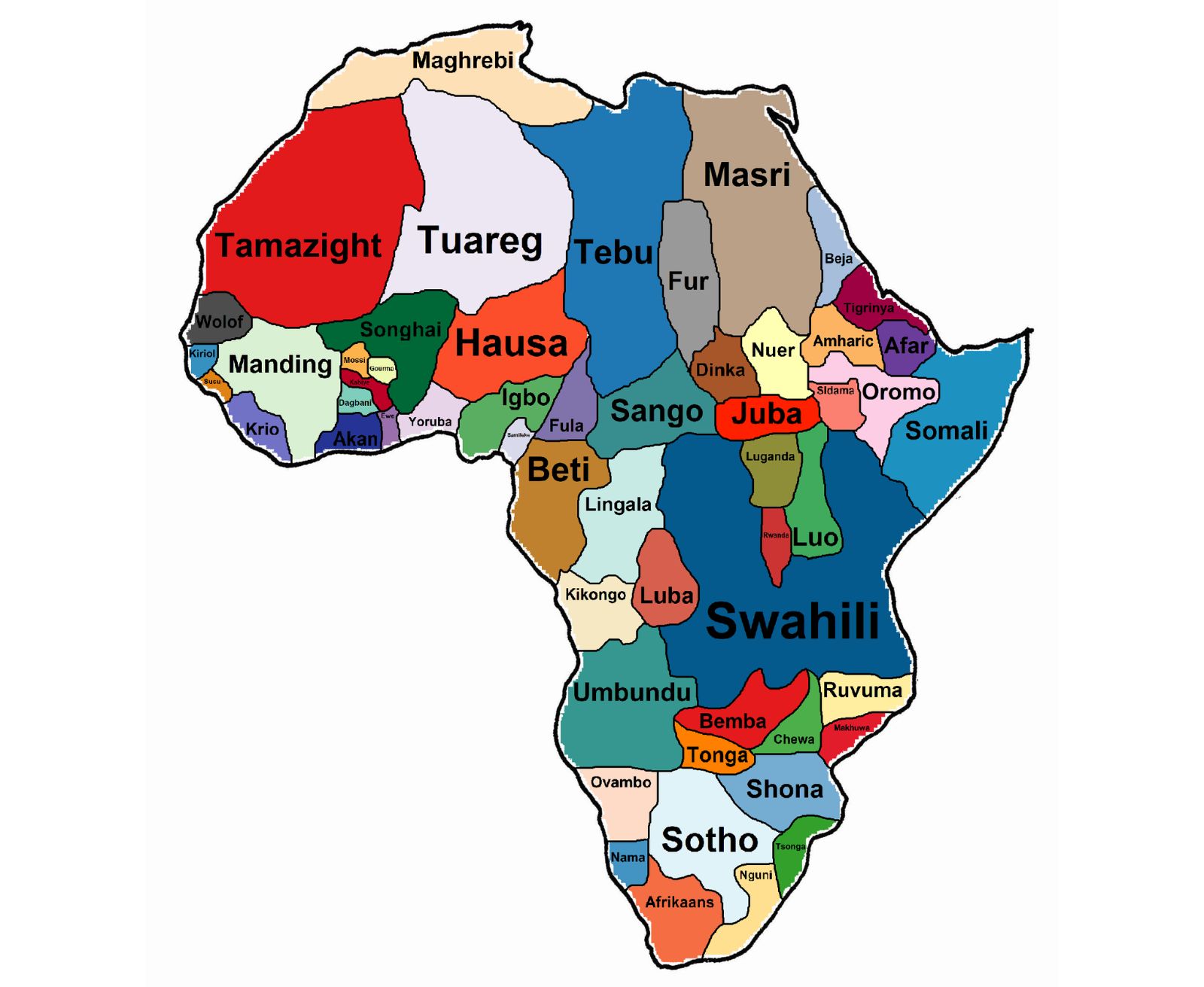
MONROVIA – Africa is a continent of extraordinary cultural, historical, and linguistic diversity. From the savannahs of West Africa to the townships of Southern Africa and the highlands of East Africa, indigenous languages have served for centuries as vessels of history, identity, culture, wisdom, and community.
Yet, across much of Africa, colonial languages such as English, French and Portuguese continue to dominate government, education, business and formal communication. While these languages have become important tools for communication between people from different linguistic backgrounds, the continued marginalization of African languages presents a serious challenge to cultural preservation and Pan-African unity.
Ghana, Liberia, Nigeria, South Africa and Kenya provide powerful examples of Africa’s linguistic diversity and demonstrate why indigenous languages must be protected, promoted and passed on to future generations.
Ghana: Language as a Bridge to Culture
Ghana is home to a rich collection of indigenous languages, including Akan, Ewe, Ga, Dagbani, Nzema and others. Akan, in particular, is widely spoken and includes major varieties such as Twi and Fante.
These languages are more than methods of communication. They carry Ghana’s traditional knowledge, proverbs, oral history, music, folklore and cultural values.
For generations, Ghanaian communities have used proverbs and storytelling to teach children about respect, leadership, family, courage and responsibility. When an indigenous language disappears, the cultural knowledge carried within that language can also become endangered.
Ghana therefore demonstrates an important Pan-African principle: African development should not require Africans to abandon their cultural identity.
Liberia: Protecting the Voices of Indigenous Communities
Liberia presents another important example. English is the country’s official language, while Liberian English and numerous indigenous languages are widely spoken across the country.
Liberia recognizes 16 indigenous ethnic groups, including the Kpelle, Bassa, Gio, Mano, Kru, Grebo, Krahn, Vai, Gola, Mandingo, Lorma, Kissi, Mende, Gbandi, Belle and Dei. Each has its own linguistic and cultural traditions.
Languages such as Kpelle, Bassa, Vai, Grebo, Kru, Mano and Gio are deeply connected to the identity and history of their communities.
Liberia’s linguistic diversity should therefore be viewed as a national asset rather than a barrier. Indigenous languages can play a greater role in education, community development, cultural preservation, radio broadcasting and public awareness.
The Liberian experience also reminds us that Pan-Africanism begins at home. Before Africans can fully appreciate the languages and cultures of other African nations, they must first value their own.
Nigeria: The Power of Linguistic Diversity
Nigeria is one of Africa’s greatest examples of linguistic diversity. The country has more than 500 indigenous languages, with Hausa, Yoruba and Igbo among the most prominent.
Hausa is particularly influential across northern Nigeria and wider West Africa, while Yoruba remains a major language in southwestern Nigeria and across parts of the African diaspora. Igbo is central to the cultural identity of southeastern Nigeria.
Nigeria demonstrates that indigenous languages can exist alongside a colonial language while continuing to serve millions of people in everyday life.
However, linguistic diversity also requires deliberate preservation. Smaller languages risk declining when younger generations increasingly use dominant languages for education, employment and social interaction.
The Nigerian experience therefore presents an opportunity for Africa: technology, television, radio, music, social media and education can be used to make indigenous languages relevant to younger generations.
South Africa: Making Indigenous Languages Part of National Identity
South Africa has one of the most comprehensive constitutional approaches to linguistic diversity on the continent.
The country now recognizes 12 official languages, including isiZulu, isiXhosa, Sepedi, Sesotho, Setswana, siSwati, Tshivenda, Xitsonga, isiNdebele, Afrikaans, English and South African Sign Language.
South Africa’s Constitution specifically recognizes the historically diminished status of indigenous languages and requires the state to take practical measures to elevate and advance their use.
Kenya: Kiswahili and the Pan-African Connection
Kenya offers perhaps one of the clearest examples of how an African language can become a powerful instrument of national and continental identity.
Kiswahili is Kenya’s national language and, together with English, is an official language. Kenya’s Constitution also directs the state to promote and protect the country’s linguistic diversity and to promote the development and use of indigenous languages.
Beyond Kenya, Kiswahili has become one of Africa’s most important cross-border languages. It is spoken across several countries in East and Central Africa and has become an important language for regional communication.
Kiswahili demonstrates what Pan-Africanism can achieve when an African language is given space to grow beyond its original community.
It provides a powerful reminder that African languages do not have to remain confined within national borders. They can become instruments of regional integration, trade, diplomacy, education and cultural exchange.
Why African Languages Matter
The experiences of Ghana, Liberia, Nigeria, South Africa and Kenya reveal a common truth: Africa’s languages are part of Africa’s wealth.
Language and Pan-Africanism
Pan-Africanism is not only about political unity or economic cooperation. It is also about recognizing and celebrating the cultural connections that exist among African people.
Our languages tell the story of Africa before colonial borders divided the continent.
Many African languages share words, grammatical features, cultural concepts and historical connections that cross modern national boundaries. This linguistic relationship reminds us that Africa’s peoples have been connected long before the creation of today’s states.
For this reason, promoting African languages should be considered part of the broader Pan-African project.
Africa should not reject English, French, Portuguese or other international languages. These languages can remain valuable tools for international communication. But they should complement—not replace—the languages that originated from Africa’s own communities.
The Role of Governments and the Media
African governments have a major responsibility to protect indigenous languages.
More African languages should be incorporated into schools, public information campaigns, radio, television, newspapers and digital platforms.
The media also has an important role to play. Journalists, broadcasters, filmmakers, musicians and content creators can help make indigenous languages attractive and relevant to younger generations.
A Call for a Pan-African Language Movement
Ghanaian, Liberian, Nigerian, South African and Kenyan languages may be different, but they share a common purpose: they preserve the voices of African people.
The future of Africa should therefore not be built at the expense of African identity.
We must encourage children to speak their mother tongues.
We must encourage schools to teach African languages.
We must encourage governments to invest in indigenous-language education.
We must encourage journalists and broadcasters to produce more African-language content.
We must encourage technology companies to develop African-language digital tools.
And we must encourage Africans to see speaking an indigenous language not as a sign of backwardness, but as a source of pride.
Africa cannot fully preserve its history if it loses the languages through which that history was transmitted.
From Akan in Ghana to Kpelle and Bassa in Liberia, Hausa, Yoruba and Igbo in Nigeria, isiZulu and isiXhosa in South Africa, and Kiswahili and Kenya’s many indigenous languages, Africa’s linguistic diversity is a treasure that deserves protection.
Pan-Africanism must therefore include not only the unity of African people, but also the preservation of the voices that make Africa unique.
When Africa protects its languages, Africa protects its identity. And when Africa protects its identity, it strengthens the foundation for a truly united continent.
The Importance of African Local Languages
African local languages are more than just tools for communication; they are the foundation of Africa’s cultural identity, history, traditions, and unity. Across the continent, thousands of languages are spoken, each carrying the stories, values, customs, and knowledge of the communities that created them.
1. Preserving African Culture and Identity
Local languages preserve Africa’s cultural heritage. Traditional songs, folktales, proverbs, names, ceremonies, and oral histories are often best understood in their original languages. When a language disappears, an important part of a community’s identity and history can disappear with it.
2. Passing Knowledge from One Generation to Another
For centuries, African societies have used local languages to pass knowledge from parents and elders to children. Knowledge about farming, traditional medicine, the environment, history, and community leadership is often preserved through storytelling and oral traditions.
3. Strengthening African Unity
Pan-Africanism should not mean abandoning the languages of our communities. Instead, African unity should recognize and respect the continent’s linguistic diversity. Learning and appreciating one another’s languages can help Africans understand their shared history and strengthen solidarity across borders.
4. Improving Education
Children often learn more effectively when they understand the language being used to teach them. Incorporating African languages into early education can make learning more accessible while helping students develop confidence in their cultural identity.
When an African language survives, a piece of Africa’s history survives with it. When an African language disappears, a part of our collective memory is lost.



No Comments
Join the DiscussionBe the first to join the discussion!