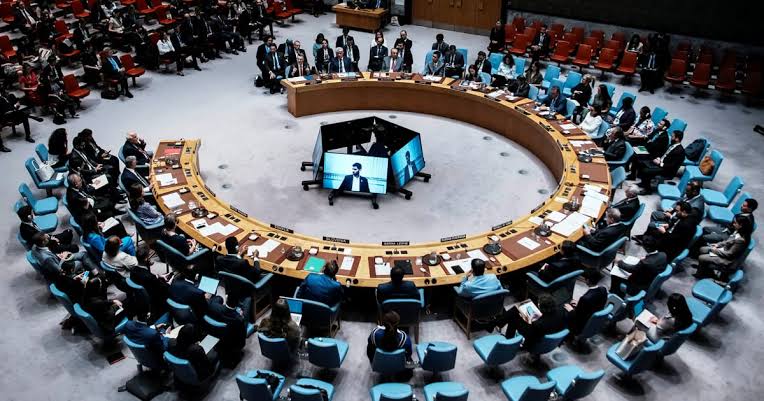
There is a wise West African proverb that perfectly captures the current state of global diplomacy: “Until the lions have their own historians, the history of the hunt will always glorify the hunter.” For eighty years, this has been the reality inside the chambers of the United Nations Security Council (UNSC). The “hunt”—the management of global crises, the deployment of armed interventions, and the imposition of sweeping international sanctions—is routinely decided by an elite group of external powers. Meanwhile, the “lions”—the African nations directly impacted by these decisions—are denied a permanent voice to write their own history.
Another poignant Swahili proverb warns: “A guest does not direct the owner of the house.” Yet, when it comes to global peace and security, the UN Security Council operates on the exact opposite premise. The Council possesses the unique, legally binding authority to shape the geopolitical destiny of any nation. Yet, its core power is concentrated entirely in the hands of five permanent members (the P5) with absolute veto power: the United States, Russia, China, France, and the United Kingdom. Not a single permanent seat belongs to Africa.
This systematic exclusion creates a profound structural crisis. Africa comprises 54 sovereign states and over 1.5 billion people. More than a quarter of all UN member states are African, making the continent a massive pillar of the international community. Yet, under the current framework, Africa is treated as a passive observer rather than an equal partner. It must rely on just three rotating, non-permanent seats allocated for short, two-year terms. These rotating members lack the vital veto power required to block resolutions that threaten their regional stability.
The Kitchen Analogy: Cooking the Meal, Denied the Plate
To truly understand the unfairness of this dynamic, imagine a large restaurant kitchen. Five head chefs sit comfortably in an air-conditioned dining room, designing a complex, experimental menu for a massive banquet. In the scorching kitchen, a team of tireless sous-chefs chops the vegetables, braises the meat, and handles the dangerous open flames. When the meal is finally served, the head chefs consume the feast, take full credit for the menu, and dictate exactly how much the kitchen staff is allowed to eat. If a sous-chef tries to voice a complaint about the recipe or the working conditions, any one of the head chefs can simply wave a hand and completely silence them.
In this geopolitical analogy, African nations are the sous-chefs doing the dangerous work on the ground, while the P5 are the elite diners dictating the terms from afar.
Consider the sheer data behind this imbalance: according to tracking by Oxfam, over the last decade, conflicts across Africa have dominated UN Security Council resolutions, totaling a staggering 80 percent of the Council’s focus. Nearly 45% of all resolutions adopted by the UNSC focus explicitly on situations in an African country. In short, Africa’s domestic affairs are the primary “meal” being discussed, yet African nations are barred from holding the master recipe. As a popular Nigerian proverb reminds us, “You cannot shave a man’s head in his absence.” Yet, the Security Council routinely attempts to trim and style African security policies without Africa in the room.
The Peacekeeping Paradox
The asymmetry deepens significantly when analyzing who actually enforces global peace. Critics and African leaders frequently point out a glaring paradox: Africa is heavily over-represented on the dangerous frontlines of global peacekeeping, but completely locked out of the executive boardroom that commands them.
United Nations data shows that African nations consistently provide a massive portion of the world’s “Blue Helmets”. Countries like Rwanda, Ghana, Morocco, Egypt, Tanzania, and Ethiopia regularly rank among the top global contributors of military and police personnel to UN operations. Today, roughly 40% of all UN peacekeepers deployed worldwide are African.
This brings us to a second logical analogy: the construction site. Imagine a multi-billion-dollar real estate firm where five corporate executives sit in a corporate tower, drawing up architectural blueprints. They send these designs to a high-risk construction zone thousands of miles away. The laborers on the ground—facing structural collapses, hazardous weather, and physical injury—are the ones who actually build the tower. Yet, these workers have zero equity in the company, no representation on the board of directors, and no say in whether the blueprints are structurally sound for their local environment.
While wealthy permanent members of the Security Council finance these missions from safe distances, African soldiers absorb the immediate physical and human costs on the ground, navigating complex insurgencies and sacrificing their lives. This structure results in what diplomats call the “penholder” problem. Historically, the actual text of UN resolutions regarding African conflicts has been drafted and tightly controlled by non-African permanent members—frequently former colonial powers like France or the UK. It is the definition of a Zulu proverb: “The eye that has seen the danger can best guide the hand.” Unfortunately, the UNSC relies on hands that are completely blind to the local realities of the terrain.
Dismantling the Status Quo: Why Arguments Against Reform Fall Flat
While the moral argument for Africa’s inclusion is clear, defenders of the status quo offer several pragmatic objections. However, a closer look reveals that these arguments are built on outdated assumptions that crumble under modern geopolitical realities.
1. The “Competence and Stability” Fallacy
Critics suggest that the Security Council requires stable, powerful nations capable of managing global crises. They argue that because several African nations struggle with internal conflicts, political instability, or weak governance, the continent is not ready to wield the immense responsibility of a permanent seat.
This argument applies a blatant double standard. Several current P5 members are deeply unstable or actively driving global conflict. Russia launched a massive invasion of Ukraine, the United States faces severe domestic political polarization, and the United Kingdom has cycled through multiple prime ministers in rapid succession amidst economic turmoil. Furthermore, internal challenges have never stopped other regions from holding power. As an Ethiopian proverb notes, “The person who holds the mirror does not see their own wrinkles.” It is hypocritical to deny Africa a seat based on stability when current permanent members are often the primary sources of global instability.
2. The “Financial Contribution” Deception
Another common objection is that permanent members should be the primary financial backers of the United Nations. The United States, China, and Japan contribute the largest shares to the UN’s budget, while African nations collectively contribute a much smaller percentage. Critics argue that those who pay for the house should choose the furniture.
This view reduces global peace to a corporate transaction, ignoring the human cost of security. Wealthy nations can easily write checks from the safety of their capital cities, but money cannot buy peace without the human capital to enforce it. Africa pays its dues in blood, sacrifice, and manpower. By providing 40% of the world’s peacekeepers, African nations shoulder the physical risks that Western nations routinely avoid. As a Ghanaian proverb states, “Money is sharper than a sword, but a sword cannot cut wood without a hand.” Financial capital is useless without the human capital African nations provide.
3. The “Continental Rivalry” Excuse
Opponents of reform frequently point out that Africa cannot agree on who should actually take the seats. If Africa is granted two permanent seats, which countries get them? Nigeria (the continent’s largest economy and population), South Africa (a diplomatic powerhouse and G20 member), and Egypt (a crucial bridge to the Arab world) are all fierce rivals for the positions. Critics argue that expanding the council will only bring regional infighting into the UN chamber.
Regional rivalry is a natural part of international politics, not a uniquely African defect. Europe has deep divisions between Western and Eastern states, yet holds three permanent positions (UK, France, Russia). Asia features intense rivalries between China, India, and Japan, yet China holds a permanent seat without paralyzing the entire continent’s diplomacy. Furthermore, Africa has already proven it can operate with a unified voice through the African Union (AU) and the Ezulwini Consensus. Using internal competition as an excuse to lock out an entire continent is a classic “divide and rule” tactic.
The Concrete Wall to Reform
This glaring imbalance has triggered a unified, roaring demand for systemic change. Spearheaded by the African Union, the continent has rallied behind the Ezulwini Consensus, a joint position demanding at least two permanent seats with full veto power for Africa, alongside five non-permanent seats. UN Secretary-General António Guterres has strongly championed this reform. Speaking directly to African leaders at the African Union Summit in Addis Ababa, Guterres called the lack of permanent African representation “indefensible,” bluntly declaring: “This is 2026 – not 1946. Whenever decisions about Africa and the world are on the table, Africa must be at the table.”
Yet, despite this growing global consensus, actual reform faces a structural brick wall. Altering the makeup of the UNSC requires amending the UN Charter, a process that can be completely blocked by a single veto from any one of the current P5 members. Unsurprisingly, the world’s most powerful nations have shown minimal interest in voluntarily diluting their own geopolitical dominance.
This brings us to a final, inescapable analogy: a game of cards. Imagine trying to change the rules of a poker game when the person holding all the aces also holds the exclusive right to veto any new rule changes. The players with the worst hands will naturally demand a reshuffle to make the game fair, but the player holding the winning hand will simply use their power to keep the rules exactly as they are.
As an ancient Akan proverb states, “The person who holds the ladle decides who gets the soup.” For nearly a century, the P5 have held the global ladle, ensuring their own bowls remain full while leaving Africa to beg for scraps of influence.
The Clock is Ticking: Why the United States of Africa is the Only Answer
But here lies the ultimate trap: as long as we approach the card game as 54 separate players, we will always be forced to beg for scraps. If we are to truly break through this concrete wall, we must realize that begging the P5 to share their power is a losing strategy. The international community will remain fractured, reminding us of the timeless Xhosa proverb: “A single finger cannot crush a louse.” True global peace and true African liberation cannot be achieved by relying on the hands of a chosen foreign few; it requires a radical shift in how Africa operates.
There is another well-known African proverb that says, “When spiders unite, they can tie up a lion.” For over six decades, the nations of Africa have lived in the shadow of global giants, operating as individual, fragile threads. We possess the world’s richest soil, the youngest population, and the most critical minerals on earth. Yet, because we remain fragmented into 54 separate pieces, the world continues to treat Africa not as a global player, but as a boardroom playlist to be divided and managed.
If we are to change our destiny, African states must immediately dissolve their artificial borders and unite into a single federal country—the United States of Africa. The window of opportunity is closing, and the blame for our delay lies squarely on our own shoulders.
The Mirror of Blame: We are Our Own Obstacle
It is easy to point fingers at the ghosts of colonial history or the modern interference of foreign superpowers. But as the adage goes, “If there is no enemy within, the enemy outside can do us no harm.” We, as Africans, must accept the harsh truth: our continued division is our own fault.
For decades, our political elites have fiercely guarded their individual sovereignty, prioritizing local titles, presidential motorcades, and national flags over the collective advancement of 1.5 billion people. We have allowed colonial-era borders—drawn by men who never set foot on our soil—to dictate our identities and spark senseless regional conflicts. When we trade more easily with Europe and China than we do with our immediate neighbors, we are actively choosing weakness. We have chosen to be kings of tiny anthills rather than architects of a global mountain.
The Imperative of Immediacy: Why We Must Act Now
We do not have the luxury of time. The world is changing rapidly, and a new era of resource scramble is underway. Artificial intelligence, the green energy transition, and space exploration require lithium, cobalt, and copper—resources that sit beneath African soil.
If we remain divided, foreign powers will continue to play African nations against one another, buying our raw materials for pennies and selling them back to us as expensive finished goods. An individual African nation negotiating with a global superpower is like an ant trying to negotiate terms with an elephant.
We must unite immediately because our population is projected to double by 2050. Without a unified economic engine, a single currency, and borderless trade, we will face an unemployment and economic crisis of catastrophic proportions. Unity is no longer a romantic Pan-African poem; it is an urgent economic shield.
Shattering the Chessboard: Forcing Our Seat at the Table
The day Africa unites into a federal state, the entire global geopolitical chessboard shatters. We will no longer need to lobby for amendments to the UN Charter or debate which individual country deserves a seat. A federal United States of Africa would instantly control the world’s largest workforce, dominate its most critical supply chains, and field a consolidated military force rivaling any superpower.
When a single central government speaks with one voice for the entire African continent, the United Nations will have no choice but to grant us a permanent seat with full veto power. You cannot lock the landlord out of the house. With absolute economic and military leverage, a unified Africa will stop asking for permission to join the boardroom. We will simply walk in and take our place.
An Ethiopian proverb reminds us that “Many corn stalks tied together are unbreakable, but a single one is easily snapped by the wind.” The division of Africa is an expensive luxury we can no longer afford. We must cast aside the petty rivalries of nationality and tribe to build a federal union. Only then can we secure our rightful place on the world stage, protect our immense wealth, and ensure that the 21st century truly belongs to Africa. The time to build the United States of Africa is not tomorrow. It is now.



No Comments
Join the DiscussionBe the first to join the discussion!